


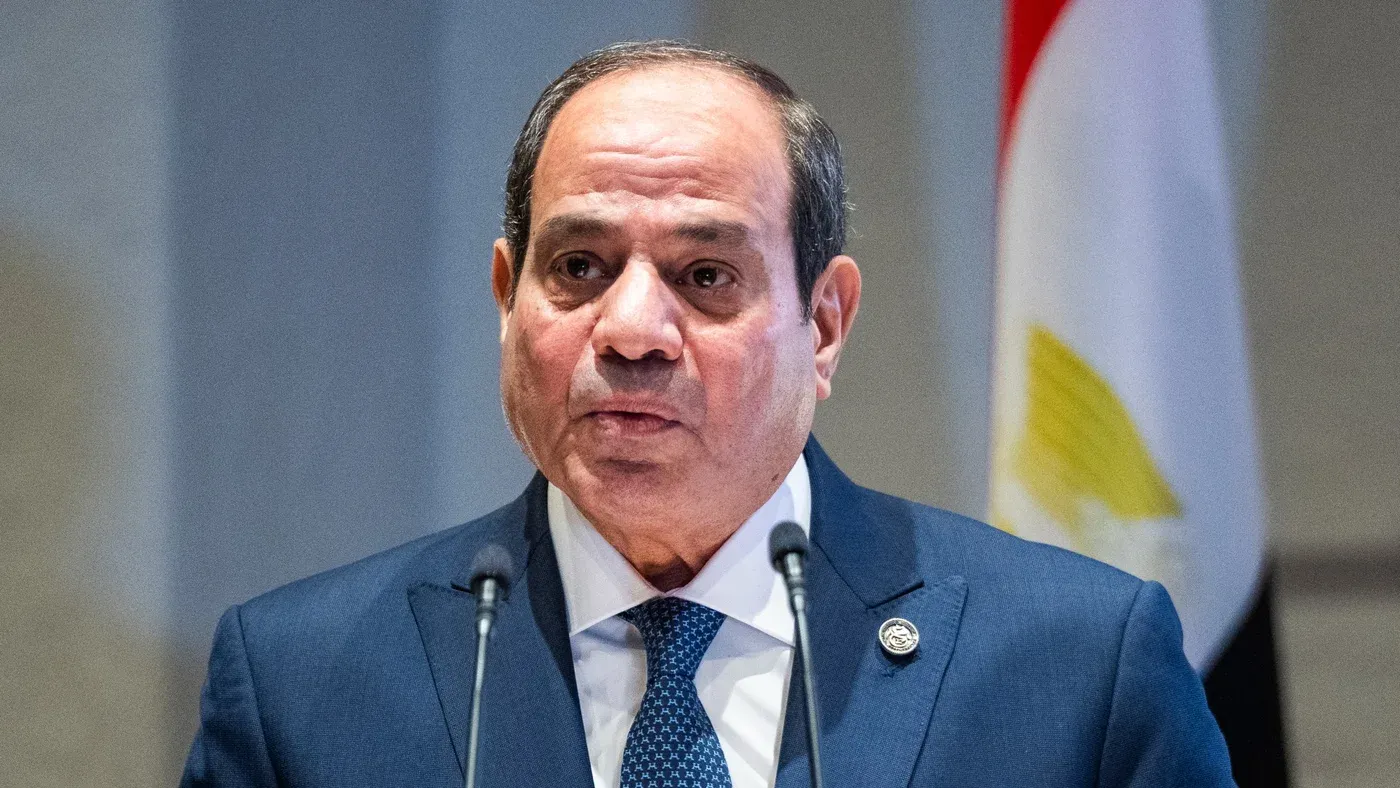
Egyptian President Abdel Fattah al-Sisi warned today that persistent schemes to destabilize the state remain an ongoing threat, declaring that the unrest witnessed between 2011 and 2013 has not truly ended and that underlying plots against Egypt have not stopped. Speaking during an address at the Egyptian Military Academy, Sisi emphasized that while the specific methods used against the state may evolve over time, the broader push to dismantle it persists in different forms.
The president underscored public awareness as the nation’s primary defense against these continuing challenges, framing citizen vigilance as an essential complement to the state’s own security and military capabilities. Reflecting on the volatility that swept across the wider region during the previous decade, Sisi noted that several neighboring nations suffered catastrophic destabilization during that period, while Egypt, in his words, miraculously survived that same turbulent era.
Sisi described the country’s survival through that period as reflecting a divine blessing, while simultaneously asserting that the events which unfolded across the region during those years were systematically orchestrated and planned rather than occurring spontaneously. That characterization places responsibility on Egypt, in the president’s framing, to safeguard its continued stability with particular care given what he described as the nation’s finite resources available to withstand repeated external and internal pressures.
The president stressed that protecting the state represents a collective civic duty rather than a responsibility resting solely with government institutions or security services. This framing reflects a consistent theme within Sisi’s public addresses over recent years, emphasizing shared national responsibility for stability rather than positioning security purely as a top down state function separate from ordinary citizens’ daily engagement and awareness.
Today’s address at the Military Academy carries particular symbolic weight given the institution’s role in training Egypt’s future military leadership. Presidential addresses delivered specifically at military academies have historically served as venues for Sisi to articulate broader national security philosophy, often reaching beyond the immediate graduating class to communicate messages intended for wider domestic and regional audiences following official state media coverage.
The timing of these remarks arrives amid a genuinely turbulent period across the broader Middle East, with the ongoing conflict between the United States and Iran continuing to generate regional instability that has directly affected Egypt through disrupted shipping routes and elevated energy costs. Against that backdrop, Sisi’s emphasis on internal vigilance against destabilization efforts reflects concerns extending beyond purely domestic political opposition toward the broader web of regional tensions currently affecting Egypt’s immediate neighborhood.
Egyptian officials have consistently framed national stability as a precondition for the country’s broader economic development ambitions, arguing that sustained investment, tourism growth, and infrastructure development all depend fundamentally on maintaining the kind of security and predictability that has distinguished Egypt from several regional neighbors that experienced more severe upheaval during the past decade and a half.
As today’s remarks continue circulating through Egyptian state media and international coverage, they reinforce a message Sisi has repeated consistently throughout his presidency, positioning state stability and vigilance against destabilization as core priorities that underpin virtually every other aspect of Egypt’s governance and development agenda moving forward.
