


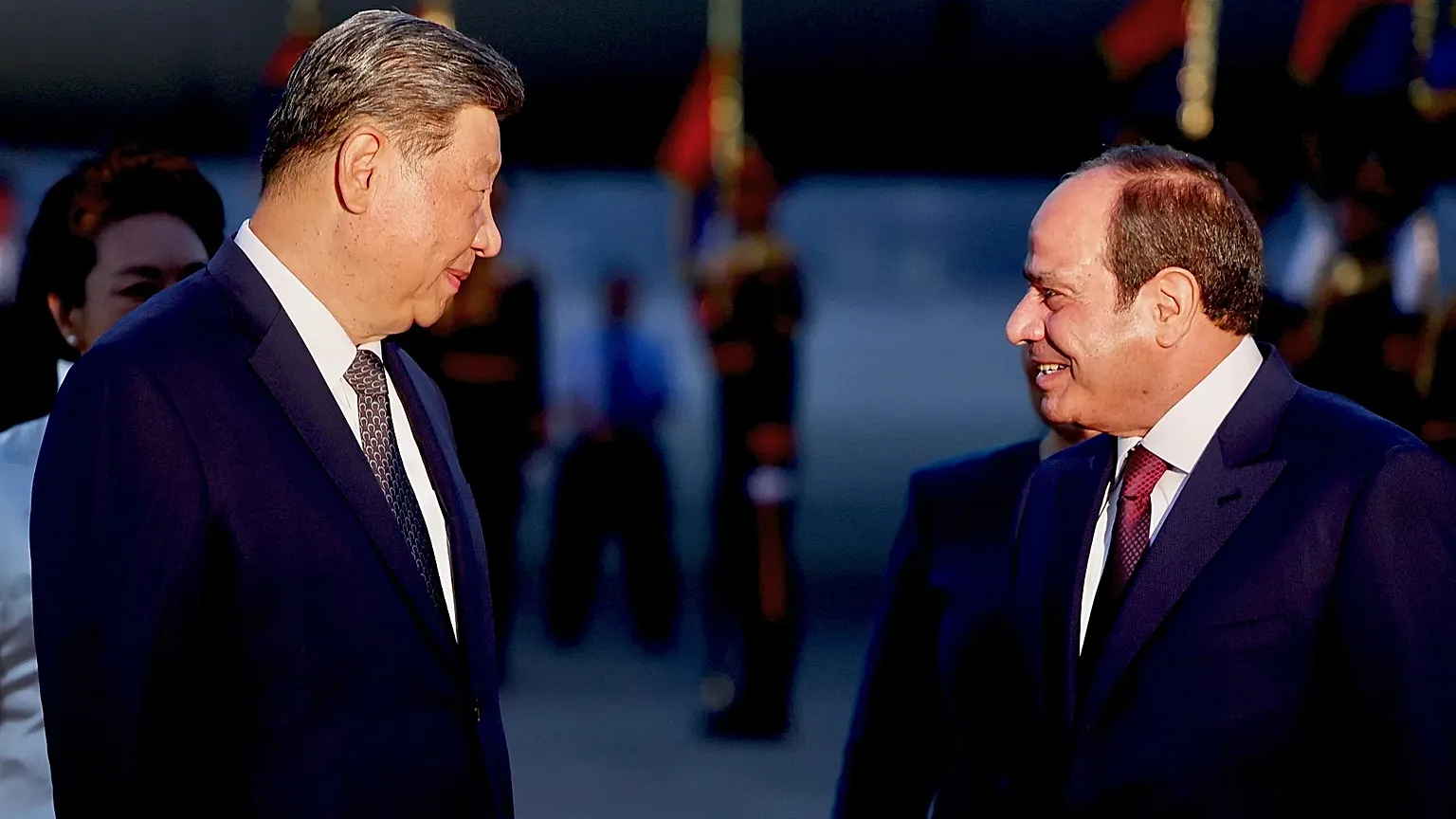
Egypt and China have signed a sweeping package of economic agreements this week, including plans to expand a joint industrial zone near the Suez Canal and new private sector manufacturing investments worth well over one hundred million dollars combined. The deals came during Chinese President Xi Jinping’s first visit to Cairo in a decade, marking one of the most substantial economic packages between the two countries in recent memory.
Among the headline agreements, Egypt and China signed a deal to launch the third phase of their joint industrial zone at the Suez Canal, an area that already hosts around two hundred companies with roughly four billion dollars in combined investment. Officials did not announce a specific figure for the new investment tied to this expansion, though the move gives China deepened involvement in one of the world’s most strategically important trade corridors at a moment when regional shipping routes face heightened security concerns.
Beyond the industrial zone expansion, five headline agreements were signed covering a wide range of sectors. These included a memorandum linking Egypt’s long term development strategy, known as Vision 2030, with China’s global Belt and Road infrastructure initiative, along with a broader economic and technical cooperation agreement and a separate memorandum focused on industrial development and supply chain collaboration between the two countries.
Private sector deals accompanied the government to government agreements, adding concrete manufacturing commitments to the broader diplomatic framework. Chinese agricultural technology company FAMSUN signed an agreement with Egyptian firm Cairo 3A, planning a further one hundred million dollars in manufacturing and technology investment covering agricultural machinery, grain storage, and feed and food processing equipment. Separately, Egypt’s Mansour Group and China’s Tianneng Battery Group signed a memorandum to explore battery and energy storage manufacturing, including products aimed at the growing new energy vehicle market.
Chinese officials confirmed that more than twenty additional cooperation documents were signed on the sidelines of the visit, spanning areas including the digital economy, science and technology, education, transport, and media. This broad spread of agreements reflects an effort by both governments to deepen ties across multiple sectors simultaneously rather than concentrating exclusively on any single area of cooperation.
Economic analysts note that the true significance of this economic package will depend less on the number or headline value of the agreements signed and more on how effectively they translate into actual manufacturing activity inside Egypt. Key questions going forward include how much of the eventual production Egypt itself will supply, how much gets exported from Egyptian facilities, and how much genuine technology transfer occurs as these projects move from agreement to operation.
Bilateral trade between Egypt and China reached approximately twenty point seven billion dollars by the end of last year, making China Egypt’s largest trading partner outside of petroleum products. That existing trade relationship provides context for why officials on both sides view this latest round of agreements as building on already substantial economic ties rather than establishing an entirely new relationship from scratch.
The timing of these agreements, arriving during the seventieth anniversary year of diplomatic relations between Egypt and China, adds symbolic weight to what officials describe as a new phase in the countries’ economic partnership. As these various memoranda and agreements move from signing ceremonies toward actual implementation, businesses and analysts on both sides will be watching closely to see which projects advance quickly and which face the kind of delays common to large scale international investment commitments, ultimately determining whether this week’s agreements deliver the substantial economic benefits both governments have promised.
