


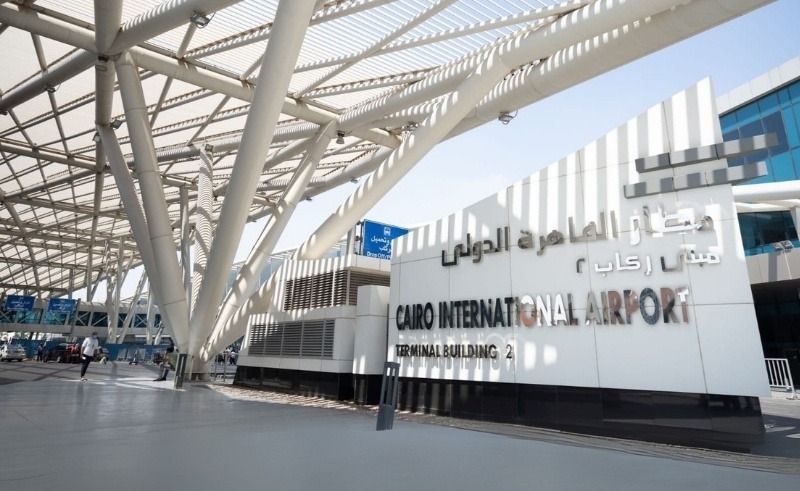
Egyptian officials are pushing forward with plans for a massive new terminal at Cairo International Airport, a project expected to nearly double the airport’s total passenger capacity and cement its position as a major hub linking Africa, Europe, and Asia. Prime Minister Mostafa Madbouly reviewed the latest progress on the Terminal 4 project this week during a meeting held at government headquarters in New Alamein City, joined by the civil aviation minister and other senior officials.
The new terminal is designed to handle up to forty million passengers annually on its own, which would push Cairo International Airport’s total yearly capacity to roughly seventy million once the project is complete. The airport currently manages more than thirty million travelers a year across its existing three terminals, a load that already exceeds their combined designed capacity of around twenty eight million passengers. That gap between actual traffic and built capacity has made expansion an urgent priority for officials managing Egypt’s busiest aviation gateway.
Civil Aviation Minister Sameh El Hefny described Terminal 4 as one of the country’s flagship national infrastructure projects, one intended to strengthen Cairo’s position as a regional and global aviation hub. He said the new facility will draw on the latest international approaches to airport design, incorporating artificial intelligence, digital transformation, and smart operating systems aimed at improving both efficiency and the overall passenger experience from arrival through departure.
President Abdel Fattah al Sisi has personally overseen planning for the project, meeting with top officials including the civil aviation minister and a presidential financial affairs adviser to review the terminal’s strategic vision and construction timeline. Sisi has directed officials to ensure the new facility meets the highest international standards across design, sustainability, safety, and security, while also pushing for greater private sector and foreign investment involvement in Egypt’s broader aviation sector.
Cost estimates for the project have grown alongside its ambitions since it was first floated publicly back in 2019. Officials now put the price at a minimum of three and a half billion dollars, with construction expected to take around four years once building begins. The project will be self financed by the state airport holding company working alongside several national entities, rather than relying on sovereign borrowing to fund the expansion.
Beyond the passenger terminal itself, the broader Terminal 4 masterplan includes a new cargo city with an initial handling capacity of one million tonnes annually, expandable to two million tonnes as demand grows. Planners also intend to establish a unified visual identity across Terminals 2, 3, and 4, creating a more consistent experience for travelers moving through different parts of the airport complex.
The expansion comes as Egypt’s tourism sector continues showing strong growth, with the country welcoming around nine million visitors during the first half of this year, roughly four percent more than the same period last year. Rising passenger numbers have added pressure on existing airport infrastructure, reinforcing the case for expanded capacity to accommodate both current demand and projected future growth in both tourism and business travel.
Officials say the Terminal 4 project reflects Egypt’s broader ambitions to position itself as a leading transfer point for air traffic moving between continents, competing directly with other major regional hubs. As construction planning continues, attention will turn to setting a firm groundbreaking date, with officials expected to provide further updates on the project’s timeline in the coming months as financing and design details are finalized.
