


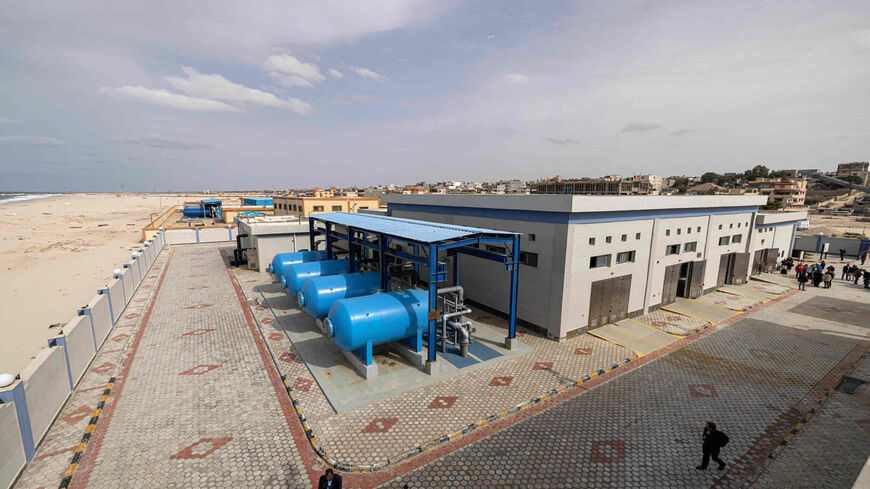
Egypt’s government moved forward this week with plans to sharply expand seawater desalination capacity, as officials work to address a deepening water crisis facing the country of more than one hundred million people. Prime Minister Mostafa Madbouly chaired a meeting reviewing updates on desalination projects and pushing forward efforts to build more of the required equipment inside Egypt rather than relying entirely on imports.
The scale of the challenge facing Egypt is significant. Officials estimate the country needs around one hundred fourteen billion cubic meters of water each year, yet current supply covers only about half that amount. Water available per person has dropped to roughly five hundred cubic meters annually, well below the internationally recognized threshold for water poverty. Much of this pressure traces back to strain on the Nile River, which supplies the vast majority of Egypt’s water but faces growing challenges from climate change and dam projects built by upstream nations.
To close that gap, the government has set an ambitious target of increasing desalinated water production more than sevenfold within the next five to six years. Egypt currently produces about one point eight million cubic meters of desalinated water daily, and officials aim to push that figure to ten million cubic meters, with an even longer term goal of reaching thirty million cubic meters per day. Achieving that scale would mark one of the most significant water infrastructure expansions in the country’s modern history.
A central part of the strategy involves building local manufacturing capacity rather than importing all necessary equipment from abroad. Madbouly has repeatedly stressed the importance of localizing desalination technology, offering incentives to foreign companies willing to manufacture plant components inside Egypt. Officials say this approach will not only reduce costs over time but also create skilled jobs and build technical expertise within the domestic workforce.
International companies have shown strong interest in partnering with Egypt on these projects. Saudi Arabia’s ACWA Power has already invested around four billion dollars in the country and has proposed building a dedicated factory to manufacture membranes used in desalination plants, alongside a training center to develop local expertise. Chinese firms have also expressed interest, with discussions touching on both desalination technology and broader cooperation across energy and manufacturing sectors, building on momentum from recent high level exchanges between the two countries.
Housing Minister Randa El Menshawy has held multiple rounds of talks with prospective partners, evaluating proposals based on pricing, technical quality, and how much local manufacturing content each bid includes. Officials say they are working to set firm timelines for completing projects already underway while removing bureaucratic obstacles that could slow investment in the sector.
The push toward desalination reflects a broader national strategy to diversify water sources amid mounting pressure on traditional supplies. Housing officials have described the effort as both a technical fix and a strategic necessity, given how central stable water access is to food security and long term economic stability in a country where agriculture remains a major employer and source of national income.
As international firms continue submitting proposals and officials work through the evaluation process, attention will turn to how quickly Egypt can move from planning to actual construction across the various governorates targeted for new facilities. With water scarcity ranking among the most pressing long term challenges facing the country, the pace of progress on this expansion will likely remain a closely watched indicator of how effectively Egypt can adapt to a increasingly water stressed future.
