


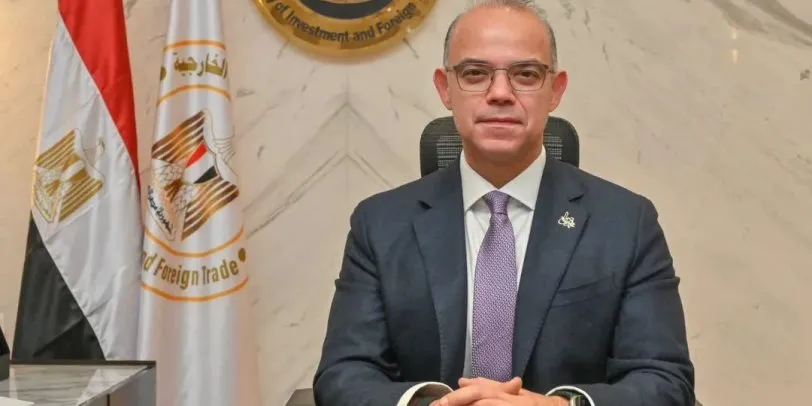
Egypt has renewed its call for deeper economic integration among Arab nations, arguing that unifying trade and investment data systems across the region could unlock significant new growth as intra Arab trade volumes have now surpassed two hundred fifty billion dollars. Investment Minister Mohamed Farid made the case this week, stressing that better coordination between Arab economies could help businesses expand more easily across regional markets.
Farid emphasized the importance of unifying trade and investment information systems among Arab countries, arguing that fragmented data currently makes it harder for businesses to make informed investment decisions when considering expansion into neighboring markets. He said improved information sharing between Arab economies would give companies clearer visibility into opportunities and regulatory requirements across the region, reducing friction that has historically slowed cross border trade and investment activity.
The push for deeper integration comes as Egypt continues positioning itself as a hub connecting African, Arab, and European markets. The country’s extensive network of free trade agreements, combined with its strategic geographic location along the Suez Canal, gives Egyptian officials a strong argument for why deeper regional cooperation could benefit not just Egypt but the broader Arab economic community as trade volumes continue climbing.
Egypt has been actively pursuing this integration agenda across multiple fronts in recent months, including expanded cooperation with Gulf states, discussions with the African Export Import Bank on strengthening trade financing mechanisms, and ongoing efforts to modernize its own domestic investment infrastructure. The Ministry of Investment and Foreign Trade has rolled out a series of digital reforms this year aimed at making it easier for both domestic and foreign investors to navigate Egypt’s regulatory environment.
Among the most significant reforms has been the development of a unified digital platform designed to connect government service providers through a single electronic system, allowing investors to submit and track applications while monitoring how long different authorities take to complete their reviews. Officials say the platform, which will eventually cover hundreds of distinct economic activities, represents a major step toward reducing the bureaucratic friction that has historically discouraged both regional and international investment in Egypt.
Egypt’s broader economic strategy has emphasized building stronger trade relationships across multiple regional blocs simultaneously rather than concentrating exclusively on any single set of partners. Recent data shows Egyptian exports to the United Arab Emirates alone grew by roughly four hundred seventy five percent between 2021 and 2025, illustrating the kind of rapid growth officials hope to replicate across other Arab trading relationships as integration efforts deepen further.
The call for stronger integration also reflects Egypt’s position as one of the top destinations for foreign direct investment on the African continent, having ranked first in Africa for four consecutive years according to recent United Nations trade data. That track record gives Egyptian officials credibility when advocating for regional economic cooperation frameworks, since the country has demonstrated tangible results from its own investment climate reforms in recent years.
Business leaders and trade officials across the Arab world have periodically debated how to translate political goodwill around regional cooperation into concrete improvements in trade infrastructure and data sharing. Egypt’s latest push suggests officials view this moment, with trade volumes already exceeding the quarter trillion dollar mark, as an opportune time to press for more structural improvements rather than relying solely on incremental bilateral agreements between individual countries.
As discussions continue among Arab economic officials, the coming months will likely reveal whether this latest push for unified trade and investment systems translates into concrete new agreements or remains primarily aspirational. For now, Egypt’s advocacy reflects a broader recognition among regional policymakers that deeper structural integration, rather than simply expanding bilateral trade deals one at a time, may offer the clearest path toward unlocking additional growth across Arab economies in the years ahead.
