


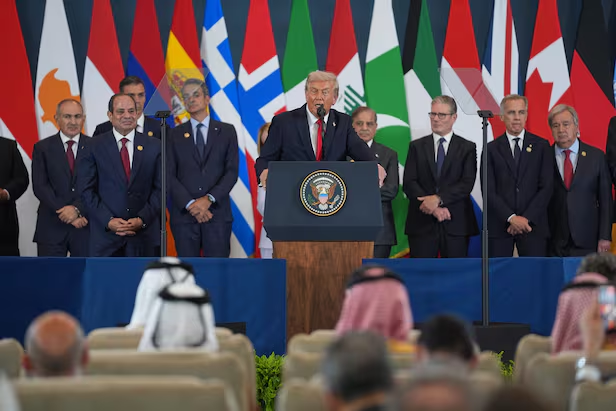
Egypt is continuing to promote dialogue as the main path to resolving regional tensions, reinforcing its long-standing role as a stabilizing force in global and regional politics. The country’s diplomatic stance focuses on reducing conflict risks and encouraging peaceful communication between rival sides.
Officials in Cairo have repeatedly stressed that diplomacy remains the most effective tool for managing disputes. They argue that sustained dialogue helps prevent escalation and creates space for long-term solutions. This approach reflects Egypt’s broader foreign policy, which prioritizes stability and cooperation.
In recent years, Egypt has taken part in multiple diplomatic initiatives aimed at easing tensions in the Middle East and beyond. These efforts include facilitating discussions, supporting indirect communication between conflicting parties, and engaging with regional partners to promote coordinated responses.
Egypt’s position is based on its strong diplomatic relationships with a wide range of countries. It maintains active ties with regional powers as well as global actors, allowing it to serve as a communication bridge in sensitive situations. This role has become increasingly important as regional tensions have grown more complex.
Diplomatic observers say Egypt’s emphasis on dialogue is part of a wider regional trend. Many countries are now focusing more on negotiation and cooperation as a way to address long-standing disputes. This shift reflects growing recognition that military escalation can have wide-reaching consequences.
Egypt’s leadership has also highlighted the importance of international cooperation. Officials believe that global and regional partnerships are essential for building trust and reducing misunderstandings. They argue that coordinated diplomatic efforts can help prevent conflicts before they escalate.
The country’s approach includes participation in regional forums and international meetings. These platforms allow governments to discuss security concerns, economic challenges, and political issues in a structured environment. Egypt often uses these opportunities to promote calm and encourage compromise.
At the same time, regional tensions remain high in several areas. Political disputes, security risks, and economic pressures continue to create challenges for stability. Despite this, Egypt maintains that dialogue is the only sustainable path forward.
Experts note that Egypt’s role as a mediator is supported by its history of involvement in peace efforts. Over the years, it has acted as a facilitator in various regional disputes, helping to maintain communication even during difficult periods. This experience has strengthened its reputation as a trusted diplomatic actor.
Economic stability is also linked to diplomatic progress. Conflicts in the region can affect trade, energy supply, and investment flows. Egypt argues that peaceful solutions are necessary to protect both regional economies and global markets.
While no single solution can resolve all ongoing disputes, Egypt continues to focus on gradual progress. Officials emphasize that even small steps in communication can reduce risks and build confidence between parties.
The country’s diplomatic strategy also includes support for humanitarian stability. In conflict-affected areas, Egypt encourages cooperation to ensure access to food, energy, and essential services. This reflects its broader belief that peace and development are closely connected.
International partners often view Egypt as a consistent voice for stability. Its continued emphasis on dialogue has helped maintain its role in regional discussions. This reputation supports its ability to engage with different sides and contribute to ongoing negotiations.
As regional dynamics continue to evolve, Egypt is expected to maintain its diplomatic approach. The focus remains on encouraging dialogue, reducing tensions, and supporting peaceful solutions through sustained engagement with global and regional partners.
