


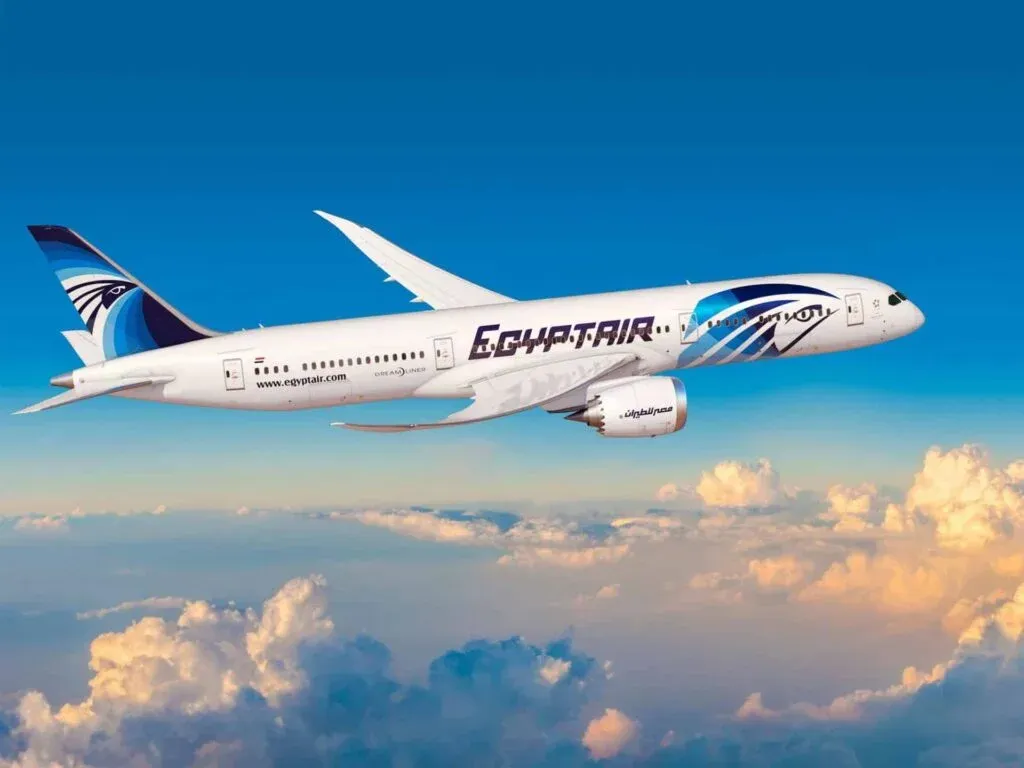
EgyptAir has launched its first ever direct flight service between Cairo and Zanzibar, marking the latest expansion in the Egyptian flag carrier’s ongoing push to strengthen its network across the African continent. The new route began operating this month, connecting Cairo International Airport with Zanzibar’s Abeid Amani Karume International Airport twice weekly, on Fridays and Sundays, using the airline’s Boeing 737 MAX 8 aircraft.
The inaugural flight recorded a load factor above ninety percent, according to EgyptAir officials, an unusually strong opening figure that suggests genuine pent up demand for direct connectivity between the two destinations. EgyptAir Airlines Chairman Mohamed Alyan highlighted the strong initial booking numbers as an encouraging sign for the route’s long term commercial viability, while the airline has also rolled out promotional fares across both economy and business class to help build momentum during the launch period.
EgyptAir Holding Company Chairman Ahmed Adel framed the new route as part of a broader strategy to expand the carrier’s presence across Africa, connecting Egypt with what he described as strategically important destinations throughout the continent. He emphasized that the expansion aligns with the state’s broader directive to foster deeper cooperation with African nations, positioning aviation connectivity as one practical tool for strengthening those wider diplomatic and economic relationships.
Zanzibar has established itself as one of East Africa’s premier tourist destinations in recent years, drawing visitors with its combination of pristine beaches, historic Stone Town architecture, and vibrant spice growing culture. The new direct connection eliminates the need for travelers to route through intermediate hubs like Nairobi or Dar es Salaam, potentially making the island significantly more accessible to travelers originating from Egypt, as well as passengers connecting through Cairo from Europe, the Middle East, and other parts of Africa served by EgyptAir’s broader network.
For Zanzibar itself, the new service strengthens the island’s international air access, providing a direct link to Cairo’s major aviation hub with onward connections spanning Africa, Europe, and the Middle East. Tourism officials on both sides view improved air connectivity as an important factor supporting continued growth in visitor numbers, particularly as Zanzibar continues positioning itself as a leading international tourism destination within the broader East African region.
The route launch fits within a wider trend of African carriers working to capture more of the continent’s growing trade and tourism traffic directly, rather than ceding connecting passenger flows to major hubs located outside Africa entirely. Industry observers note that EgyptAir’s continued network expansion across the continent reflects this broader competitive push among African airlines to strengthen intra continental connectivity and reduce reliance on international carriers for African to African travel.
The Boeing 737 MAX 8 aircraft deployed on the new route represents a relatively modern, single aisle narrow body designed specifically for efficient medium distance operations, well suited to the regional flight length connecting Cairo and Zanzibar. EgyptAir’s use of this aircraft type on the new service also reflects the airline’s broader fleet modernization efforts, part of a larger strategy to improve operational efficiency while expanding international operations across multiple regions simultaneously.
As the twice weekly service settles into its regular operating rhythm, EgyptAir and tourism officials in both Egypt and Tanzania will be watching closely to see whether the strong inaugural demand translates into sustained booking levels over the coming months. With promotional fares helping drive early interest and a clear strategic rationale behind the route, the Cairo Zanzibar connection offers an early test case for how effectively improved direct air links can support deeper tourism and business ties between North and East Africa going forward.
