


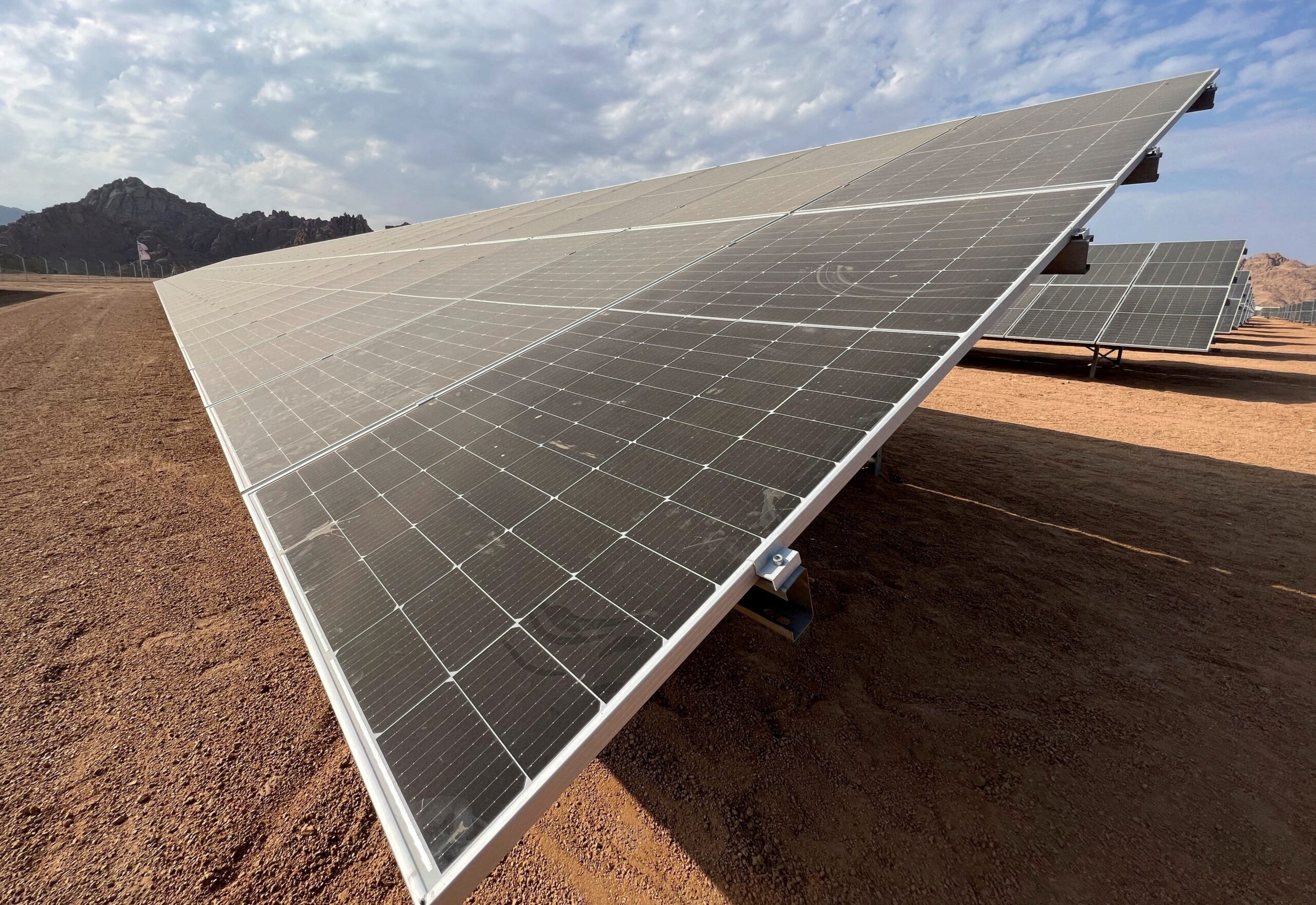
Egypt has taken a step toward a major solar power project in the country’s south. The government announced a preliminary financing agreement worth about 650 million dollars for the Dandara project in Qena province. The plan aims to add a large amount of renewable electricity to the national grid and support Egypt’s wider effort to diversify its energy supply. The agreement brings together an international energy company and several development banks, although further work will be needed before the project is fully built.
The planned project is located in Nagaa Hammadi, in Upper Egypt. It is expected to have a solar generation capacity of one gigawatt, along with battery storage capable of holding 200 megawatt-hours of electricity. These features could help supply power when sunlight is weak or unavailable. Battery storage is becoming an important part of renewable energy systems because solar panels produce the most electricity during daylight hours, while demand can continue into the evening.
The project is expected to be built in two phases. Each phase would deliver 500 megawatts of solar power and 100 megawatt-hours of storage. A phased approach can help developers manage construction, funding, and technical work over time. It can also allow parts of the project to begin operating before the full site is complete, depending on the final construction schedule and required approvals.
The preliminary financing arrangement involves Norway’s Scatec and three multilateral development banks: the European Investment Bank, the European Bank for Reconstruction and Development, and the African Development Bank. The National Bank of Egypt is also expected to take an ownership stake in the project company. The involvement of several financial institutions reflects the scale of the investment and the need to spread funding across different partners.
Egypt has been seeking ways to increase renewable power and reduce the cost of relying on natural gas. A larger supply of solar electricity could help reduce the amount of gas used for power generation, leaving more room to manage domestic demand and imports. The country has set a goal of raising renewables to 42 percent of its electricity generation mix by 2030. Reaching that target will require new projects, stronger grid connections, and reliable systems to manage power when renewable output changes.
Solar power can bring economic benefits beyond electricity generation. Large projects may create jobs during construction and require workers for maintenance and technical services once they are operating. They can also support local suppliers and related services. However, the size of these benefits will depend on how much local labour and business participation the project can support, as well as how the work is organised.
The use of battery storage is another important feature. Solar output can change with cloud cover and falls after sunset, while households and businesses may still need large amounts of electricity. Batteries can store some of the power produced during the day and release it later. They do not solve every challenge facing the grid, but they can help make renewable power more useful when paired with careful planning and other energy sources.
The preliminary deal is a step toward financing, not proof that every part of the project is complete or already producing electricity. The next stages will include detailed arrangements, construction planning, and work to connect the facility to the power system. If the project proceeds as planned, it could become a major addition to Egypt’s renewable energy capacity and support the country’s long-term effort to build a more varied and reliable electricity supply.
