


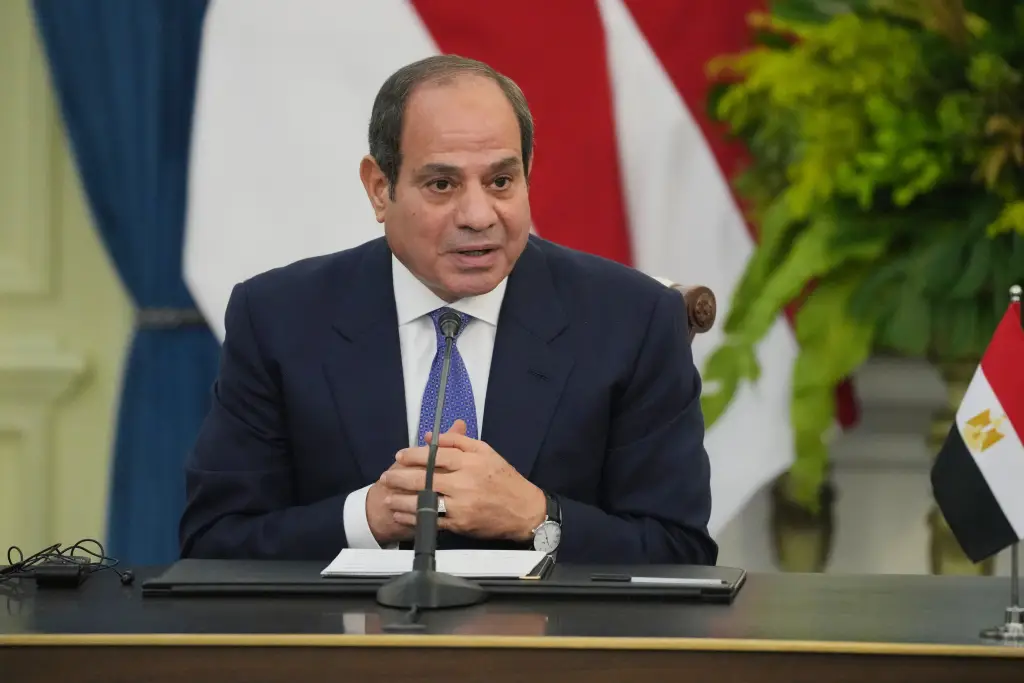
Egypt’s parliament has approved a plan that allows President Abdel Fattah el-Sisi to offer military support to Saudi Arabia if the kingdom asks for help against Houthi attacks. The decision came on Monday, October 26, amid rising tensions in the Middle East. It could bring Egypt closer to the conflict, though officials say any role would focus on defence.
The vote followed a request from Sisi, who asked lawmakers to approve steps to help protect Saudi Arabia. The kingdom has faced growing threats from Yemen’s Iran-backed Houthi movement. The attacks have raised fears for regional security and key sea routes that carry oil and other goods. Egypt sees the safety of these routes as vital to its own trade and economy.
The vote took place behind closed doors, and officials did not share the number of lawmakers who supported the measure. A regional official said Egypt planned to offer air defence systems and aircraft to help stop missiles and drones. The plan would not include sending ground troops into Yemen. The full scope and timing of any support remain unclear.
The decision does not mean that Egyptian forces have already joined the fighting. Saudi Arabia has not made a public request for Egyptian troops, and Cairo has said its role would be defensive. The next steps would depend on the kingdom’s needs and talks between the two governments. Any action could still carry risks for Egypt and the wider region.
The Houthi movement controls large parts of northern Yemen, including the capital, Sanaa. The group has launched attacks against Saudi targets as fighting has grown. Its actions have also raised concern about the Bab el-Mandeb Strait, a narrow sea passage linking the Red Sea with the Gulf of Aden. Ships using this route can reach the Suez Canal, a major source of income for Egypt.
The Suez Canal is one of the world’s key trade routes. It links the Mediterranean Sea with the Red Sea and helps ships travel between Europe and Asia. Any threat to shipping in nearby waters can raise costs, delay cargo and push firms to seek longer routes. For Egypt, a lasting crisis could hurt canal income at a time when the country needs steady foreign currency.
Egypt has often condemned attacks on Gulf states and has close ties with Saudi Arabia. The kingdom is an important source of aid, investment and money sent by Egyptian workers abroad. Strong ties with Riyadh give Cairo a reason to help protect its security. Yet direct military action could expose Egypt to greater costs and draw it deeper into a conflict with no clear end.
The plan has also raised concern among some Egyptian political groups. An opposition alliance called the Civil Democratic Movement has rejected the idea of joining a regional war. It has argued that Egypt should focus on diplomacy and seek ways to calm the crisis. Critics fear that military action could place more pressure on public finances and put Egyptian forces at risk.
Egypt has a difficult history in Yemen. In the 1960s, it sent troops to support a side in Yemen’s civil war. The campaign proved costly and placed a heavy burden on the army and the economy. That past experience remains a warning for leaders who must weigh the risks of taking part in another conflict on the Arabian Peninsula.
The latest approval gives Sisi more room to respond if Saudi Arabia asks for help. But it does not settle how much support Egypt would provide or how long any mission might last. Lawmakers and the public may seek more details about the cost, the risks and the limits of Egypt’s role before any forces or equipment are sent.
For now, Cairo says its aim is to help defend Saudi territory and protect regional stability. The coming days may show whether the kingdom asks for direct help and what form that support could take. Egypt will need to balance its close ties with Saudi Arabia against the danger of a wider war and the need to protect its own people and economy.
