


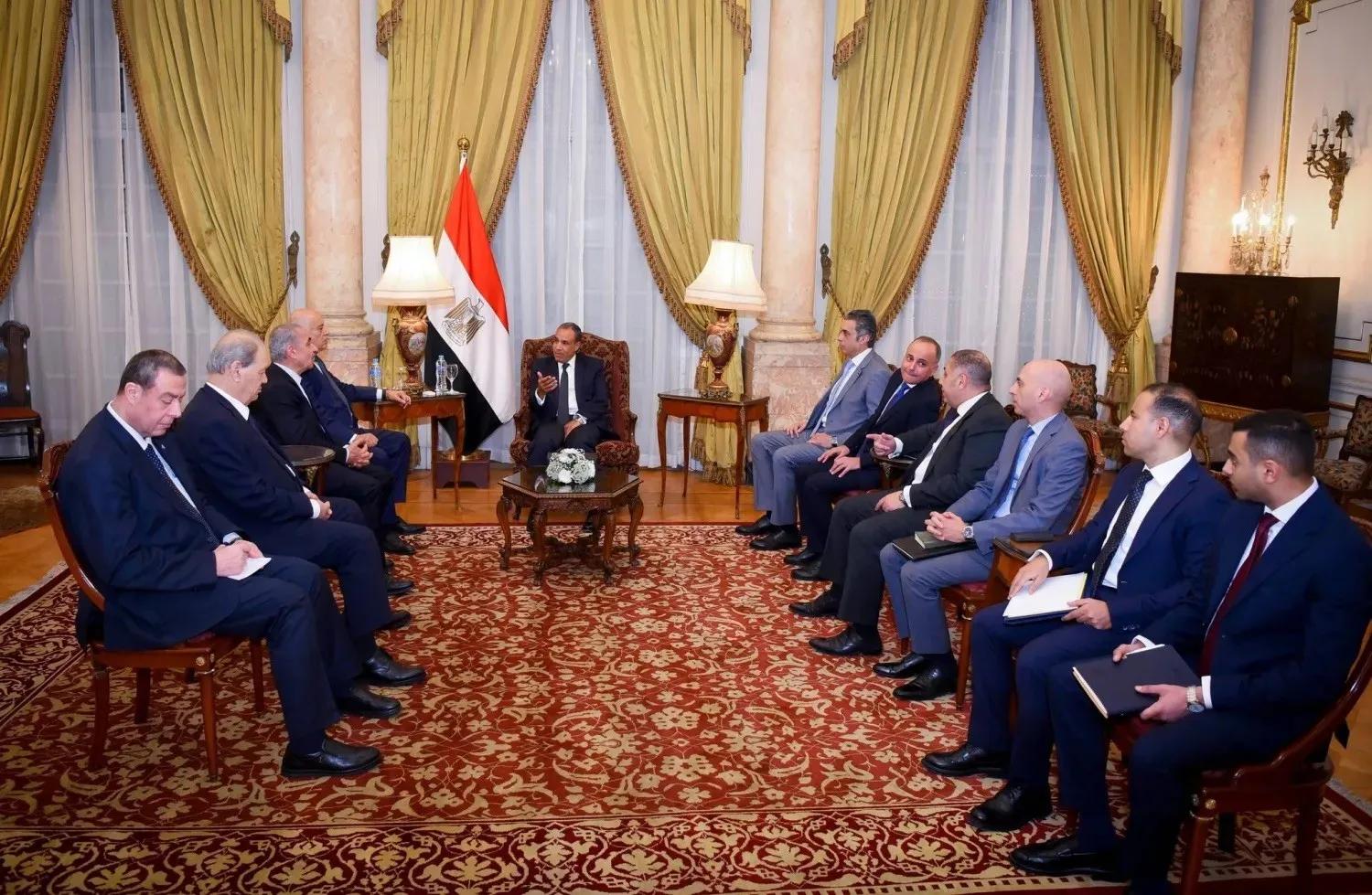
Egyptian officials held talks with Palestinian leaders on August 25 as Cairo pushed for action on Gaza and a wider peace plan. The meeting came as Egypt sought more pressure on Israel to allow aid into Gaza and carry out steps linked to a US backed plan.
Foreign Minister Badr Abdelatty met Palestinian Vice President Hussein Al Sheikh in El Alamein on August 24. Their talks were reported on August 25. They covered the crisis in Gaza, the West Bank, and the path toward Palestinian rule in Gaza.
Egypt said the Gaza crisis remains severe. Abdelatty called for stronger international pressure on Israel. He said aid should enter Gaza without barriers. He also called for Israeli withdrawal steps that would help the Palestinian Authority return to its role in Gaza.
The talks also focused on the West Bank. Egyptian officials raised concern over settler attacks and the growth of Israeli settlements. They also discussed reported violations at Christian and Muslim holy sites in East Jerusalem.
Cairo again stressed the need to keep Gaza and the West Bank as one Palestinian territory. Egypt said it supports a political path to an independent Palestinian state based on the 1967 borders, with East Jerusalem as its capital.
The meeting has wider meaning because Egypt remains a key link between the Arab world, Palestinian leaders, Israel, the United States, and other regional powers. Cairo has long played a role in efforts to limit the Gaza war and move the sides toward a political deal.
The new talks also came as Egypt continued to send aid toward Gaza. On August 25, the Egyptian Red Crescent sent its 264th aid convoy. The convoy carried more than 81,000 food parcels, along with flour, medicine, relief items, and fuel. The scale of the shipment showed the size of the needs facing civilians in Gaza.
For Egypt, aid is only one part of the wider issue. Cairo also wants a clear political plan for what comes after the war. Egyptian officials have argued that the Palestinian Authority should be able to take full responsibility in Gaza. They have also rejected steps that could divide Gaza from the West Bank.
The talks are closely linked to US efforts to advance a new peace plan. Egypt has worked with regional partners to keep communication open. Yet major gaps remain over the order of Israeli withdrawal, Palestinian governance, security, and the future role of armed groups in Gaza.
The August 25 discussions did not announce a final deal. Instead, they showed that Cairo is still trying to shape the next stage of the conflict. Egypt wants aid to move faster, violence to fall, and a political process to remain alive.
The West also has a direct interest in the outcome. A stable Gaza would reduce pressure on nearby states and could help ease risks across the wider Middle East. It could also support trade and travel links through the region. For Egypt, a workable peace plan could reduce pressure on its border and support long term regional stability.
The meeting also underlined Egypt’s concern about the West Bank. Cairo sees the unity of Palestinian territory as a key part of any lasting settlement. It has warned against actions that could create a new reality on the ground.
As talks continue, Egypt faces a hard task. It must balance ties with the United States and Arab partners while keeping contact with Palestinian leaders and other regional actors. Cairo also has to respond to the urgent need for aid while pressing for a political answer.
Egypt also wants a clear role for Palestinian institutions after the fighting, not only a short term pause in violence. That goal remains central to Cairo’s wider diplomatic effort.
The August 25 talks therefore placed Egypt back at the center of a major Middle East question. The next test will be whether diplomatic pressure can turn calls for aid and withdrawal into steps on the ground.
