


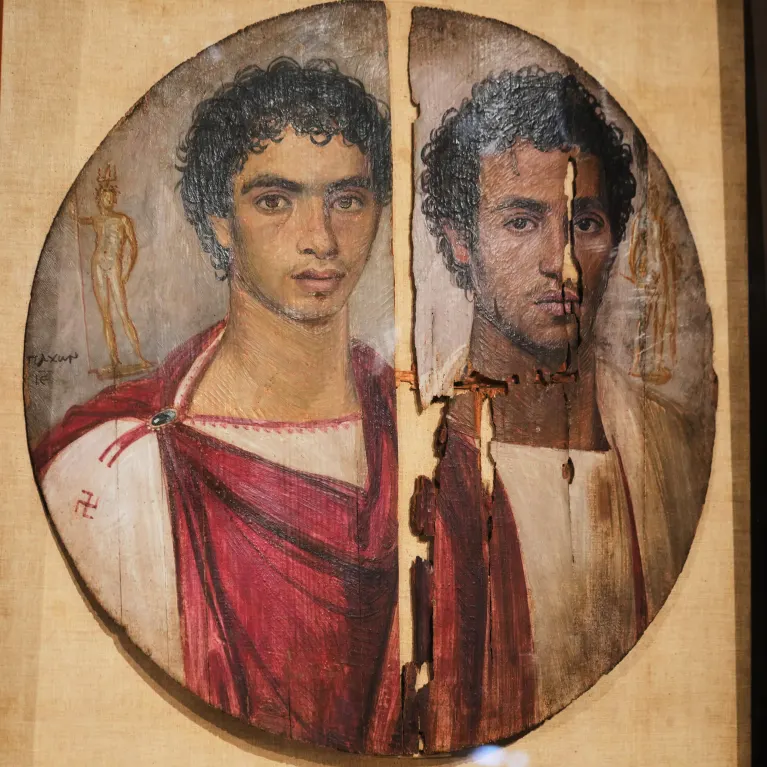
Egypt has unveiled a restored ancient painting known as the Tondo of the Two Brothers, highlighting efforts to protect the country’s historic collections. The second-century artwork belongs to the celebrated Fayoum mummy portraits, which combine Egyptian funerary traditions with artistic influences from the Greco-Roman world. The restoration involved specialists from Rome and conservators at the Egyptian Museum in Tahrir, Cairo. Their work aimed to recover important details while protecting a fragile object that has survived for nearly two thousand years.
Fayoum portraits were generally painted on thin wooden panels and placed over the faces of the dead within mummy wrappings. They offer valuable evidence of artistic practices and cultural exchange during the period when Egypt was part of the Roman world. The Tondo is unusual because of its circular form and its depiction of two brothers. Over time, damage caused by termites and the delicate condition of the painted surface made careful restoration necessary. Specialists worked together for three weeks to improve the artwork’s condition and recover visible features.
Egypt plans to lend a major part of the collection for a temporary exhibition in Rome, marking the first time these portraits will travel abroad as part of such a presentation. The exhibition is scheduled to run from November 2026 to May 2027 and is expected to include more than 110 objects. The collection will allow international visitors to explore ancient funerary practices and the artistic traditions that developed in Egypt under Roman rule.
Officials have described the restoration as an example of international cooperation in cultural preservation. Such projects require specialist knowledge because aggressive cleaning or poorly chosen materials can cause lasting damage to ancient objects. Conservators must balance the need to improve visibility with the responsibility to preserve original details.
The planned exhibition also offers an opportunity to share Egypt’s cultural heritage with a wider audience. Museums can help people understand how societies interacted across borders and how artistic styles changed over time. For Egypt, protecting these portraits supports historical research while strengthening the international profile of its archaeological collections.
