


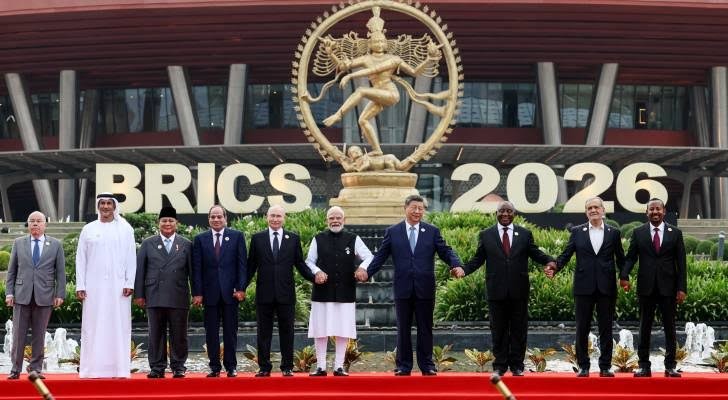
Egypt BRICS UN Security Council support became official this week as Cairo backed a joint declaration from the bloc’s leaders. The declaration calls for reform of the United Nations Security Council, a body many emerging economies say no longer reflects today’s world. It also pushes for wider use of local currencies in trade and stronger Global South representation on world stages.
Egyptian officials joined counterparts from across the BRICS bloc in signing the declaration during recent summit meetings. The document argues that permanent Security Council seats, largely unchanged since the mid twentieth century, fail to represent large parts of Africa, Asia, and Latin America fairly. Egypt has long argued that Africa in particular deserves a stronger voice on the council.
Security Council reform has been debated at the United Nations for decades without a breakthrough. Any changes require approval from existing permanent members, several of whom have shown little appetite for giving up their current influence. Egyptian diplomats say persistent pressure from blocs like BRICS keeps the issue alive even when formal progress stalls.
The push for wider local currency trade forms another central piece of the declaration. BRICS nations have increasingly explored using their own currencies for trade among themselves rather than relying solely on the US dollar. Egyptian officials say this shift could reduce exposure to currency swings tied to decisions made far outside their control.
Analysts note that Egypt’s economy has faced real pressure from currency volatility in recent years. Officials in Cairo see local currency trade arrangements as one practical tool to help stabilize import costs for essential goods. Still, experts caution that shifting away from dollar dominance will likely take many years, even among motivated blocs like BRICS.
Stronger Global South participation in global decision making rounds out the declaration’s main goals. Egyptian officials frame this push as part of a broader argument that international institutions built after World War Two need updating for a more multipolar world. They point to shifting economic weight toward Asia and Africa as reason enough for structural change.
Egypt joined BRICS relatively recently compared to founding members like Brazil, Russia, India, China, and South Africa. Since joining, Cairo has used its seat actively, raising regional issues like Gaza alongside these broader structural reform goals. Officials say this dual approach lets Egypt address urgent crises while also shaping longer term global governance debates.
Some Western governments have expressed skepticism about the practical impact of BRICS declarations like this one. Critics argue that the bloc includes countries with very different interests, making unified action difficult beyond symbolic statements. Egyptian officials counter that shared statements still carry diplomatic weight, even without immediate binding power.
Domestic reaction within Egypt to the declaration has been largely supportive among officials and state aligned commentators. Few expect the Security Council reform push to yield quick results given the well known resistance from existing permanent members. Still, many see value in Egypt positioning itself clearly on the side of institutional change.
Looking ahead, Egyptian diplomats say they will keep raising these themes at future international gatherings. They argue that consistent, repeated pressure from a wide coalition of nations offers the best chance of eventually shifting entrenched positions. For now, the declaration stands as a marker of where Cairo and its BRICS partners want global governance to head next.
African partners have generally welcomed Egypt’s active role in pushing Security Council reform on behalf of the wider continent. Several African leaders have long argued that the continent deserves permanent representation on the council, given its large population and growing economic weight. Egyptian officials say they see this advocacy as consistent with their broader ambition to serve as a bridge between Africa and other global blocs.
Diplomatic observers note that declarations of this kind, while not legally binding, can still shape long term conversations within international institutions. Repeated calls from large coalitions of nations sometimes build momentum that eventually forces incremental change, even when immediate results remain elusive. Egyptian officials appear to be betting on this slower, more patient approach to eventually shifting the balance of global governance.
