


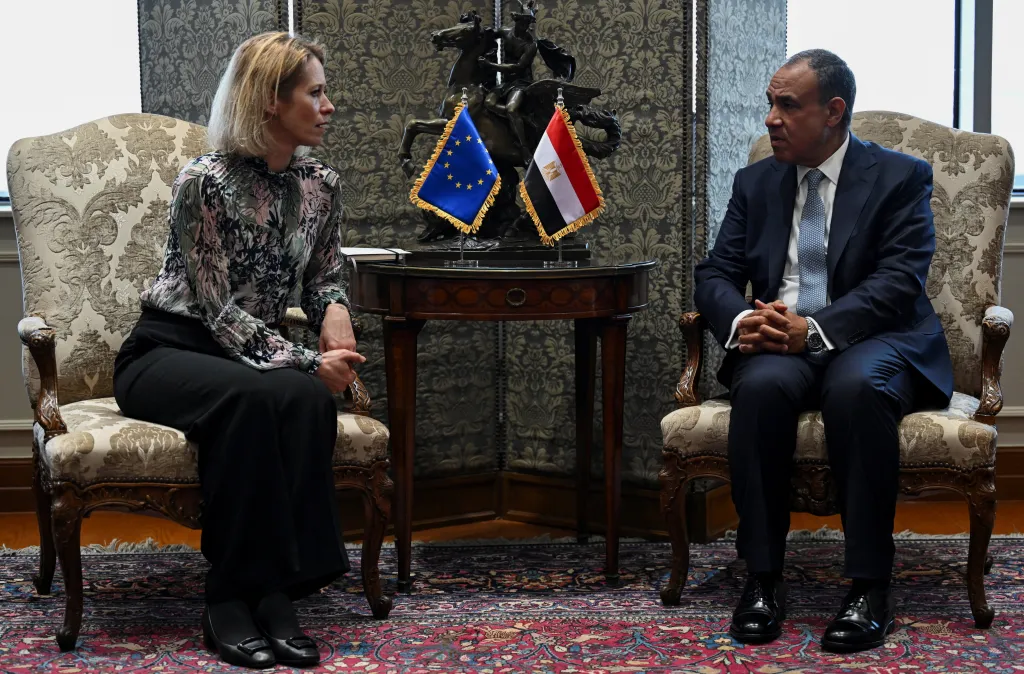
Egypt press freedom EU relations are under renewed scrutiny after international rights groups urged European leaders to take a stronger stance on human rights conditions in Egypt.
The Committee to Protect Journalists, Committee to Protect Journalists, joined 14 other press freedom and human rights organizations in calling on the European Union to pressure Egypt over its record on media freedom, democracy, and the rule of law.
The appeal comes ahead of the EU-Egypt Association Council meeting scheduled for June 15. The groups argue that Egypt has not shown meaningful progress on human rights reforms, despite such improvements being a key condition tied to a €5 billion macro-financial assistance package provided by the EU.
The assistance package, worth about $5.75 billion, was designed to support economic stability in Egypt while encouraging governance reforms. However, rights organizations now say the expected progress has not been achieved.
One of the central concerns raised is the continued imprisonment of journalists in Egypt. According to the statement, at least 18 journalists were behind bars in 2025, placing the country among the world’s highest jailers of media workers.
The report also highlights what it describes as a broader pattern of retaliatory arrests. These include detentions of journalists and, in some cases, pressure or legal action against their family members.
The groups cited recent cases to illustrate ongoing concerns. One example is the sentencing of political commentator Ahmed Douma on June 3, who received a one-year prison term over comments related to prison conditions in Egypt.
Rights organizations argue that such cases reflect restrictions on freedom of expression and increasing pressure on critical voices in the country’s public space.
The statement urges the European Union and its member states to use the upcoming Association Council meeting as an opportunity to address these concerns directly with Egyptian authorities.
It also calls for human rights benchmarks to be clearly reflected in the European Commission’s upcoming annual report on the implementation of the macro-financial assistance program for Egypt.
The EU’s financial support mechanism is intended to strengthen economic resilience while also promoting governance reforms and respect for democratic principles.
However, critics argue that enforcement of these conditions has been inconsistent, allowing concerns over press freedom and civil liberties to persist.
European Union officials are expected to assess Egypt’s progress during the upcoming meeting, which could influence future cooperation and financial disbursements.
Human rights groups say stronger accountability measures are needed to ensure that financial assistance is linked more effectively to measurable reforms.
They argue that continued funding without sufficient progress risks undermining the credibility of EU human rights commitments.
At the center of the debate is the balance between geopolitical cooperation and rights-based conditionality in EU foreign policy, particularly in strategically important regions such as North Africa.
Egypt remains a key partner for the EU on issues including migration, regional security, and economic cooperation, making the relationship both politically and strategically significant.
However, rights organizations insist that cooperation should not come at the expense of press freedom and civil liberties.
They are calling for clearer benchmarks, regular monitoring, and stronger consequences if agreed reforms are not implemented.
As the June 15 meeting approaches, attention is now focused on whether EU officials will publicly address the concerns raised or maintain a more cautious diplomatic approach.
The outcome of the discussions could shape future EU-Egypt relations, particularly regarding funding conditions and human rights expectations.
For now, Egypt press freedom EU tensions continue to highlight the ongoing debate over how international partners should respond to rights concerns while maintaining strategic alliances.
