


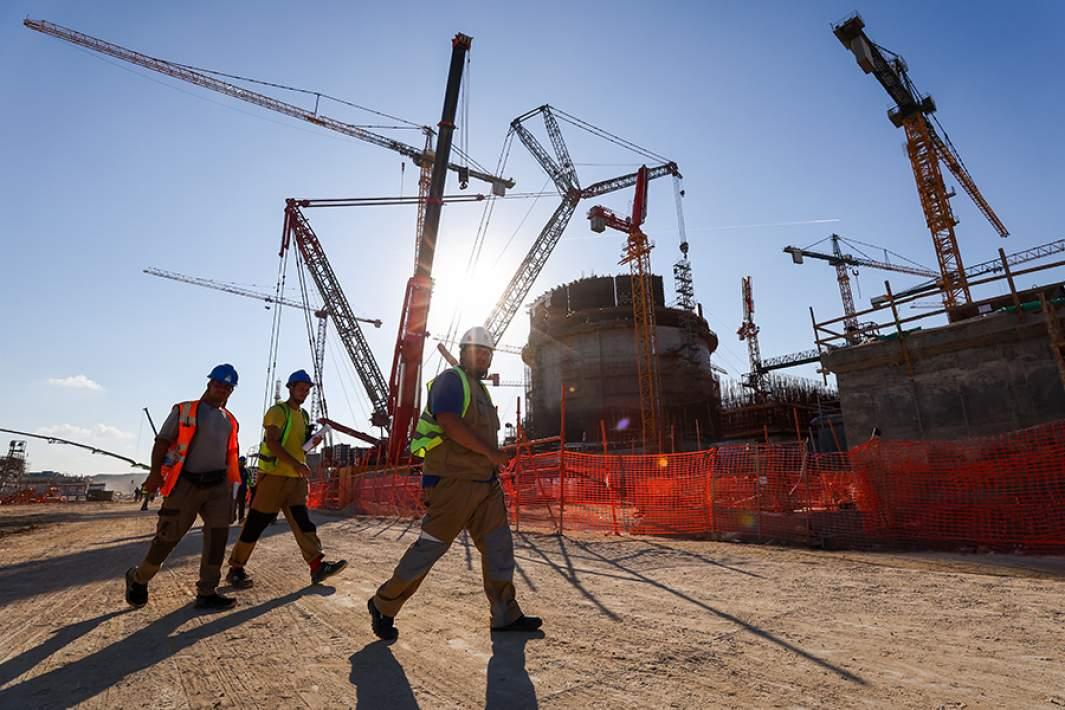
Egypt and Russia discussed a possible expansion of the El Dabaa nuclear power plant on August 25, putting energy security and long term cooperation at the center of a major new deal. The talks could add two more power units to Egypt’s first nuclear plant, though no final agreement was announced.
Egyptian Electricity and Renewable Energy Minister Mahmoud Esmat met Rosatom chief Alexey Likhachev in Russia. They reviewed progress at El Dabaa and discussed wider work in advanced nuclear energy. The possible addition of two more units was reported after the meeting.
The current El Dabaa project has four planned reactors. They are being built on Egypt’s Mediterranean coast in Matrouh. The plant is designed to give Egypt a new source of steady power and reduce some pressure on its gas and oil system.
The reported expansion would mark a major step in Egypt’s nuclear plans. If approved, more reactors would increase the plant’s future power output. They could also deepen Russia’s role in Egypt’s energy sector for many years.
Egypt has worked with Russia on El Dabaa since a major agreement was signed in 2015. The project uses Russian reactor technology and Russian support. The work includes reactor construction, fuel support, training, and other services linked to the plant.
The four current reactors are designed to produce about 1,200 megawatts each. Together, they would provide about 4,800 megawatts of capacity. That could become a useful part of Egypt’s power mix as demand rises.
The August 25 talks also included wider cooperation on small and advanced reactors. These technologies are being studied in many countries. They can offer new options for power supply, industry, and water needs. Egypt has strong demand for electricity and also faces pressure on water resources.
The talks have a wider global meaning. Russia has used nuclear power projects to build long term economic ties with other states. Egypt, meanwhile, is seeking more energy options as it works to support growth and protect its power system.
The project also has a strong link to the West and the wider Middle East. Egypt sits near the Suez Canal, a key trade route between Europe and Asia. Stable power can support ports, factories, transport systems, and other industries that depend on steady energy.
The possible expansion comes as Egypt also works to improve oil and gas output. President Abdel Fattah El Sisi met officials and the head of Italian energy firm Eni on August 25 to review crude oil and natural gas production. That shows Cairo is not replacing one energy source with another. Instead, it is trying to build a wider energy mix.
For Egypt, nuclear power offers one major benefit. A nuclear plant can produce electricity day and night. It does not depend on daily fuel imports in the same way as gas fired plants. This can help support long term planning.
Still, nuclear projects need large funds and long construction periods. They also need strong safety rules, skilled staff, and careful waste planning. Any expansion at El Dabaa would therefore require more work before it becomes a confirmed project.
The August 25 talks were important because they showed that Egypt and Russia are looking beyond the first four reactors. Yet the reported two extra units should not be treated as a final decision. Officials have discussed the idea, but a formal deal and clear construction plan would be needed before work could begin.
The decision will also be watched by investors, energy firms, and governments across the Middle East. The project could affect future energy planning in Egypt and shape the country’s long term ties with Russia.
The next steps will matter for both sides. Egypt will want strong power output and value from its investment. Russia will want to keep a major nuclear project in a key regional state.
If the expansion moves forward, El Dabaa could become one of the largest symbols of Egypt’s long term shift toward nuclear energy. It could also strengthen the energy link between Cairo and Moscow while giving Egypt another tool to meet rising power needs.
