


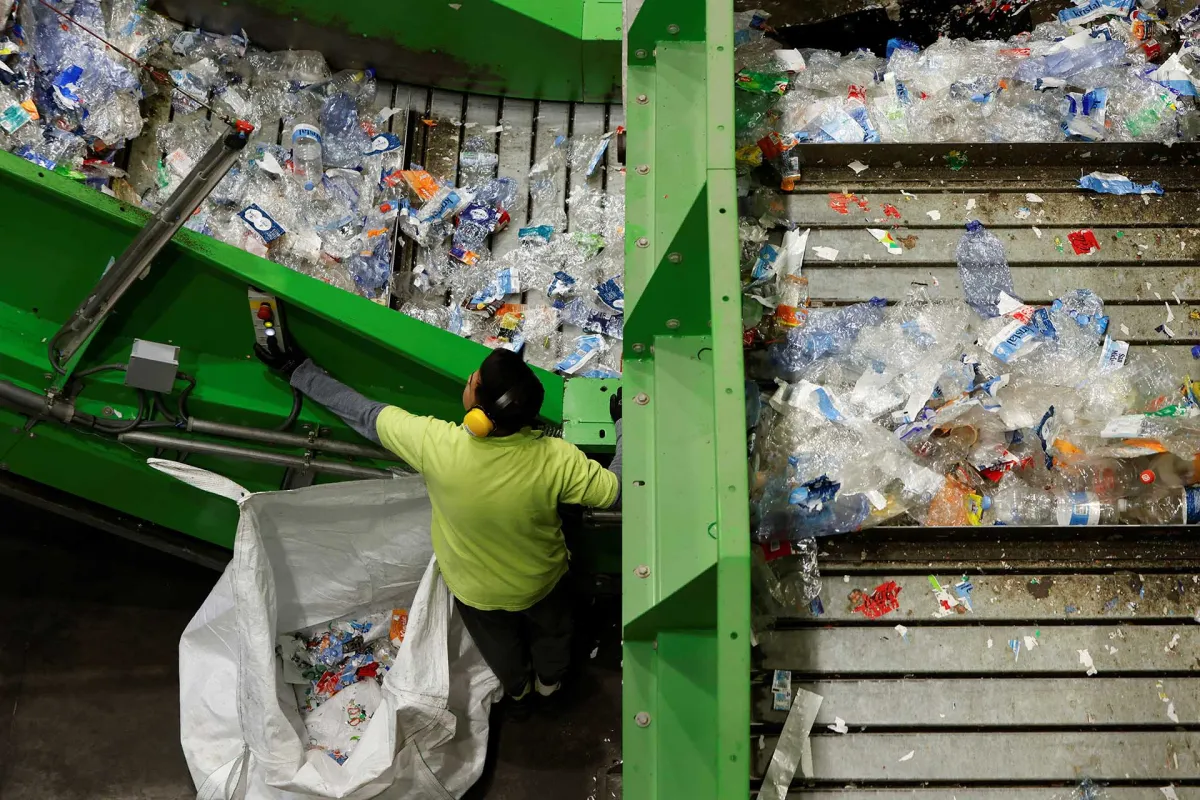
Egypt’s recycling industry is seeing a sharp rise in demand as manufacturers increasingly turn to locally processed plastic materials following supply disruptions linked to tensions around the Strait of Hormuz. The growing Egypt Plastic Recycling Boom has created new business opportunities for recyclers and manufacturers across the country.
At the center of this growth is Manshiyet Nasser, widely known as Cairo’s “Garbage City.” The neighborhood has long been home to one of the world’s largest informal recycling networks, where thousands of residents collect, sort, and process waste into reusable materials.
Recyclers say demand has changed dramatically in recent weeks. Instead of searching for buyers, many are now receiving direct calls from factories looking for immediate supplies of recycled plastic.
Peter Romany, a recycling specialist who processes recycled polyethylene, said manufacturers have become increasingly eager to secure local materials. Polyethylene is one of the world’s most commonly used plastics and is widely used in packaging products.
Industry experts say the increased demand follows disruptions to the global supply chain after tensions involving the United States and Iran affected shipping through the Strait of Hormuz. The waterway is one of the world’s most important trade routes for petrochemical products used in plastic manufacturing.
According to industry data, a large share of Middle Eastern polyethylene exports normally passes through the Strait of Hormuz. Supply uncertainty has encouraged Egyptian manufacturers to seek alternative sources closer to home.
Egypt imports around 40 percent of its raw plastic materials from Gulf countries, Europe, China, and South Korea. As imported supplies became less predictable, many factories shifted toward recycled plastic produced within Egypt.
Businesses across the recycling sector reported strong growth. Some manufacturers said prices for certain recycled plastic materials increased significantly as demand rose. Several companies also reported receiving advance payments from customers seeking to secure available supplies.
Rizq Yousif, who specializes in recycling PET plastic commonly used in beverage bottles and food packaging, said demand for his products has increased sharply. He also reported higher prices for recycled materials during the recent period of supply pressure.
The increased activity has benefited manufacturers that convert recycled plastic into new products. Companies producing packaging materials and polyester fibers have reported stronger domestic demand while also expanding exports to international markets.
One manufacturer said the recent market conditions helped the company reach new overseas customers, including buyers in Brazil. Other businesses supplying recycled packaging materials reported a noticeable increase in orders from food and beverage producers seeking reliable alternatives to imported raw materials.
Manshiyet Nasser continues to play a vital role in Egypt’s recycling system. Government figures estimate the community processes more than one-third of Cairo’s waste. Families often live and work in the same buildings, where recyclable materials such as plastic, cardboard, paper, metal, and glass are sorted before being sold to factories.
Despite the recent gains, industry participants believe market conditions could change if global supply chains return to normal. Some recyclers reported that demand briefly slowed after signs of easing tensions between the United States and Iran.
However, renewed geopolitical developments have once again increased uncertainty around shipping routes, leading to another rise in customer inquiries. Industry representatives say manufacturers continue to monitor the situation closely while maintaining strong interest in locally available recycled materials.
The recent Egypt Plastic Recycling Boom highlights the growing importance of domestic recycling capacity during periods of international supply disruption. While future demand will depend on global trade conditions, Egypt’s recycling sector has demonstrated its ability to support local manufacturing and provide alternative sources of essential raw materials during times of market uncertainty.
