


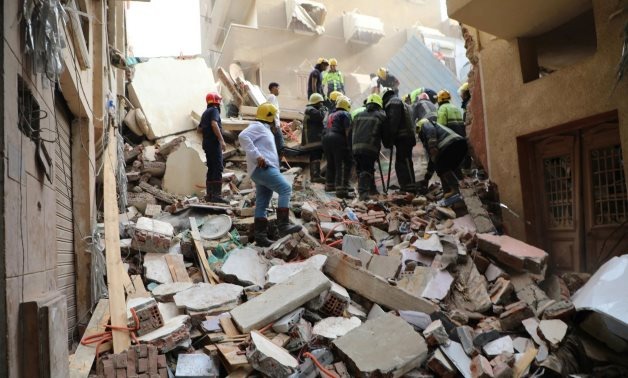
Six people, including three children, died after a residential building collapsed in Cairo’s Hadayek El-Qobba district on Tuesday, October 13. Egypt Today reported the fatalities on Wednesday, October 14, 2026, saying seven injured people had been taken to hospital. The tragedy has renewed attention on the safety of older buildings and the need to identify structures that may pose risks to residents.
The building was an old structure dating from the 1950s. It had a ground floor and four upper floors and was located off Teret El-Gabal Street in Hadayek El-Qobba. Civil protection teams, ambulances and security officials went to the scene after the collapse. Cairo Governor Ibrahim Saber also attended as authorities began rescue operations and arranged for the site to be examined.
The six people who died included children aged 13, nine and two, along with two women and a man in their sixties. The building’s owner was also among the dead, according to the report. The loss of young lives has made the incident particularly distressing for the local community. Families living in nearby buildings were left waiting for information as emergency teams worked and investigators began assessing what had happened.
Authorities ordered an engineering committee to examine neighbouring buildings and determine whether the collapse had affected their safety. Officials also said debris would be removed after the public prosecution and criminal investigation teams completed their work at the site. These steps are important because a collapse can damage nearby structures or reveal problems that were not visible before the incident.
Investigators are expected to establish the cause of the collapse. Older buildings can face different risks, including structural deterioration, unapproved alterations, poor maintenance or damage caused over time. However, the precise cause cannot be determined from the building’s age alone. A technical inspection and evidence collected during the investigation will be needed before officials can explain why the structure failed.
The incident highlights the challenges faced by densely populated cities where old residential buildings remain in use. Residents may not always know whether a building has structural problems, and visible cracks do not necessarily tell the full story. Regular inspections, clear reporting channels and timely repairs can help authorities identify dangerous conditions before they become emergencies.
Safety programmes can also be difficult to carry out because repairs may be expensive and residents may have limited options for temporary housing. Officials must balance urgent safety measures with the practical needs of families who depend on their homes. Where buildings are judged unsafe, clear communication and appropriate support are important to prevent residents from returning to dangerous structures.
The collapse has left families grieving and raised questions about how older buildings are monitored. The investigation should help clarify what happened and whether warning signs were missed. Its findings may also inform decisions about inspections and repairs in other parts of Cairo.
For residents, the immediate priority is safety around the damaged site and nearby buildings. For local authorities, the wider task is to identify risks before another tragedy occurs. The incident is a reminder that building maintenance and enforcement are not only technical matters; they are essential parts of protecting communities and preventing avoidable loss of life.
