


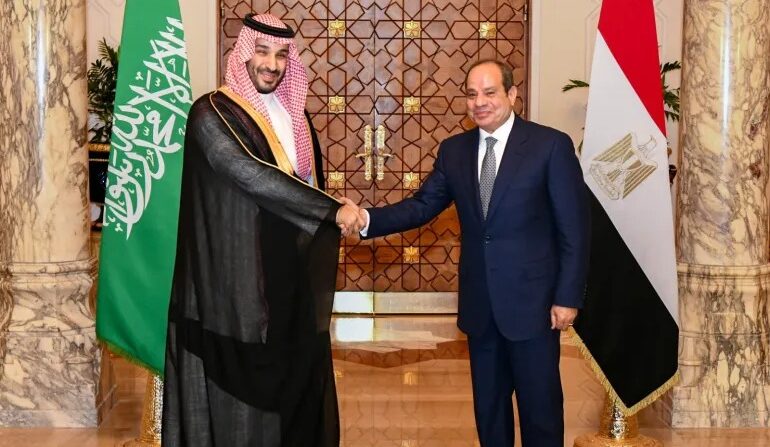
Egypt condemned attacks targeting Saudi Arabia and reaffirmed its solidarity with the kingdom after a ballistic missile was intercepted near Riyadh. Cairo issued its position on Sunday, September 20, following the attempted attack on Saturday. The incident came during a wider escalation involving Yemen’s Houthi movement and Saudi security concerns.
Saudi authorities said Yemen’s Houthi rebels attempted to strike Riyadh with a ballistic missile. The Saudi-led coalition reported that the missile was intercepted and that there were no reported casualties or major damage in the capital. Residents nevertheless reported hearing an explosion and seeing smoke in the area around Riyadh’s airport.
Saudi officials also reported attempts to target other locations, including civilian infrastructure. The Houthis claimed they had targeted sensitive sites in Riyadh and facilities linked to Saudi oil company Aramco, but the claims were not independently verified. The Saudi statement said the attacks were thwarted.
Egypt’s response reflects its close political and security relationship with Saudi Arabia. The two countries frequently coordinate on major Arab and regional issues. Cairo has also repeatedly called for regional stability and for conflicts to be contained so that fighting does not spread into neighboring states.
The latest attack is important because Riyadh is a major political and economic center. The Saudi capital contains government institutions, businesses and transport infrastructure. Any successful missile or drone strike could therefore have effects beyond the immediate security situation, particularly if it damaged important facilities or affected investor confidence.
The wider conflict also has economic implications. Saudi Arabia is a major oil producer, while the Red Sea is an important route for international trade. Continued attacks on infrastructure or shipping can increase risks for energy markets, transport companies and businesses that depend on stable routes between Asia, Africa and Europe.
For Egypt, the issue is especially important because the country depends heavily on the stability of the Red Sea and the Suez Canal. Any prolonged regional disruption can affect shipping, tourism, fuel markets and government revenues. Cairo therefore has strong economic as well as diplomatic reasons to support efforts that reduce regional tension.
The missile interception prevented an immediate disaster in Riyadh, according to Saudi authorities. However, repeated attacks can place pressure on air defenses and increase the risk of escalation. Governments across the region are watching closely to see whether the latest exchange leads to further attacks or renewed diplomatic efforts.
Egypt’s statement places Cairo behind Saudi Arabia while emphasizing the need for stability. The coming days will show whether the security situation improves or becomes more serious. For now, the attempted Riyadh strike has added another layer of tension to an already unstable regional environment, with Egypt calling for solidarity and restraint.
Egypt’s statement also reflects the importance of Saudi stability for the wider Arab region. Riyadh is a central player in regional diplomacy, energy markets and trade. Cairo has an interest in maintaining close contact with the kingdom because instability can affect neighboring countries even when attacks do not directly reach Egyptian territory.
The Red Sea dimension is especially important for Egypt. The Suez Canal depends on secure maritime traffic, and disruptions can reduce the number of ships using the route or increase insurance and transport costs. A prolonged security crisis around the Red Sea could therefore create economic pressure well beyond the countries directly involved in the fighting.
Cairo’s response is likely to remain focused on regional stability and support for its partners. The attempted strike on Riyadh has not produced reported major damage, but it adds to a growing list of security concerns. Egyptian officials will continue watching developments closely because the outcome could affect diplomacy, trade and regional security.
The latest development will also be watched in Cairo because regional security can quickly affect Egypt’s economic interests. The government has strong reasons to support the protection of Saudi infrastructure and the safety of Red Sea routes. Officials are likely to continue emphasizing restraint and cooperation while monitoring whether the fighting produces further risks for neighboring countries.
