


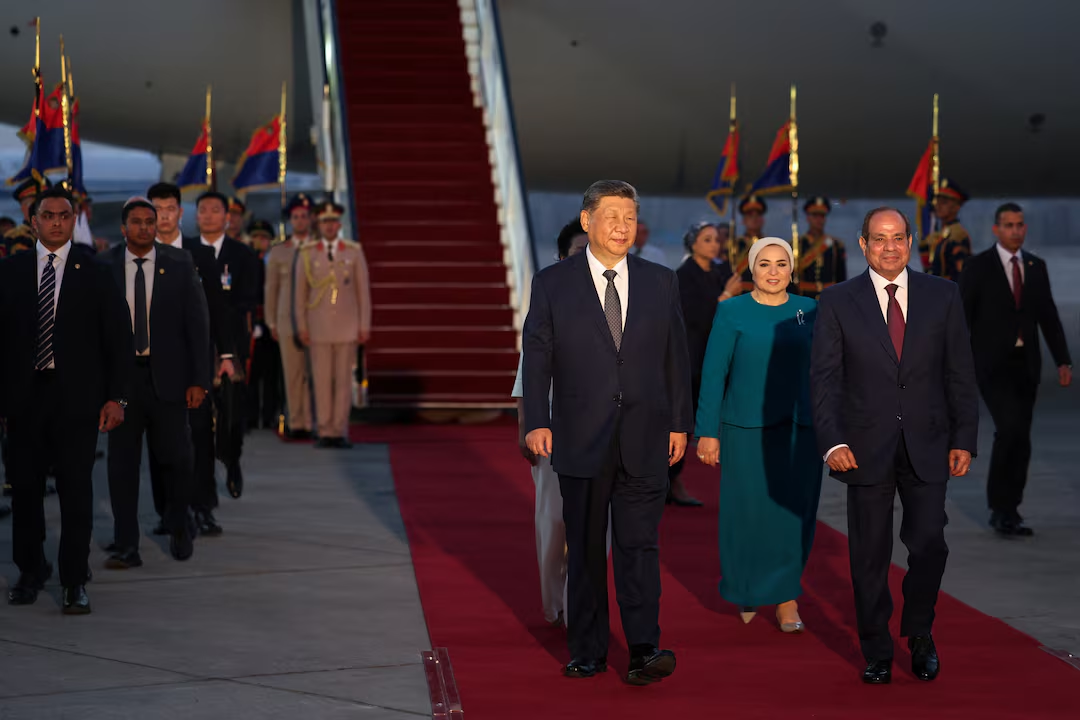
Chinese President Xi Jinping landed in Cairo this week for his first visit to Egypt in ten years, arriving for a two day trip that marks a major moment in relations between the two countries. Egyptian President Abdel Fattah al Sisi and the First Lady welcomed Xi and his wife at Cairo International Airport, where children waved flags from both nations and crowds gathered to greet the visiting leader. The reception reflected the depth of ties between the two countries built up over decades.
The visit lands at a sensitive moment for the wider region. Tensions between the United States and Iran have escalated sharply in recent weeks, raising fears of wider instability that could affect trade routes and energy markets across the Middle East. Xi’s trip comes just after US authorities placed sanctions on a branch of one of Egypt’s major banks over alleged ties to Iran, adding extra weight to talks between the two leaders. In a published article ahead of the trip, Sisi stressed that Egypt intends to keep strong ties with both Washington and Beijing, describing the approach as a matter of independent foreign policy.
Trade between the two countries has grown quickly in recent years. Data from Egypt’s statistics agency shows exports to China nearly tripled in the first half of this year compared with the same period last year, while imports from China remained many times larger than exports moving the other way. Much of the Chinese investment flowing into Egypt has focused on the area surrounding the Suez Canal, a critical passage for trade between Asia and Europe. A large industrial zone near the canal, built as part of China’s global infrastructure investment program, now hosts around two hundred companies with billions of dollars in combined investment.
During the two day summit, the leaders are expected to sign a series of economic agreements covering trade, artificial intelligence, transport, and energy cooperation. Officials from both sides say the talks will also address regional security concerns tied to the ongoing conflict between the United States and Iran, along with the potential impact on shipping routes vital to global trade. Egypt has a strong interest in these discussions given how much its economy depends on canal traffic and stable regional conditions.
Sisi has praised China’s role as a key economic partner, noting that direct investment from Chinese firms has grown steadily since the two countries established a comprehensive strategic partnership more than a decade ago. He also highlighted China’s recognition of the importance of the Nile River to Egypt, a sensitive issue tied to ongoing disputes with upstream nations over water rights. Sisi called for continued cooperation based on mutual benefit rather than actions taken without consultation among the countries that rely on the river.
This marks Xi’s first visit to Egypt since 2016, even though Sisi has traveled to China eight times since taking office in 2014, reflecting a relationship that has grown steadily even without frequent visits from the Chinese side. The trip also falls near the seventieth anniversary of formal diplomatic relations between the two nations, adding symbolic weight to the visit beyond its immediate economic and security discussions.
Analysts watching the visit say it signals China’s growing interest in expanding its footprint across the Middle East and North Africa, a region where Beijing has steadily increased investment in ports, energy projects, and infrastructure over the past decade. For Egypt, deeper ties with China offer a path to diversify economic partnerships beyond traditional Western allies, even as the country works to maintain its long standing relationship with the United States.
As the summit continues, attention will focus on what concrete agreements emerge and how they might shape the region’s economic and security landscape at a time when tensions elsewhere in the Middle East remain high and unpredictable.
