


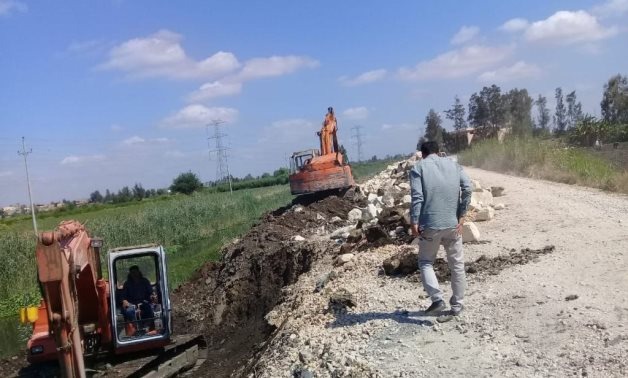
Egypt’s Minister of State for Military Production, Salah Soliman Gambalat, has called for faster implementation of projects under the presidential “Decent Life” initiative, stressing that the program remains one of the country’s highest development priorities.
The minister made the remarks during a meeting at the Ministry of Military Production headquarters in the New Administrative Capital. The session brought together chairpersons of affiliated companies responsible for implementing projects linked to the nationwide rural development initiative.
The meeting focused on reviewing the current status of ongoing works, assessing completion rates, and evaluating timelines for unfinished projects. Officials also discussed measures needed to accelerate execution and ensure projects become operational according to planned schedules.
Gambalat said the Decent Life Projects Progress is receiving direct attention from President Abdel Fattah El-Sisi because of its importance in improving living standards and expanding access to essential services for citizens.
According to the minister, the initiative represents the largest rural development program in Egypt’s history. He described it as a key part of the government’s strategy to achieve sustainable development and improve conditions in villages across the country.
The Decent Life initiative aims to upgrade infrastructure, strengthen public services, and enhance economic opportunities in rural communities. Officials view the program as a major step toward reducing development gaps between urban and rural areas.
During the meeting, Gambalat highlighted the role played by the Ministry of Military Production in supporting the initiative. He explained that the ministry contributes through its industrial network by supplying equipment and products required for development projects.
These contributions include water pumps, power generators of different capacities, and electrical control panels used in infrastructure and service projects. The minister said relying on local manufacturing helps increase domestic production, reduce dependence on imports, and generate financial savings for the state.
Officials noted that significant progress has already been achieved in many project locations. However, Gambalat stressed that additional efforts are needed to complete remaining works within the approved timelines.
He instructed affiliated companies to intensify coordination with all relevant authorities and quickly address any operational challenges that may slow implementation. The minister emphasized that obstacles should be resolved immediately to prevent delays and maintain project momentum.
A major focus of the meeting was ensuring accountability among contractors involved in the initiative. Gambalat issued a strong warning to companies that fail to meet contractual obligations or fall behind schedule.
He stated that the ministry will not tolerate poor performance or failure to comply with technical standards. Legal measures, including contract termination and reassignment of projects to more capable contractors, may be taken when necessary.
At the same time, the minister affirmed that the government remains committed to supporting contractors facing legitimate operational difficulties. He said assistance will be provided where needed to help ensure projects are completed efficiently and to the required quality standards.
The minister stressed that maintaining high construction and service standards remains essential as the initiative moves toward completion. He noted that successful project delivery is critical to achieving the broader goals of improving living conditions and expanding access to modern services.
Gambalat also directed officials to increase field monitoring activities. He called for regular site inspections to track progress, identify potential challenges, and ensure construction activities continue according to approved plans.
The minister urged stronger cooperation between implementing companies, executive agencies, and consulting bodies. Enhanced coordination, he said, will help projects move forward more smoothly and allow facilities to begin serving local communities on schedule.
Government officials continue to view the initiative as a cornerstone of Egypt’s development agenda. The program covers a wide range of sectors, including infrastructure, utilities, healthcare, education, and community services.
Supporters of the initiative say it has the potential to improve the lives of millions of residents by expanding access to clean water, reliable electricity, transportation services, healthcare facilities, and educational opportunities.
The latest directives reflect the government’s determination to maintain momentum and ensure that all planned projects are completed as quickly as possible. Officials believe the success of the initiative will contribute significantly to long-term economic and social development.
As implementation continues across multiple governorates, the Decent Life Projects Progress remains a central focus for policymakers seeking to deliver improved services and stronger infrastructure for rural communities throughout Egypt.
