


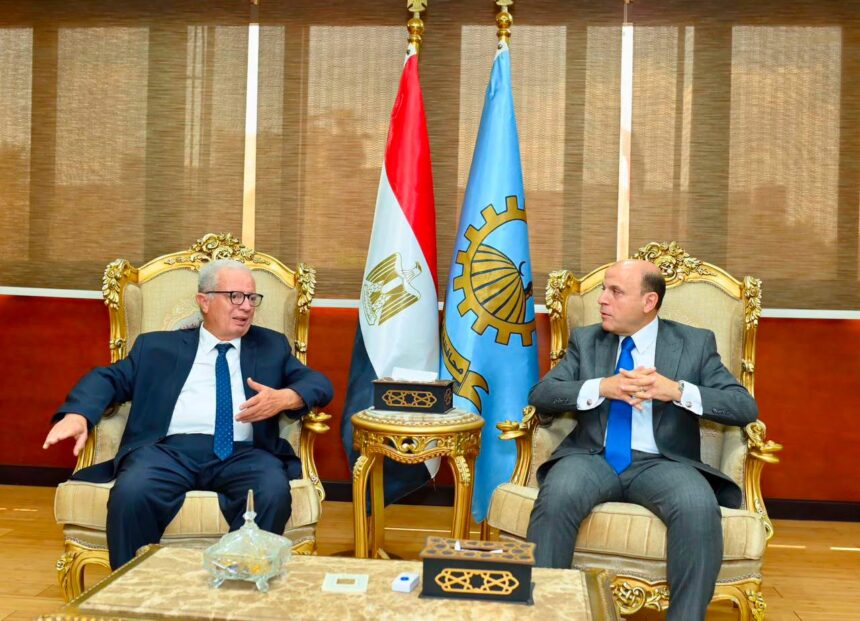
Egypt is continuing to accelerate industrial and economic development efforts as the government works to expand production, attract investment, and create jobs across the country. Deputy Prime Minister for Economic Affairs Hussein Eissa said industry remains one of the most important drivers of economic growth and plays a central role in strengthening Egypt’s competitiveness in global markets.
Eissa made the remarks during a meeting with Gharbeya Governor Alaa Abdel Moaty at the governorate’s headquarters. The meeting marked the start of an official visit that included inspections of several industrial and production projects in the governorate.
The discussions focused on key economic and development priorities, including support for industrial activity, investment promotion, and the expansion of production capacity in Gharbeya. Officials also reviewed plans aimed at increasing employment opportunities, attracting new investments, and enhancing the contribution of industry to Egypt’s overall economic growth.
According to Eissa, expanding industrial production and increasing value-added manufacturing are essential for building a stronger economy. He said the government is working to deepen industrialisation while helping Egyptian products compete more effectively in regional and international markets.
The Deputy Prime Minister highlighted the importance of making full use of Gharbeya’s economic potential. He said the governorate has significant opportunities to attract investment and support production projects that create jobs and contribute to sustainable economic growth.
Eissa noted that encouraging investment remains a major priority for the government. He explained that expanding value-added industries can strengthen the local industrial base, improve productivity, and generate long-term economic benefits for communities across the governorate.
A major focus of the visit was the development project at the Misr Spinning and Weaving Company in El Mahalla El Kubra. Eissa described the project as one of the most important components of Egypt’s national programme to modernise the textile industry.
He said the project accounts for around 40 percent of the total investment allocated to the nationwide textile modernisation plan. This reflects the company’s strategic role and its importance to the future of Egypt’s manufacturing sector.
According to Eissa, the project is expected to significantly increase production capacity and improve operational efficiency. The modernisation programme includes the introduction of advanced technologies designed to enhance productivity and strengthen competitiveness in both domestic and international markets.
The Deputy Prime Minister said the initiative will also support Egypt’s efforts to maximise the value of its natural advantages in textile production, particularly the global reputation of Egyptian cotton. By improving manufacturing processes and expanding production capabilities, the project is expected to strengthen Egypt’s position in the international textile market.
During the meeting, Eissa stressed the need for continued cooperation among government agencies to support investment and economic growth. He called for greater efforts to remove barriers facing investors and improve the overall business environment.
He also emphasized the importance of increasing private sector participation in economic activity. The government views private investment as a key factor in expanding production, creating employment opportunities, and supporting sustainable development across the country.
Eissa said regular monitoring of industrial and investment projects is necessary to ensure that development goals are achieved. He added that strong coordination between government institutions and investors will help accelerate progress and improve economic outcomes.
For his part, Governor Alaa Abdel Moaty said the visit demonstrates the government’s commitment to supporting industrial development and strengthening economic growth. He noted that Gharbeya has a long-established industrial base and continues to attract interest from investors across multiple sectors.
The governor said the region’s diverse industrial zones and production facilities provide a strong foundation for future expansion. He added that local authorities are working closely with national agencies to create a business-friendly environment that supports industrial growth.
Abdel Moaty emphasized the importance of maximizing existing industrial capabilities while encouraging new value-added projects. He said efforts are underway to address challenges facing investors and provide the support needed to expand production and employment opportunities.
The governor also noted that strengthening industrial competitiveness remains a key objective. He said these efforts align with Egypt’s broader vision of building a strong, production-based economy capable of supporting long-term growth and development.
As Egypt continues to invest in industrial modernization and economic expansion, officials believe that increased production, stronger investment activity, and improved competitiveness will play an important role in driving sustainable growth and creating new opportunities across the country.
