


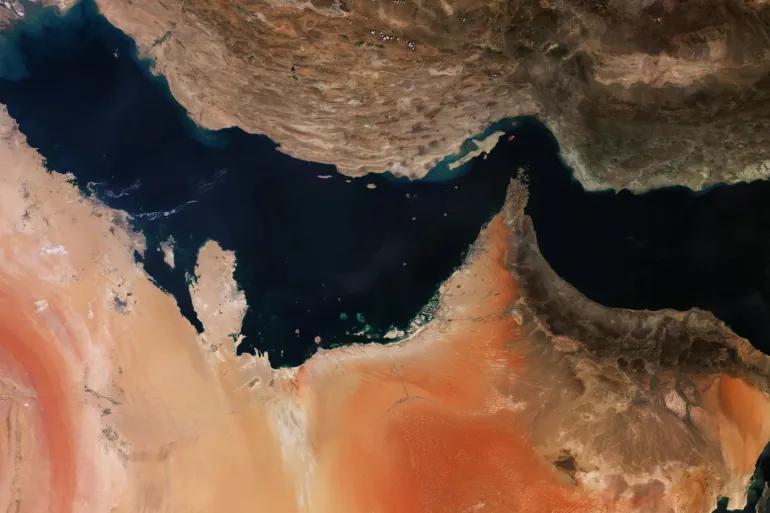
Egypt has called for an immediate end to military action as tensions between the United States and Iran continue to rise. The country also stressed the need to protect shipping routes through the Strait of Hormuz and the Red Sea, warning that further conflict could affect global trade and regional stability.
The Egypt US Iran De Escalation effort comes as military activity has increased across the Gulf region. Egyptian officials said diplomacy remains the best path to reduce risks and prevent the crisis from growing.
Egyptian Foreign Minister Badr Abdelatty held separate phone talks with Omani Foreign Minister Badr bin Hamad Al-Busaidi and Iranian Foreign Minister Abbas Araghchi. During the discussions, Abdelatty urged all sides to avoid further military action and focus on political dialogue.
He said freedom of navigation through major waterways must be protected at all times. According to Egypt, any disruption in the Strait of Hormuz or the Red Sea could affect international shipping, energy supplies, and global supply chains.
The Strait of Hormuz is one of the world’s busiest shipping routes. A large share of global oil and natural gas exports passes through the narrow waterway each day. Any interruption there can quickly affect international markets and shipping operations.
The diplomatic calls came as the United States announced another round of military operations against Iran. US Central Command said the strikes were intended to reduce military capabilities that could threaten commercial shipping and civilian vessels traveling through the Strait of Hormuz.
US President Donald Trump said Iran remains in contact with Washington and is seeking an agreement. However, he added that Iran is not yet ready to finalize a deal. Reports also said the US administration is reviewing its next steps while additional military aircraft have been sent to the region.
At sea, the US military reported several maritime enforcement operations. Officials said forces stopped a merchant tanker in the Gulf of Oman after it repeatedly attempted to cross a blockade involving Iranian ports. The military also said a US destroyer redirected several commercial ships and disabled another vessel during the operation.
Iran also announced new maritime actions. The Revolutionary Guard Navy said it stopped four vessels within one day after claiming they used an unsafe route through the Strait of Hormuz. Iranian officials warned that countries supporting US military operations could face problems while using the strategic waterway.
Iranian Foreign Minister Abbas Araghchi said Tehran would not accept a temporary ceasefire unless issues involving the Strait of Hormuz were addressed. He said discussions with Washington include proposals related to reopening the waterway and providing safe navigation before broader talks continue with support from Oman.
Regional diplomatic efforts are also continuing. Qatar and Pakistan presented a joint proposal that calls on both Iran and the United States to return to their positions before July 9. The proposal aims to restart negotiations and reduce military tensions.
Qatar’s Prime Minister Sheikh Mohammed bin Abdulrahman Al-Thani also spoke with Egypt’s foreign minister. He said all sides should honor existing understandings and ensure safe passage for commercial shipping through the region.
Military exchanges continued in several Gulf countries. Iranian forces said they targeted US facilities in Bahrain and Kuwait. Kuwait reported that its air defense systems responded to missile and drone attacks. Bahrain also said it intercepted aerial threats and accused Iran of targeting civilian infrastructure and air navigation systems.
Security officials also reported activity outside the Gulf. Greek sources said an air defense system in Saudi Arabia intercepted two ballistic missiles launched from Yemen toward oil facilities in Yanbu. Saudi authorities later issued a civil defense warning for the Jazan region.
In the Gulf of Oman, two tankers managed by a Greek shipping company were hit by unidentified projectiles. One vessel experienced an engine room fire, but all crew members were safely evacuated. Maritime officials are also reviewing another incident involving an oil tanker and military forces.
As security concerns grew, the European Union delayed the release of some satellite images covering parts of the Gulf for 24 hours after a request from the United States. The move marked a temporary change from the program’s normal open data policy.
The Egypt US Iran De Escalation initiative highlights growing diplomatic efforts to prevent further conflict. Egypt continues to call for dialogue, protection of international shipping routes, and peaceful solutions as regional tensions remain high.
