


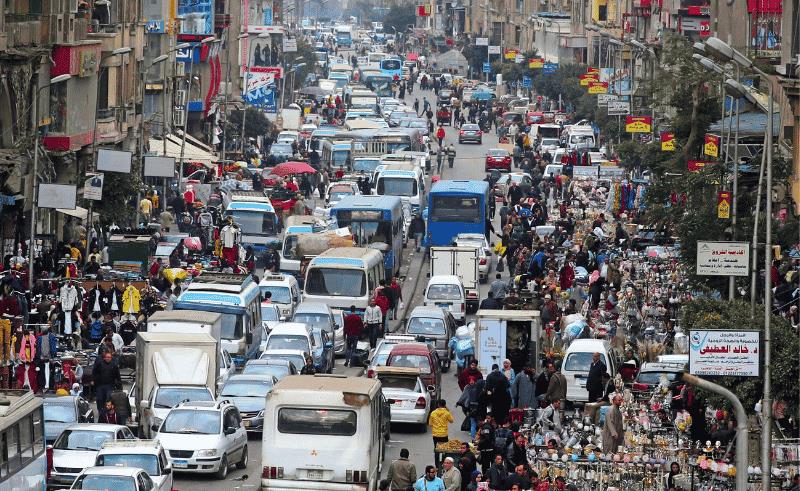
Egypt is expected to become the world’s 11th most populous country by 2050 as its population continues to grow, according to a new report from the Central Agency for Public Mobilization and Statistics (CAPMAS). The country currently ranks 13th worldwide but is projected to move higher over the next two decades.
The report was released to mark World Population Day and examined Egypt’s population trends, growth patterns, and future demographic changes. It showed that Egypt will likely remain the world’s 13th most populous country until 2035 before rising two positions by 2050.
Egypt is currently the most populous country in the Arab world and the third largest in Africa by population. The country’s growing population has increased the need for expanded services, infrastructure, housing, education, and healthcare facilities.
According to CAPMAS data, Egypt’s population reached 108.6 million at the beginning of 2026. This represents an increase of 13.8 million people compared with 2017, when the population stood at 94.8 million.
Cairo remains Egypt’s largest governorate by population, with about 10.5 million residents. Giza follows with around 9.8 million people. The report also found that 57.3 percent of Egyptians live in rural areas, showing the continued importance of supporting development outside major cities.
Population density has also increased in recent years. The number of people living per square kilometre rose from 92.4 in 2017 to 108.1 in 2026. The increase highlights the growing pressure on land, resources, and public services as more people live in the country.
The report also pointed to Egypt’s young population structure. Around 30.6 percent of residents are under the age of 15, while people aged 65 and above represent 6.1 percent of the population. The large number of young people creates both opportunities and challenges for future economic growth.
At the same time, Egypt has seen a steady decline in fertility rates. The average number of children per woman dropped from 2.85 in 2021 to 2.33 in 2025. The birth rate also decreased from 26.8 births per 1,000 people in 2017 to 18.1 in 2025.
Officials said the lower fertility rate has contributed to a major decline in natural population growth. The change reflects ongoing efforts to improve awareness, family planning, and access to health services across the country.
CAPMAS projected that if Egypt reaches the replacement fertility level of 2.1 births per woman by 2032, the population could reach about 117.8 million by that year. The population is then expected to rise to approximately 130.7 million by 2042.
The report also highlighted the government’s Urgent Population and Development Plan, which began in 2025. The program focuses on managing population changes through development projects, social programs, and improved services.
The plan monitors 29 population and development indicators to measure progress and identify areas that need additional support. It also targets 73 governorates and districts that face the greatest population-related challenges.
Experts say managing population growth will remain a major priority for Egypt in the coming years. A larger population can provide a stronger workforce and support economic expansion, but it also requires careful planning to ensure access to jobs, education, healthcare, and housing.
Egypt’s rising population ranking reflects the country’s continued demographic growth. While declining fertility rates may slow future increases, officials say long-term planning will be essential to balance population needs with sustainable development.
The latest Egypt Population Growth projections show that the country will play an increasingly important role in global population trends. Government programs and demographic policies are expected to shape how Egypt manages its expanding population over the next several decades.
