


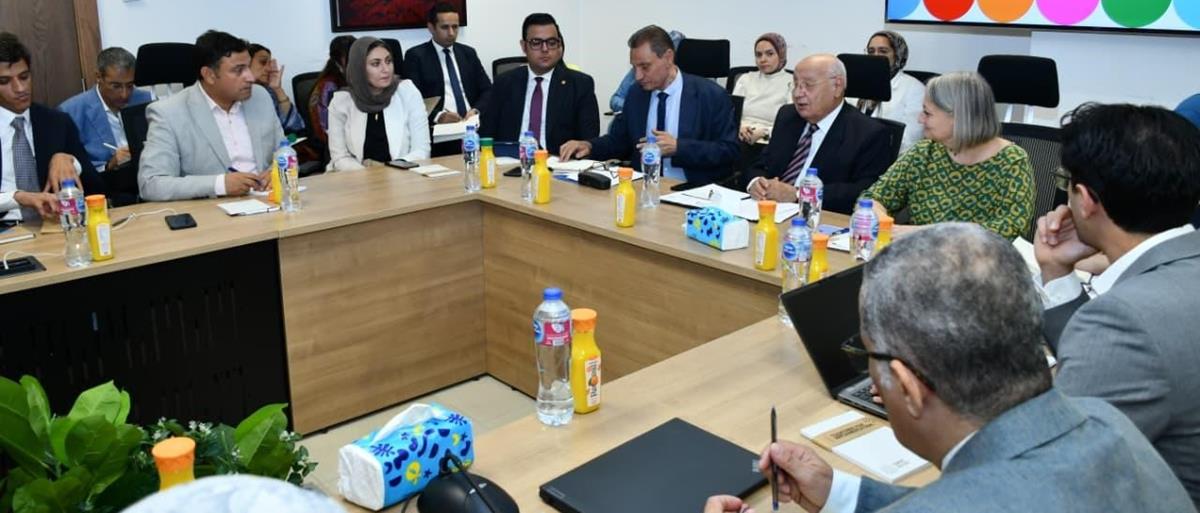
Egypt has taken another step toward strengthening its environmental and sustainability efforts by hosting a high-level United Nations meeting focused on shaping the Egypt Climate Agenda for 2026. Government officials, United Nations agencies, and national institutions gathered to review progress made during 2025 and approve priorities that will guide climate and sustainable development projects in the coming year.
The meeting was organized jointly by Egypt’s Ministry of Local Development and Ministry of Environment under the United Nations Sustainable Development Cooperation Framework (UNSDCF). Participants focused on improving natural resource management, climate adaptation, sustainable urban development, and the transition toward a circular economy.
Officials said the discussions were designed to strengthen cooperation between government agencies and international development partners while supporting Egypt’s long-term environmental and economic goals.
Representatives from several United Nations organizations attended the meeting, including the World Food Programme (WFP), the United Nations Resident Coordinator’s Office (UNRCO), the United Nations High Commissioner for Refugees (UNHCR), UNESCO, the United Nations Population Fund (UNFPA), UNICEF, the World Health Organization (WHO), and UN Women.
Senior representatives from multiple Egyptian ministries and national institutions also participated. These included officials from the ministries responsible for agriculture, housing, planning, water resources, youth and sports, foreign affairs, and international cooperation. National organizations involved in food safety, urban planning, training, and small business development also joined the discussions.
Minister of Local Development and Environment Manal Awad called for stronger coordination between Egypt and international development partners. She emphasized the importance of expanding cooperation to improve climate action, protect natural resources, and support sustainable development across the country.
During the meeting, officials reviewed several achievements completed during 2025. Programs supported under the framework helped improve natural resource management for approximately 2.4 million people across Egypt.
Participants also reported that nearly 9,573 hectares of land were rehabilitated through environmental restoration and sustainable land management projects. These efforts aim to improve soil quality, increase agricultural productivity, and strengthen long-term environmental resilience.
Climate-smart agriculture remained another major focus of the meeting. According to officials, around 181,000 smallholder farmers benefited from agricultural practices designed to improve productivity while reducing environmental impacts.
Integrated land and water management systems were implemented in 12 governorates as part of ongoing sustainability projects. Officials said these initiatives reduced irrigation water use by up to 20 percent, increased crop productivity by approximately 15 percent, and raised farmers’ incomes by about 40 percent.
Participants also discussed the growing importance of sustainable urban development as Egypt continues expanding cities and infrastructure. Officials said future projects will seek to balance economic growth with environmental protection through improved planning and efficient resource use.
The transition to a circular economy formed another key part of the discussions. Government representatives and development partners explored ways to increase recycling, reduce waste, improve resource efficiency, and encourage sustainable production methods across different sectors.
Attention then turned to priorities for 2026. Officials examined strategies to strengthen coordination among ministries, improve implementation of joint projects, and ensure that development programs address the specific needs of individual governorates.
The meeting also reviewed methods for monitoring future progress. Participants discussed performance indicators, financing needs, resource mobilization, and ways to close funding gaps while supporting long-term climate and development goals.
Officials agreed that exchanging technical expertise and sharing successful practices would help improve future projects related to sustainable land management, water conservation, climate adaptation, and urban planning.
The meeting concluded with a shared commitment to continue cooperation between Egypt, United Nations agencies, and development partners. Officials said the approved 2026 implementation plan will support stronger environmental protection, improve resilience to climate change, and deliver sustainable development benefits for communities across Egypt.
