


Egypt has cleared all outstanding payments owed to its oil and gas investment partners, a move the government says is helping restore investor confidence and support higher crude oil production after several years of decline.
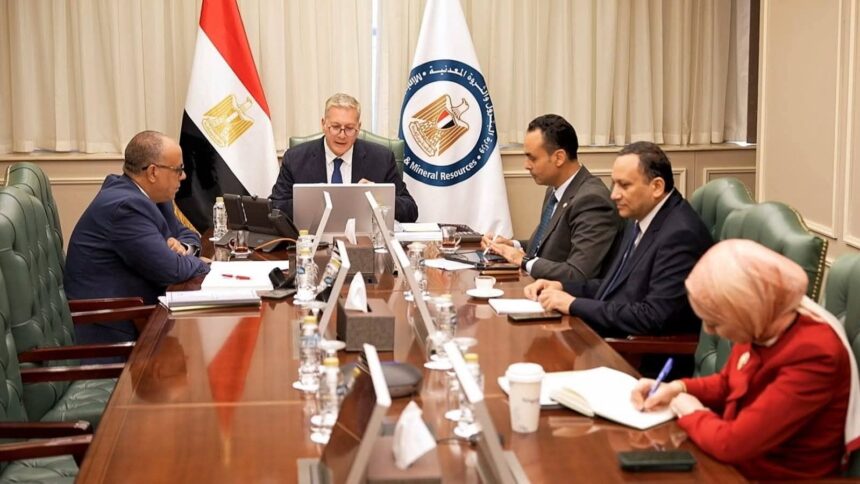
The announcement was made on Wednesday by Petroleum and Mineral Resources Minister Karim Badawi during a board meeting of the Egyptian General Petroleum Corporation held by video conference.
Badawi said clearing overdue payments was the ministry’s main goal because it was essential for bringing new investment into Egypt’s oil and gas sector. He said the government spent the past two years reducing the unpaid balance until all outstanding dues were fully settled.
The minister explained that the government also introduced new investment incentives to encourage companies to explore for oil and gas and develop new energy projects across the country.
These steps have already started to produce results. Egypt’s crude oil production has returned to growth, especially from onshore oil fields where companies can drill new wells and begin production more quickly than offshore projects.
Badawi said Egypt’s oil production had been falling since 2021. One of the main reasons was the build-up of unpaid money owed to foreign energy companies. At its highest point, the overdue payments were more than 6 billion US dollars about two years ago.
The government believes that paying its partners on time will encourage both existing and new investors to increase exploration and production activities. Officials say stronger investment will help Egypt improve its energy supply and support long-term economic growth.
The minister also said efforts to increase natural gas production are showing positive progress. Egypt continues to work closely with international energy companies to expand gas output from offshore fields.
Most of Egypt’s natural gas comes from deepwater fields in the Mediterranean Sea. These projects require large investments, advanced technology, and several years of development before production can begin.
One recent success is the Denis gas discovery. Badawi said the field is believed to contain about 2 trillion cubic feet of natural gas reserves. He described the discovery as a sign that Egypt still has large untapped energy resources.
The minister said the discovery also shows why maintaining a stable investment climate is important. He noted that timely payments and supportive government policies help attract companies willing to invest in complex energy projects.
Looking ahead, Egypt has set an ambitious target for its petroleum sector. The country’s five-year strategy aims to double domestic crude oil production by 2030.
To reach this goal, the government plans to increase the use of advanced drilling methods. These include horizontal drilling and hydraulic fracturing, which can improve production from existing oil fields and help recover more resources.
Officials also want to introduce more flexible investment contracts. They believe updated agreements will encourage energy companies to commit more money to exploration and production projects across Egypt.
Badawi also spoke about the country’s energy security. He said Egypt successfully secured enough fuel supplies for the electricity sector during the summer of 2025, when electricity demand reached a record 40.5 gigawatts.
He credited close cooperation between the Ministries of Petroleum and Electricity for helping the country meet the high demand without major supply problems. Work is continuing to ensure reliable fuel and energy supplies throughout the current summer season.
The minister also praised cooperation between several government ministries, including finance, local development, environment, investment and foreign trade, and industry. He said their joint efforts helped clear the outstanding payments, improve investor confidence, strengthen energy security, and support Egypt’s growing energy needs.
During the meeting, Egyptian General Petroleum Corporation Chief Executive Salah Abdel Karim and Deputy Chief Executive for Financial and Economic Affairs Amal Tantawy presented updates on measures designed to improve the corporation’s operational efficiency.
Badawi said the Egyptian General Petroleum Corporation remains central to the country’s energy strategy. He added that the corporation will continue to support higher oil production, expand exploration work, improve refinery performance, and help ensure a stable supply of petroleum products for the domestic market while supporting Egypt’s long-term energy goals.
