


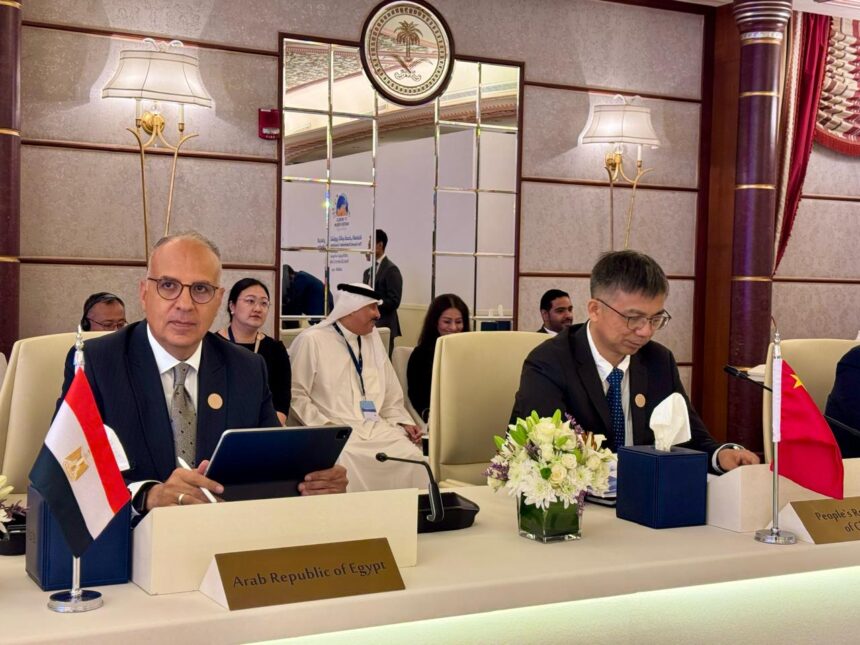
Egypt has called for stronger international cooperation to improve water security and support developing countries facing growing water challenges. The appeal came during a preparatory meeting for the 11th World Water Forum, which is set to take place in Riyadh in March 2027. Egyptian officials said countries must work together to manage water resources more effectively as climate change and rising demand continue to increase pressure on supplies.
Egypt’s Minister of Water Resources and Irrigation, Hani Sewilam, presented the country’s vision during a ministerial consultation held as part of Saudi Water Week in Jeddah. The meeting brought together ministers, senior government officials, and representatives from international and regional organizations working in the water sector.
Sewilam said water security is one of the most important foundations for sustainable development. He explained that reliable water supplies support food production, economic growth, climate resilience, and regional stability. He added that these issues are especially important for countries that already face limited freshwater resources.
The minister said modern water management should rely on advanced technology. He highlighted the need for digital systems that can improve planning and decision-making. These tools include monitoring networks, forecasting systems, computer models, satellite images, and decision-support technologies. He said such solutions help governments respond more quickly to changing weather conditions and water shortages.
During his speech, Sewilam also highlighted Egypt’s Water 2.0 programme. The national strategy focuses on expanding water treatment facilities and desalination projects. It also supports digital transformation, smart water management, stronger infrastructure, and nature-based solutions that improve the long-term sustainability of water resources.
He said non-conventional water resources will play a larger role in meeting future demand. Water reuse and desalination are becoming more important as freshwater supplies remain under pressure. Sewilam proposed creating a Global Water Partnership that would encourage countries to share knowledge, technology, and experience in these areas. He said stronger international cooperation could help improve water security in many parts of the world.
The minister also stressed the value of integrated river basin management. He said countries should work together to protect shared rivers while also making better use of green water resources found in areas with high rainfall. Better management of these resources can increase agricultural production, reduce pressure on shared water supplies, and improve regional food security.
Sewilam said cooperation between countries remains essential when managing shared water resources. He urged governments to follow international water law and respect principles such as preventing significant harm, providing prior notification of major projects, holding consultations, cooperating closely, and exchanging data on a regular basis. He noted that trust and transparency can reduce disputes and strengthen regional partnerships.
He also warned that demand for water continues to grow faster than available supplies in many regions. Because of this, sustainable water demand management should remain a global priority. The minister called for greater efficiency in agriculture, which is one of the largest users of freshwater worldwide. He encouraged wider use of modern irrigation systems, expanded water reuse, and policies that promote water conservation while protecting the interests of small-scale farmers.
As the meeting ended, Sewilam called on participants to ensure that the 11th World Water Forum delivers practical and measurable results. He proposed launching a Global Water Partnership focused on non-conventional water resources and green water management. He also suggested creating an international programme to train young water leaders and expanding financing for water projects in developing countries. He said stronger investment and global cooperation will help improve climate resilience, protect water supplies, and support sustainable development for future generations.
