


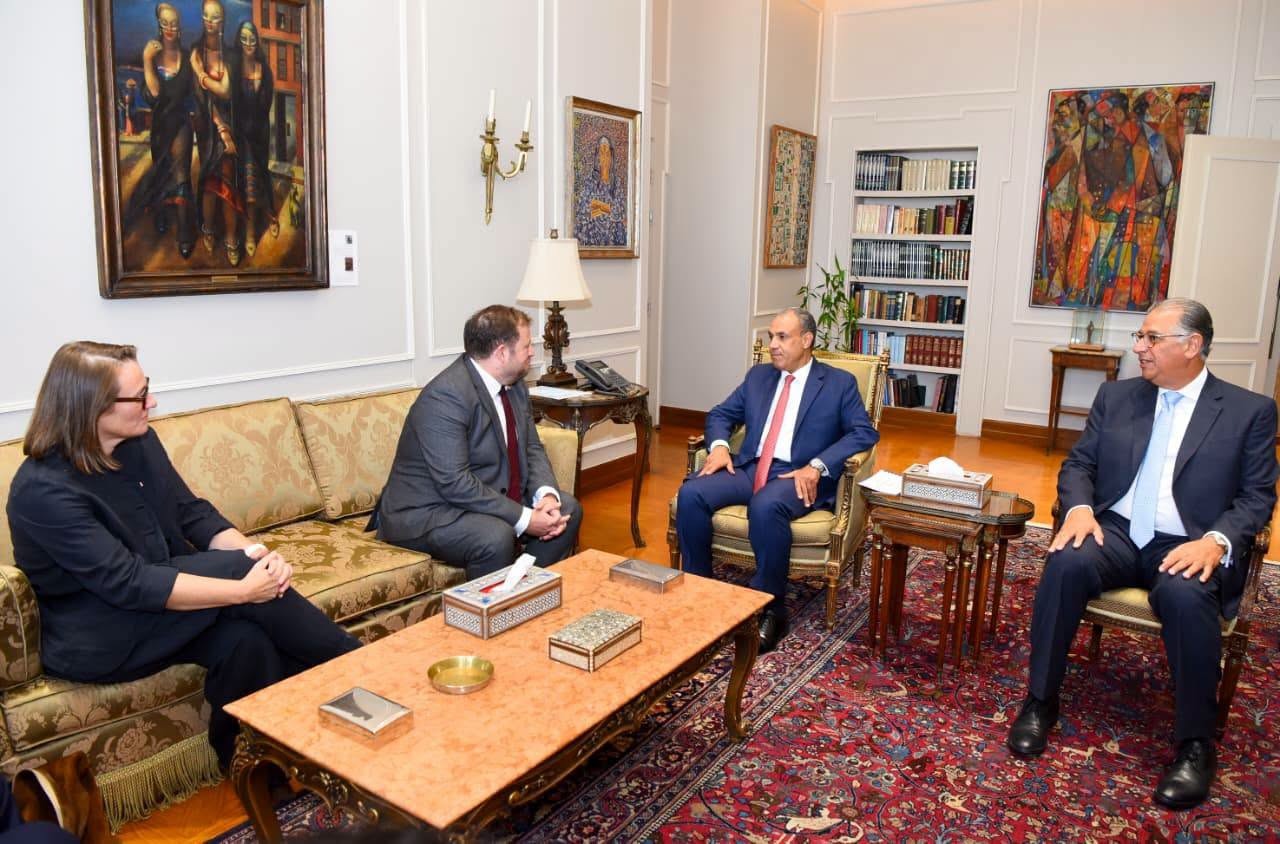
Egypt and the United Kingdom have condemned recent remarks by Israeli National Security Minister Itamar Ben-Gvir over the Gaza Strip, with Cairo warning that his statements could deepen regional tensions and undermine diplomatic efforts to restore peace.
Egyptian Foreign Minister Badr Abdelatty and British Minister of State for the Middle East Stephen Doughty voiced their opposition to the remarks during talks in Cairo on Tuesday. The discussions focused on Gaza, the occupied West Bank, regional security, migration and efforts to strengthen relations between Egypt and the UK.
Abdelatty described Ben-Gvir’s comments as inflammatory and incompatible with international law and basic human values. He said rhetoric advocating violence, Palestinian displacement and the expansion of Israeli settlements risked worsening instability across the Middle East.
The Egyptian minister also reaffirmed Cairo’s support for US President Donald Trump’s peace plan and United Nations Security Council Resolution 2803 as part of efforts to address the Palestinian issue.
On the West Bank, Abdelatty rejected Israel’s settlement expansion, increasing settler violence and the confiscation of Palestinian land. He called for a stronger international response to what Egypt considers illegal practices and stressed the need to support the Palestinian Authority.
The two ministers also discussed broader regional security concerns, including tensions involving Iran. Abdelatty called for diplomacy, dialogue and continued mediation to prevent the situation from developing into a wider military confrontation.
He also stressed the importance of protecting international navigation and freedom of movement at sea under international law. According to the Egyptian minister, continued regional tensions could have serious consequences for energy security, global supply chains and international trade.
The situation in Sudan was another major topic during the talks. Abdelatty reiterated Egypt’s support for Sudan’s unity, territorial integrity and national institutions. He said Cairo backed a political settlement that protects the interests of the Sudanese people and pledged continued coordination with regional and international partners to help contain the conflict and reduce humanitarian suffering.
Migration cooperation also featured prominently in the meeting. The two ministers signed a Declaration of Intent on migration between Egypt and the United Kingdom at the conclusion of their discussions.
Abdelatty said the agreement could strengthen bilateral cooperation on migration and argued that tackling irregular migration requires more than measures against illegal crossings. He said governments must target human trafficking networks while also addressing the economic and social factors that contribute to irregular migration.
According to Abdelatty, development, employment opportunities and expanded legal migration pathways should form part of a broader strategy to address the issue.
The meeting also reflected efforts by Egypt and the UK to deepen their wider bilateral relationship. Abdelatty congratulated Doughty on taking up his new position before the two sides discussed ways to expand economic, trade and investment cooperation.
The discussions followed the third Egyptian-British Association Council, held in June, and focused on continuing implementation of the countries’ bilateral association agreement.
Abdelatty highlighted the importance of increasing Egyptian exports to the British market as a way to expand bilateral trade. He also encouraged greater British direct investment in Egypt, saying stronger economic ties could benefit both countries.
The talks came as Egypt continues to engage with international partners on conflicts and security challenges across the Middle East and Africa. Cairo has repeatedly emphasised diplomacy, regional stability and international cooperation while seeking to strengthen its economic and political ties with major partners.
The joint condemnation of the Israeli minister’s remarks added another point of alignment between Egypt and the UK as both countries continue to address the humanitarian and political consequences of the Gaza conflict through diplomatic channels.
