


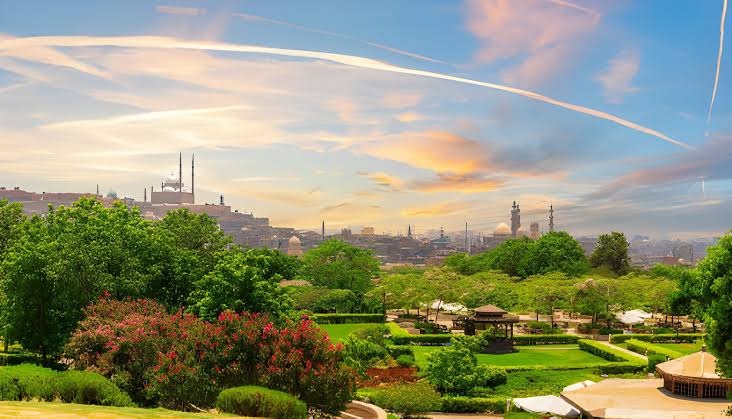
Egyptian Prime Minister Mostafa Madbouly directed officials this week to begin immediate implementation of the Greening Cairo initiative, ordering tree planting along the capital’s Ring Road and other major thoroughfares alongside a citywide inventory of vacant government land suitable for conversion into parks and green space. The directive followed President Abdel Fattah al-Sisi’s original order launching the broader campaign aimed at transforming underused urban areas throughout Cairo.
Under the plan, government agencies currently controlling undeveloped land within the capital will receive compensatory plots in Egypt’s newer planned cities, clearing the way for their existing urban holdings to be converted into parks and green corridors. Madbouly called for a dedicated task force drawing on relevant ministries, the Cairo governorate, and outside consultants to guide the initiative’s rollout, emphasizing the need for a standardized approach to tree planting informed by expert recommendations on suitable species and layouts for different street conditions.
Officials have also directed that recycled wastewater be used to irrigate the new greenery, extending water conservation practices already being piloted in Egypt’s newer cities to this expanded urban greening effort. Housing Minister Randa El-Menshawy confirmed that similar wastewater irrigation methods are already being applied to expand green space in Egypt’s newer urban developments, suggesting officials view this approach as a scalable model for the broader Cairo initiative.
Cairo Governor Ibrahim Saber noted that a pilot tree planting model has already been implemented along a street in Nasr City, with plans to extend the approach to additional major roads once the citywide inventory of suitable vacant land is completed. Officials are compiling detailed records of available plots as a foundation for prioritizing which areas receive greening investment first under the expanded initiative.
The greening push arrives amid genuine tension over how Cairo balances urban development needs against environmental preservation. Just days before this latest announcement, municipal work crews in the Mohandeseen district felled decades old trees along a major thoroughfare and public square to widen traffic lanes, sparking significant public, parliamentary, and environmental backlash across both Cairo and neighboring Giza. Critics noted the felling operations ran directly counter to the state’s flagship One Hundred Million Trees initiative, a separate seven year national campaign launched in 2022 targeting the planting of one hundred million trees across thousands of sites nationwide.
That contradiction between removing mature trees for infrastructure projects while simultaneously launching new tree planting initiatives has raised genuine questions among environmental advocates about whether newly planted saplings can meaningfully replace canopies that took decades to establish. Cairo has faced substantial green space loss in recent years, with one study finding the city lost more than nine hundred thousand square meters of green space between 2017 and 2020 alone.
Egypt’s per capita green space allocation remains well below both the government’s own targets and international health recommendations. Official estimates place current per capita green space around 1.2 square meters, considerably short of Egypt’s Vision 2030 target of 3 square meters and far below the World Health Organization’s recommended minimum of 9 square meters within a short walk of residential areas. This gap underscores the scale of the challenge facing the Greening Cairo initiative as it moves from announcement toward actual implementation.
As the task force begins its work compiling land inventories and developing standardized planting approaches, officials will face pressure to demonstrate that this latest greening effort produces genuine, lasting improvements to Cairo’s urban environment rather than simply offsetting losses from ongoing infrastructure and development projects elsewhere across the sprawling capital.
