


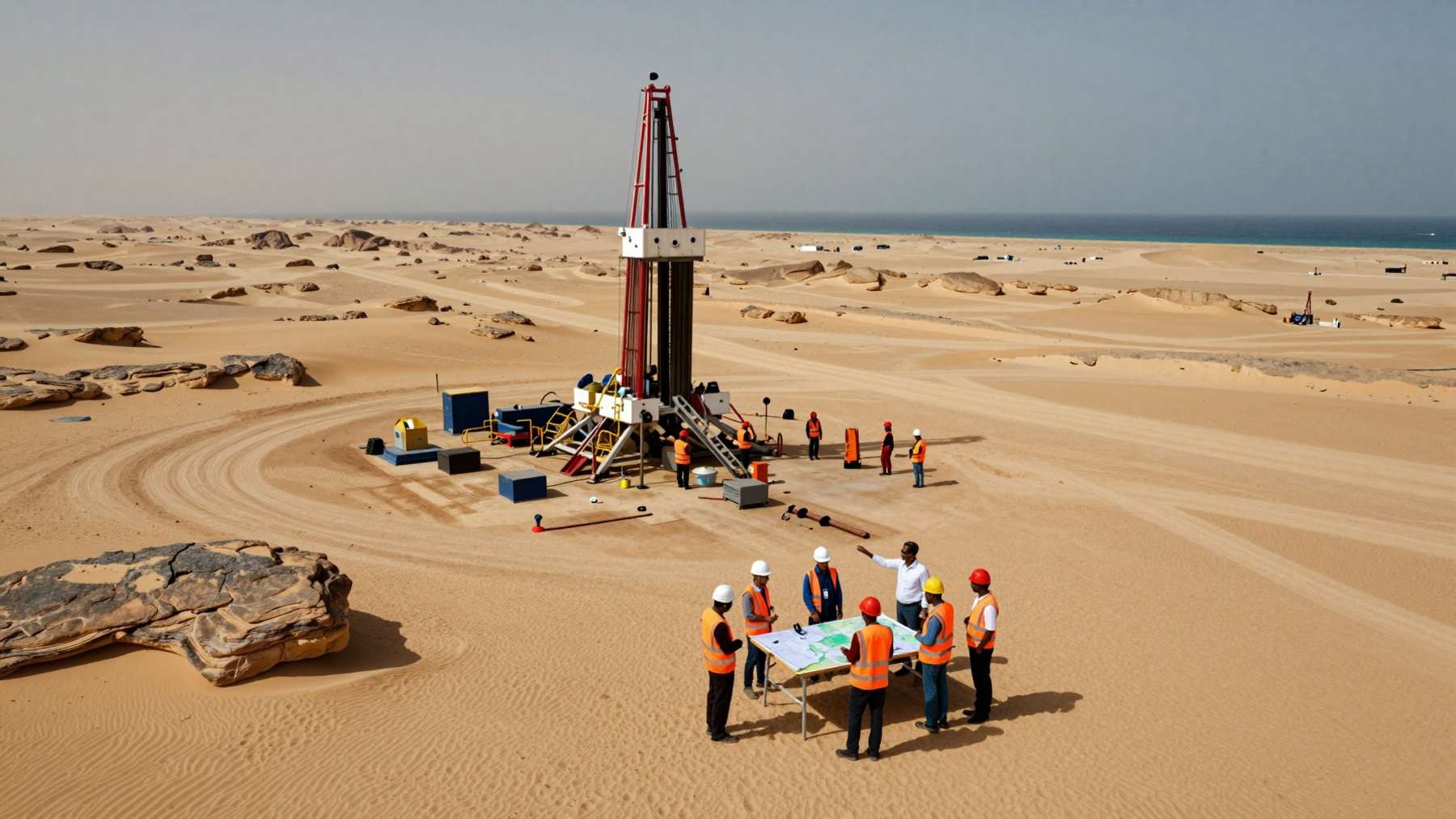
Egypt is taking big steps to build its energy future by unlocking untapped natural reserves across its southern lands and coastal waters. The nation wants to grow its domestic fuel supply, cut energy import costs, and bring major international energy companies into new onshore and offshore areas.
The South Valley Egyptian Petroleum Holding Company is currently preparing to award seven new Egypt oil and gas blocks.These fresh exploration zones include six key sites located across southern Egypt and one strategic offshore block situated in the waters of the Red Sea.Energy leaders expect this expansion round to attract total planned investments ranging from $60 million to $70 million.
To confirm progress on the ground, Petroleum Minister Karim Badawi recently conducted an official inspection tour of the Al-Baraka oil field in Aswan.The minister reviewed field conditions, checked operational safety, and looked over plans designed to lift regional crude output.
Three primary energy operators are lined up to receive these new exploration zones.Canada’s Mediterra Energy Corporation and Egypt’s state-owned General Petroleum Company will take over the six southern onshore locations.These six blocks cover the South Al-Baraka, North Al-Baraka, and Khart geographical zones.Meanwhile, global energy giant BP is slated to secure the seventh block, which rests within the Red Sea basin.
South Valley Chairman Samir Raslan pointed out that these chosen locations feature solid exploration prospects alongside low development costs.Unlike mature energy basins elsewhere in the nation that require heavy upfront capital, these southern zones give energy firms strong upside potential without massive initial risk.
While a budget of $60 million to $70 million remains modest in global terms, it marks a significant move for southern Egypt.The region has seen minimal upstream exploration over the past decade, so this investment brings fresh economic activity and local job growth to the area.
To make investments even more viable, South Valley has restructured existing production concessions.The government merged the Al-Baraka and West Al-Baraka fields into one single unified operational block.This change simplifies management, cuts overhead expenses, and improves overall project returns for incoming private investors.
At the same time, regional authorities are executing a massive regional seismic survey.The active survey covers nearly 100,000 square kilometers, which equals roughly 10 percent of Egypt’s total surface area. The deep geophysical survey will provide modern subsurface mapping across southern basins.
Energy leaders state that this updated geological survey will soon create more than ten new investment-ready exploration areas. Detailed technical data will be made available to global firms as evaluation teams finish processing the preliminary findings.
By pairing flexible business terms with fresh geological data, Egypt hopes to keep international drillers active for years to come. Expanding production in southern Egypt remains a vital part of the nation’s long-term goal of total energy independence.
