


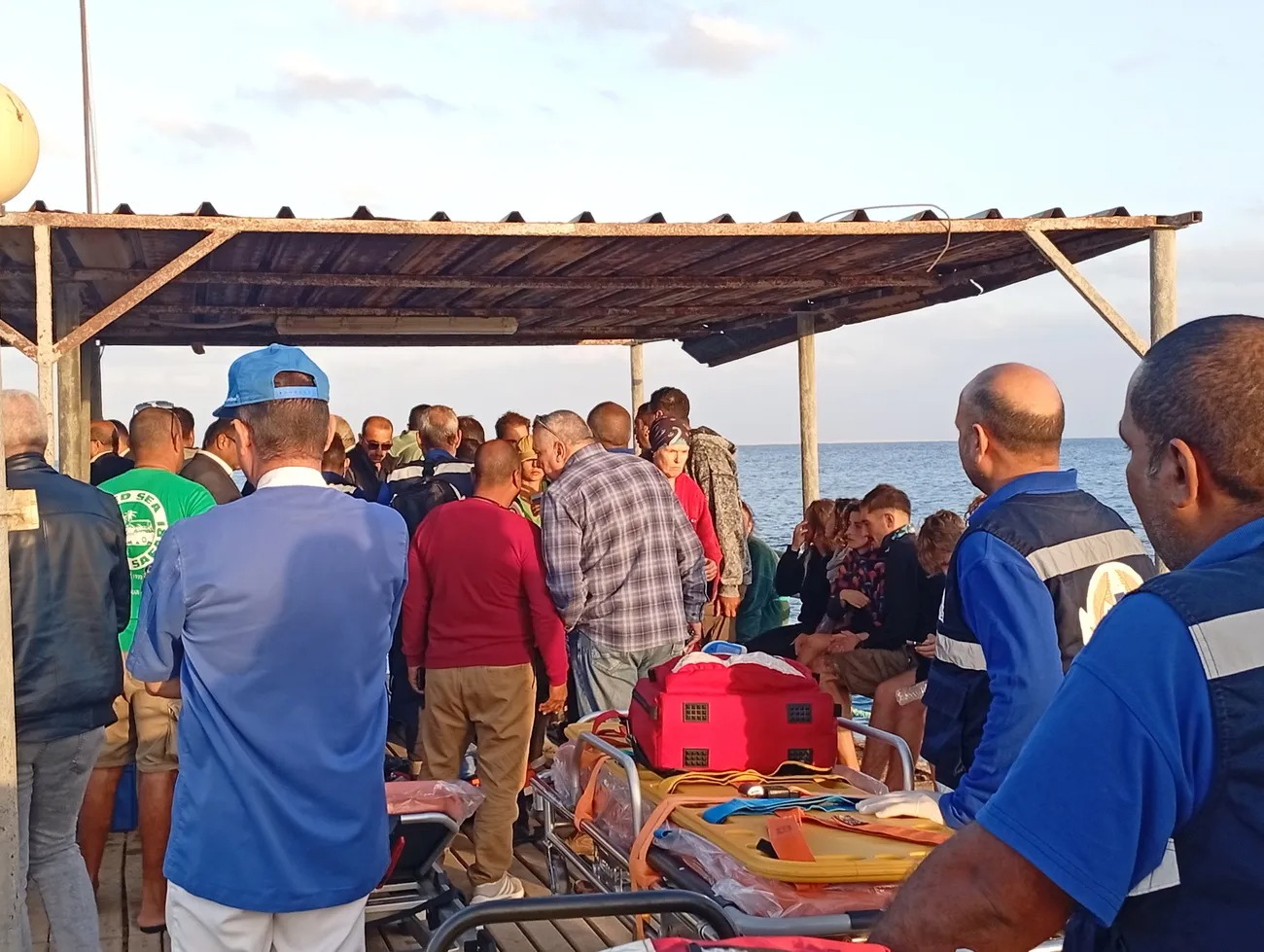
Eight Egyptian sailors have returned to Cairo after spending 151 days in captivity off the coast of Somalia, ending months of uncertainty for their families. The sailors arrived in Egypt late on Sunday after travelling from Mogadishu, where they had stayed at the Egyptian embassy following their release. Their return was reported on October 5 as relatives gathered to welcome them home.
The sailors had been held for nearly five months aboard the M/T Eureka in Somalia’s Puntland region. Their release was announced several days before their return to Egypt. Egyptian diplomatic officials helped arrange their accommodation in Mogadishu and later organised their journey home. The long period of captivity had separated the men from their families for months.
Their arrival at Cairo Airport was an emotional moment. Families waited to see the sailors after spending months without knowing when they would return. Relatives embraced them as they came through the airport, bringing an end to a period of fear and uncertainty. After the reunion in Cairo, the sailors were expected to travel to their home areas to meet other relatives.
One of the most emotional reunions involved 35-year-old Adham Salem Shaaban Gaber. He returned to eastern Alexandria and met his five-month-old daughter for the first time. The child had been born while he was in captivity, meaning he had spent the first months of his daughter’s life away from her. The meeting highlighted the personal cost of the long detention.
The sailors’ case also shows the risks faced by seafarers working in waters where security conditions can be difficult. Commercial crews often spend months away from home even under normal circumstances. When ships become involved in security incidents, workers can face long periods of uncertainty that are difficult for both them and their families.
The release required diplomatic involvement. Egyptian authorities confirmed the sailors’ freedom and worked with officials in Somalia to arrange their return. The embassy in Mogadishu provided accommodation before the group travelled back to Cairo. Such arrangements can be important after a long period of captivity because released workers may need assistance before they are able to travel home.
The sailors had been held in the Puntland area, a region that has faced security challenges linked to armed groups and maritime crime. The circumstances surrounding their captivity have been closely watched by Egyptian authorities. Officials have not provided every detail publicly, and further information about the case may emerge as the sailors recover and speak with their families.
For the families, the most important development is that the men are finally home. Five months is a long period for relatives to remain separated from loved ones, especially when communication may be limited. The sailors’ return allows families to begin rebuilding normal routines after months of anxiety.
The case also highlights the importance of cooperation between Egypt and Somalia. Egypt maintains diplomatic relations with Somalia and has been involved in regional security efforts. The safe return of the sailors required communication between Egyptian officials, Somali authorities and the diplomatic mission in Mogadishu.
There may also be questions about what happens next for the sailors. After such a long period in captivity, they may need time to recover physically and emotionally before returning to normal work. Their employers and authorities may need to assess their condition and determine what support is appropriate.
The return is therefore more than a routine arrival at Cairo Airport. It represents the end of a long period of captivity and a major moment for eight families. The sailors can now return to their communities and begin rebuilding their lives after months away from home.
October 5 brought the story to a hopeful conclusion as the sailors were reunited with relatives in Egypt. Their return demonstrates the importance of diplomatic efforts when workers become trapped in dangerous situations overseas. For the sailors and their families, the central fact is simple: after 151 days apart, they are finally together again.
