


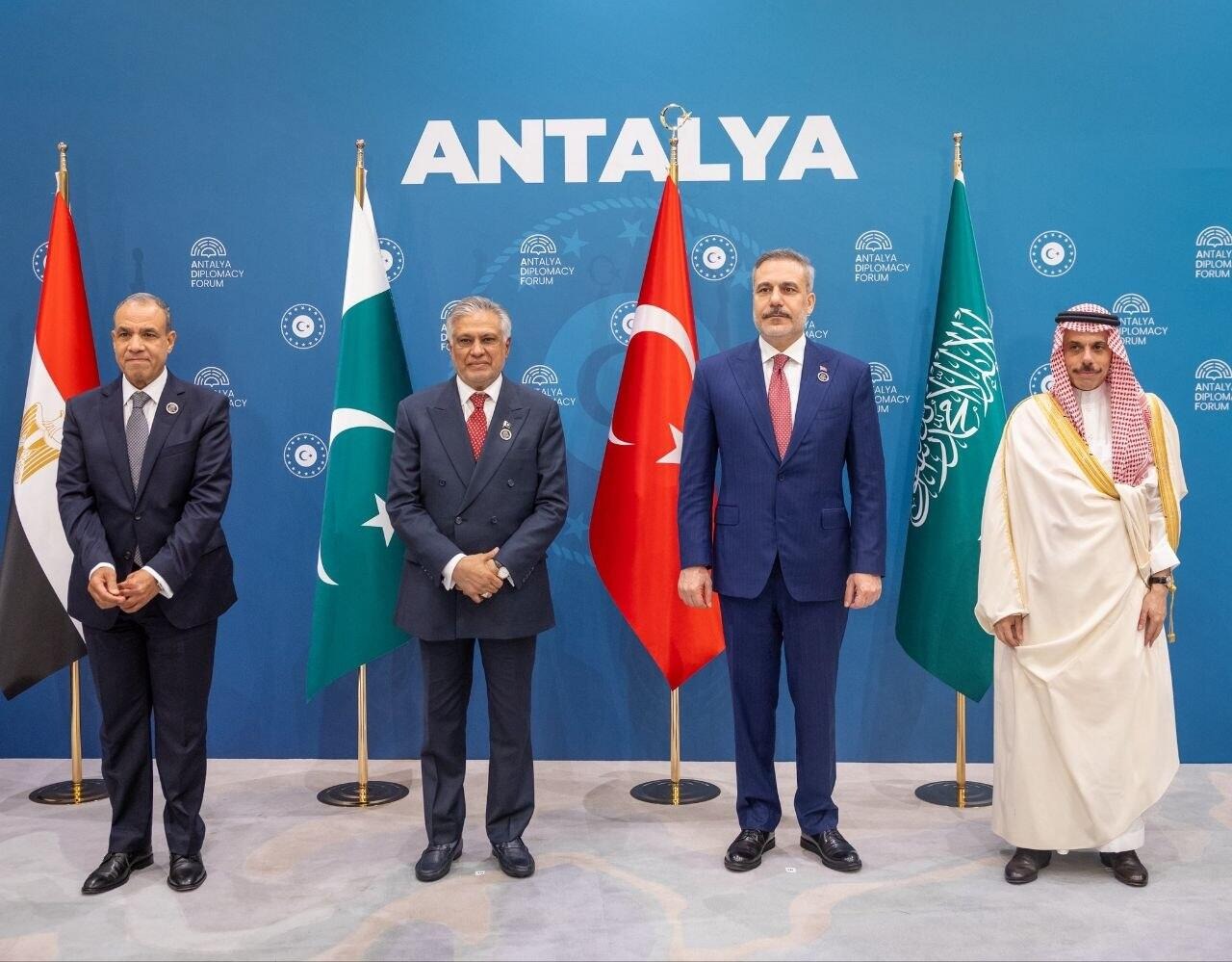
Egypt could join a new Egypt defense alliance involving Saudi Arabia, Turkey and Pakistan after several technical issues are settled, Turkish Foreign Minister Hakan Fidan said on Saturday.
Fidan said Egypt was being considered as a possible new member of the defense pact. The agreement was signed by Saudi Arabia, Pakistan and Turkey on Friday.
The Turkish foreign minister said Cairo could join the group once the remaining technical matters are resolved. He did not give a date for when Egypt could become part of the alliance.
Fidan made the comments in an interview with Turkey’s state-run Anadolu news agency. He described the new pact as a mutual defense agreement similar in principle to NATO.
Under the pact, an attack on one member would be treated as an attack on all members. Fidan linked the agreement to the idea behind NATO’s Article 5, which provides a shared defense commitment among alliance members.
The agreement marks a new step in defense cooperation between Saudi Arabia, Pakistan and Turkey. The three countries have long had ties in areas such as security, trade and regional diplomacy.
The new pact is expected to create a formal structure for cooperation. Fidan said the alliance would have a ministerial committee to guide its work.
It would also establish a general secretariat in Saudi Arabia. The new body would help manage the alliance and support coordination between its members.
Fidan stressed that the agreement was not aimed at Iran. His comments came as tensions remain high across the Middle East and as regional powers assess their security needs.
“Iran is not the target,” Fidan said, making clear that the alliance should not be viewed as a move against Tehran.
The possible addition of Egypt could make the group more important in the region. Egypt is one of the Middle East’s largest countries and has a major role in regional security and diplomacy.
Cairo also has long-standing defense and political ties with Saudi Arabia. It has worked with several regional states on security issues and has played a key role in efforts to manage regional tensions.
Egypt’s possible membership would therefore expand the reach of the alliance. It could also give the group a stronger role in regional security discussions.
However, Fidan said technical issues must first be resolved before Egypt can join. His remarks suggest that the talks are still at an early stage.
The three founding members will also need to develop the alliance’s working system. The ministerial committee and general secretariat are expected to help define how members will work together.
The mutual defense principle is one of the most important parts of the agreement. It means members would make a shared commitment to respond if another member comes under attack.
That commitment could increase security cooperation among the countries. It could also lead to closer planning, military coordination and talks between defense officials.
The pact comes at a time when security concerns remain a major issue across the Middle East and South Asia. Countries in both regions are seeking stronger partnerships as conflicts and political tensions continue.
Turkey has maintained close relations with both Saudi Arabia and Pakistan. Saudi Arabia and Pakistan also have a long history of defense cooperation.
Fidan’s comments show that the alliance could grow beyond its three founding members. Egypt is the first country publicly identified as a possible addition.
Any expansion, however, would depend on further talks and technical arrangements. Egypt would also need to agree to the terms of the pact before becoming a member.
For now, Saudi Arabia, Pakistan and Turkey remain the core members of the new alliance. The group is expected to build its structure through the planned ministerial committee and secretariat.
If Egypt joins, the alliance would bring together four major regional powers. That could give the pact greater political and security weight.
Fidan’s statement also seeks to ease concerns that the agreement is designed to confront Iran. He said the pact should not be seen as an anti-Iran alliance.
The next stage will focus on technical matters and the creation of the alliance’s new institutions. Egypt’s decision could become an important test of how far the new defense partnership can expand.
