


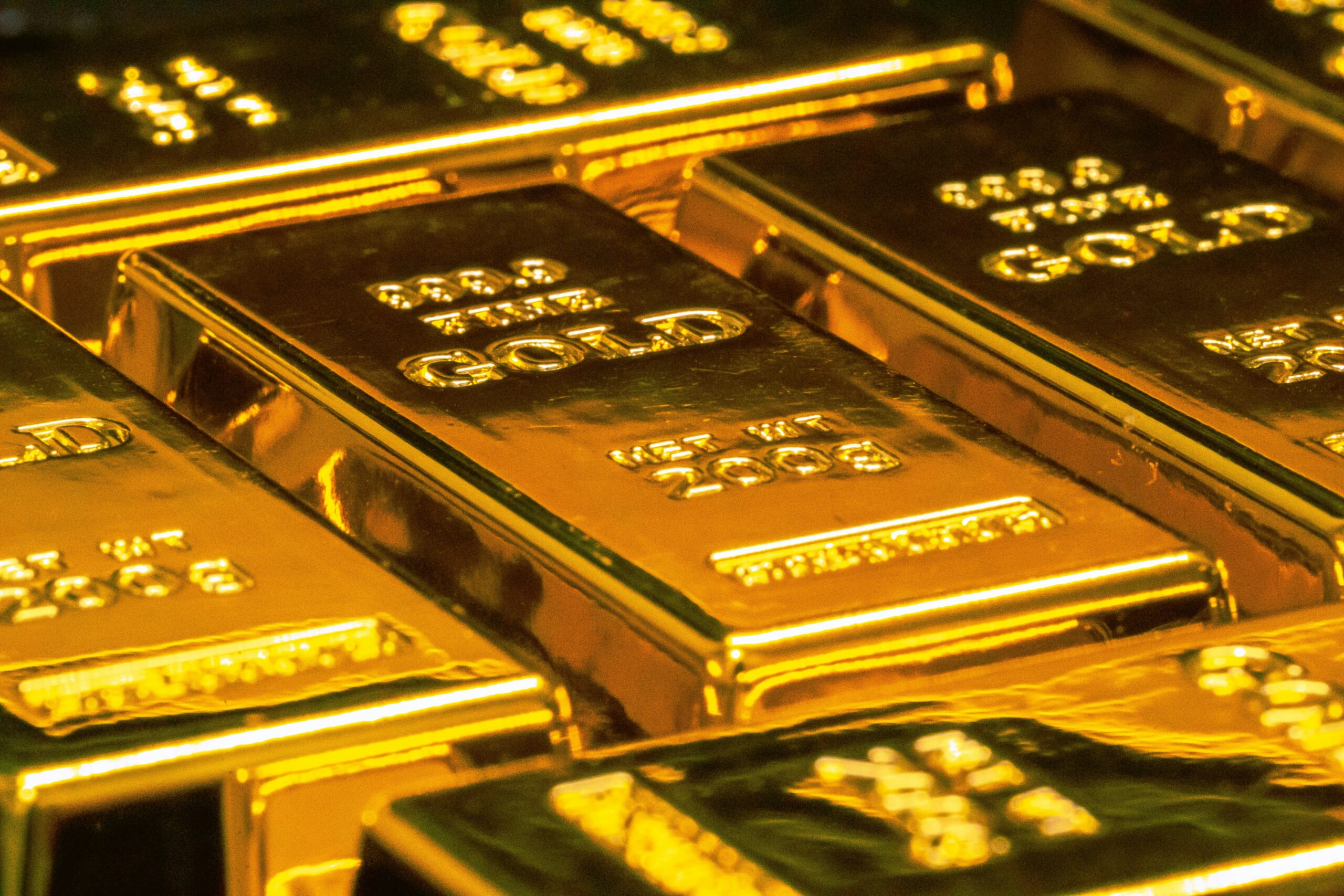
Precious metals ranked among the strongest-performing assets this year, buoyed by geopolitical instability, expectations of looser monetary policy and a fragile sense of global economic stability. Investors returned to gold and silver as multiple risks converged, from trade disputes to military flashpoints, pushing both metals into historic territory.
Gold surged to record highs in 2025, climbing as much as $4,481 (€3,797) per troy ounce in recent trading. That move translated into gains of roughly 55–70% year-on-year, making it one of the strongest annual rallies in decades. Silver, long regarded as gold’s lesser counterpart, delivered an even more dramatic performance. Prices jumped around 130–140% over the year, reaching record levels near $69 (€58) per ounce by late 2025.
After years of being overshadowed by modern stores of value such as currencies, bonds and real estate, precious metals staged a powerful comeback. A year defined by tariff retaliation, central banks steadily reducing their reliance on the US dollar as a reserve currency and persistent political tensions revived demand for assets seen as independent of governments and financial systems.
That dynamic played out again this week, when gold rose as much as 2.4% and silver gained up to 3.4% as tensions escalated between the United States and Venezuela. The move followed reports that the US Navy attempted to seize a third oil tanker linked to the South American country. While Venezuela itself does not directly drive gold prices, the confrontation sent a broader signal to markets. Political and security crises tend to light up multiple risk channels at once, including potential energy supply disruptions, sanctions escalation and renewed friction between major powers.
In that environment, gold and silver quickly regained appeal. Neither metal is tied to a single government, neither depends on corporate earnings, neither carries default risk and both are far harder to sanction or freeze than financial assets. Below is a timeline of the key events that shaped gold and silver prices throughout the year.
January–March: Tariffs and Early Safe-Haven Demand
Gold entered the year already elevated, reflecting uncertainty around inflation, interest rates and spillover risks from the ongoing Russian invasion of Ukraine. Although prices had not yet reached record territory, investors positioned defensively as macroeconomic risks lingered.
Momentum accelerated in March, when gold pushed above $3,000 (€2,544) per ounce for the first time in 2025. The catalyst was mounting concern over new and expanded US tariffs under President Donald Trump, particularly on steel and aluminium, alongside the threat of broader trade measures. Markets interpreted these developments as signs of an intensifying trade war and rising inflation risk, prompting a renewed rush into gold. Silver reacted more cautiously at first, lagging gold during the early phase of the rally.
April–June: Middle East Tensions Fuel the Rally
The announcement of Trump’s “Liberation Day” tariffs on 2 April added fresh fuel to the rally. Spot gold prices surged toward record highs above $3,100 (€2,628) per troy ounce as traders priced in the risk of an escalating trade conflict.
Gold continued its steady climb through spring and early summer, reaching new peaks of up to $3,354 (€2,842) per troy ounce. The rally broadened as geopolitical stress intensified, particularly in the Middle East. Renewed tensions between Iran and Israel culminated in late June, when the US Air Force and Navy attacked three Iranian nuclear facilities as part of the Iran–Israel war, reinforcing gold’s role as a geopolitical hedge.
July–September: Rate Expectations and a Full Tariff Regime
A public confrontation between President Trump and Federal Reserve chair Jerome Powell over interest rates strengthened gold’s mid-year momentum. Trump repeatedly criticised Powell for keeping rates high and called for cuts that did not materialise, fuelling speculation about potential changes to Fed leadership and undermining confidence in monetary policy stability.
Gold prices climbed above $3,400 (€2,883) per ounce during the summer, supported by both shifting rate expectations and persistent uncertainty around global trade policy. On 11 July, Trump unveiled a sweeping tariff package, much of which had been delayed after the initial April rollout and largely came into force on 1 August. The move reinforced a broader trend of central banks increasing gold holdings as part of long-term reserve diversification. Silver kept pace with the broader rally, reaching $38.46 per ounce in mid-July.
October–November: Gold Breaks $4,000
In early October, gold decisively crossed the $4,000 (€3,392) per ounce threshold. Safe-haven demand intensified as markets weighed expectations of future US Federal Reserve rate cuts against ongoing geopolitical and policy uncertainty.
By 13 October, gold had climbed above $4,133 (€3,504) amid persistent US–China trade tensions. Later in the month, tentative optimism around trade talks briefly pushed prices back below $4,000, but the pullback proved short-lived and the broader uptrend remained intact. Investors also focused on the risk of a US government shutdown and continued public criticism of the Federal Reserve’s policy stance from the Trump administration.
By late November, gold was on track for its fourth consecutive monthly gain, trading around $4,210 (€3,567) on 28 November. Silver followed suit, hitting a fresh record high near $56.78 (€48.12) per ounce.
December: Venezuela Shock Drives Final Surge
The most dramatic moves came in late December. Gold surged to new records above $4,490 per troy ounce, while silver approached $70 per ounce, as investors rushed into safe havens amid reports of US military action and renewed attempts to seize Venezuela-linked oil tankers.
At the same time, markets priced in expectations of additional US Federal Reserve rate cuts in 2026. The prospect of lower real yields, combined with a weakening US dollar, added further support to bullion, capping a year in which precious metals reasserted their status as crisis-era assets.
