


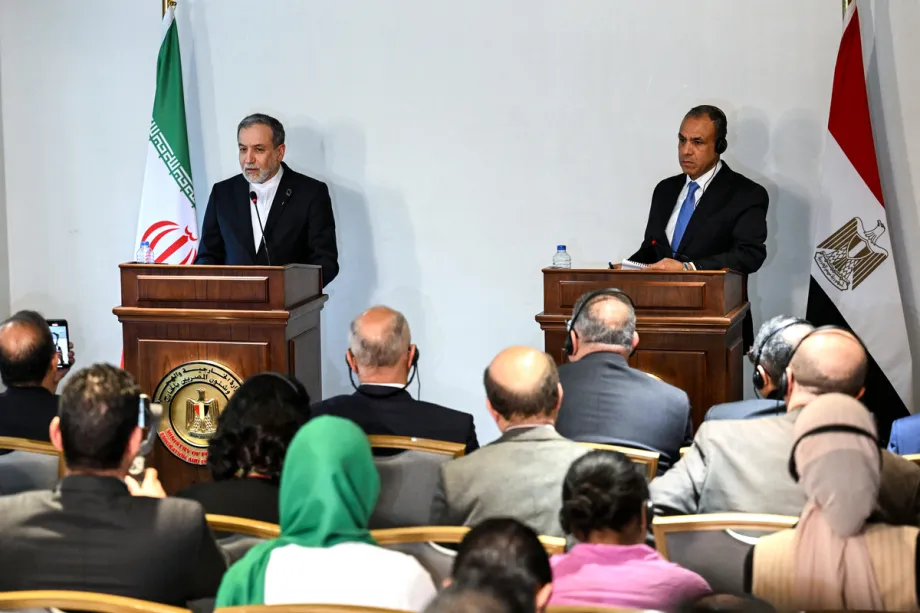
Iran and Egypt have held new discussions on regional security and ongoing diplomatic efforts involving the United States. The talks come at a time of rising tension in the Middle East and increased international mediation attempts to reduce conflict risks.
Iranian Foreign Minister Abbas Araghchi spoke with his Egyptian counterpart Badr Abdelatty during a phone call on Sunday. The two officials discussed political and security developments across the region.
A key topic in the conversation was the ongoing diplomatic contact between Tehran and Washington. These talks are reportedly being facilitated through mediation efforts involving Pakistan. Officials say the goal is to reduce tensions and maintain regional stability.
Both sides reviewed current regional conflicts and broader security concerns. The discussion reflects growing diplomatic engagement between Iran and Egypt after years of limited high-level communication.
At the same time, Iranian officials also commented on reports about possible Egyptian military activity in the Gulf region. These reports have circulated in some international media but have not been officially confirmed by Cairo.
Mojtaba Ferdowsi, who heads Iran’s Interests Section in Egypt, said Iran does not oppose Egypt making its own security decisions. He described Egypt as a major regional power with the right to decide its military policies independently.
However, he added that Iran’s main concern is that Egypt should not participate in any military action that supports Israel in its conflict with Tehran. This reflects ongoing political tensions in the wider Middle East.
Ferdowsi also said discussions about regional military presence highlight the idea of creating a regional deterrent force after conflict situations. He emphasized Iran’s opposition to what he called “imported security” from outside powers.
These remarks come amid broader debates about foreign military influence in the Gulf region. Some countries have increased coordination with regional allies, while others call for reduced external involvement.
Reports about Egyptian military deployment in Gulf states remain unconfirmed. Officials say that if such plans exist, they would be handled as internal decisions by Egyptian authorities.
The discussions also follow recent diplomatic activity involving Egypt and the United Arab Emirates. Egyptian President Abdel Fattah al-Sisi recently visited the UAE, where he met with UAE President Mohamed bin Zayed Al Nahyan.
During the visit, Egyptian warplanes stationed in the UAE were inspected by both leaders. This move was seen as a sign of closer military coordination between Cairo and Abu Dhabi.
The meeting highlights growing defense cooperation among some regional powers as security challenges continue across the Middle East. Officials say such cooperation is aimed at improving readiness and stability.
At the same time, Iran continues to emphasize diplomatic solutions. Tehran has expressed interest in reducing tensions through dialogue, while maintaining its concerns about regional alliances and military positioning.
The ongoing Iran–US diplomatic contacts remain a central issue in regional discussions. While details are limited, officials say mediation efforts are continuing through indirect channels.
Analysts say the talks between Iran and Egypt reflect a broader shift toward more active regional diplomacy. Countries in the Middle East are increasingly engaging in dialogue to manage conflicts and avoid escalation.
However, deep political differences remain on several issues, including security arrangements and regional influence. These challenges continue to shape diplomatic relations across the region.
Despite disagreements, officials on both sides say communication channels remain open. They stress the importance of continued dialogue to manage tensions and prevent misunderstandings.
As regional developments continue, Iran and Egypt are expected to maintain contact on key security and political issues. The situation remains fluid, with diplomacy playing a central role in shaping future relations.
