


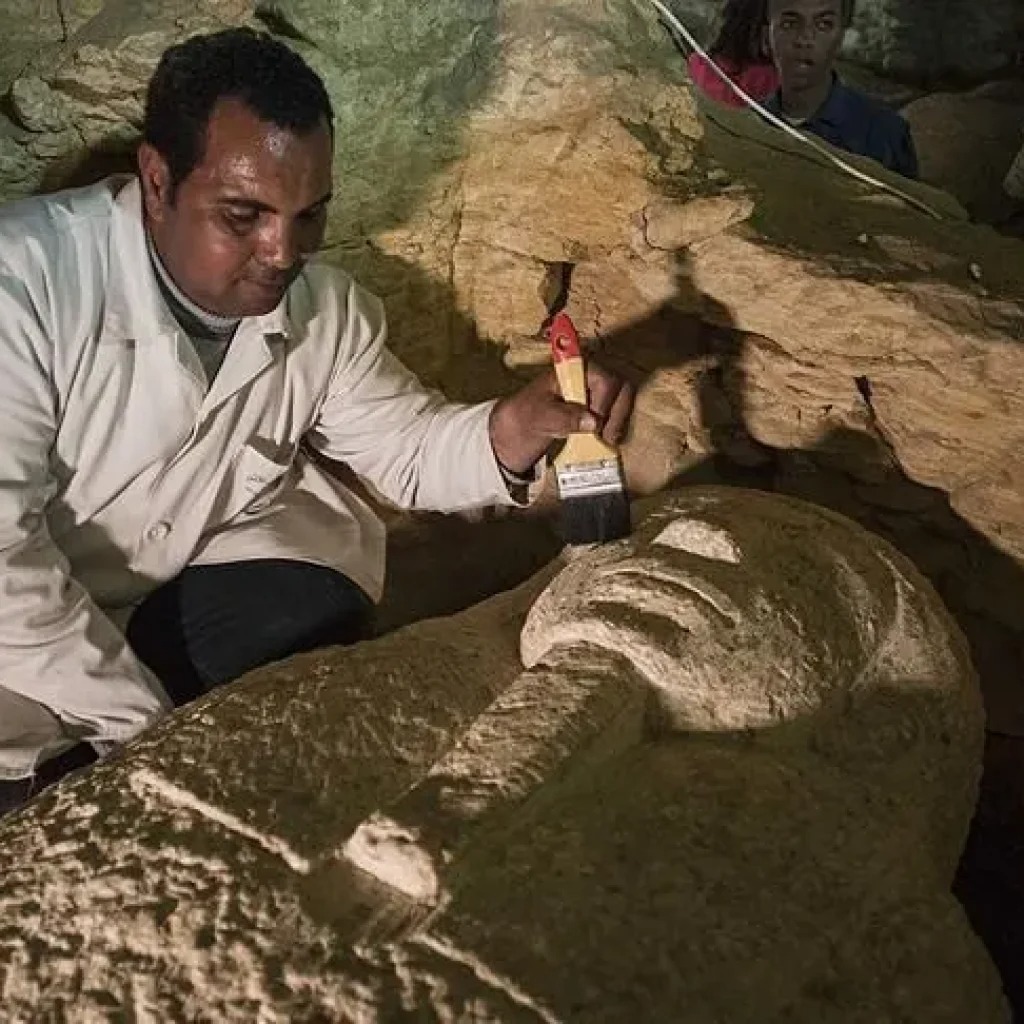
Archaeologists in Egypt made an exciting discovery this week. Teams found three ancient burial sites in the Western Desert. The finds include old mummies, stone coffins, and small clay statues.
The discoveries happened at the Sheikh Sobi site in the Bahariya Oasis. This area sits about 365 kilometers southwest of Giza. In old times, people used the site to bury powerful local leaders and priests.
The Egyptian Ministry of Tourism and Antiquities shared the news. Officials said the three structures come from two different time periods. One site is from the Late Period, while two others come from the Roman era.
The first site is a family tomb cut deep into natural rock. Workers found a square shaft that goes down three meters. This shaft leads to two small underground rooms.
In the first room, workers found a heavy limestone coffin with a mummy inside. The body was carefully wrapped in clean linen cloth. The second room held four more stone coffins with wrapped mummies. Experts believe a single wealthy family used this room for many years.
The second site is a small stair tomb from the Roman era. It has a short path that goes down three simple steps. The steps lead into a tiny burial room. The room has no wall art or paint. Workers found no bodies inside, so they think no one ever used it.
The third site is a large collective tomb built around a deep shaft. It has a big open space near the top. Workers think ancient priests used this open spot to prepare bodies for burial. Two smaller rooms connect directly to this main prep space.
Inside these rooms, the team found pieces of clay coffins and a damaged stone box. Near the front door, workers also found a smaller extra grave. It held a broken clay coffin with a human face carved on the lid.
The team also found many small everyday items at the site. They dug up old clay pots, small drinking flasks, and flat food plates. They also found stone tables used for religious gifts to the dead.
Among the smaller finds were tiny clay statues. Some show mother figures, while others show simple animal shapes. People left these small items to bring good luck and safety to their dead relatives.
Local research teams plan to keep digging at the site during future seasons. They hope to find more buried secrets in the desert sand. They also want to learn how local people lived and worked across different historical ages.
This new discovery shows that the deep desert still holds many rich secrets. Scholars hope the site will help write new pages in ancient history. Work at the oasis will start again very soon.
