


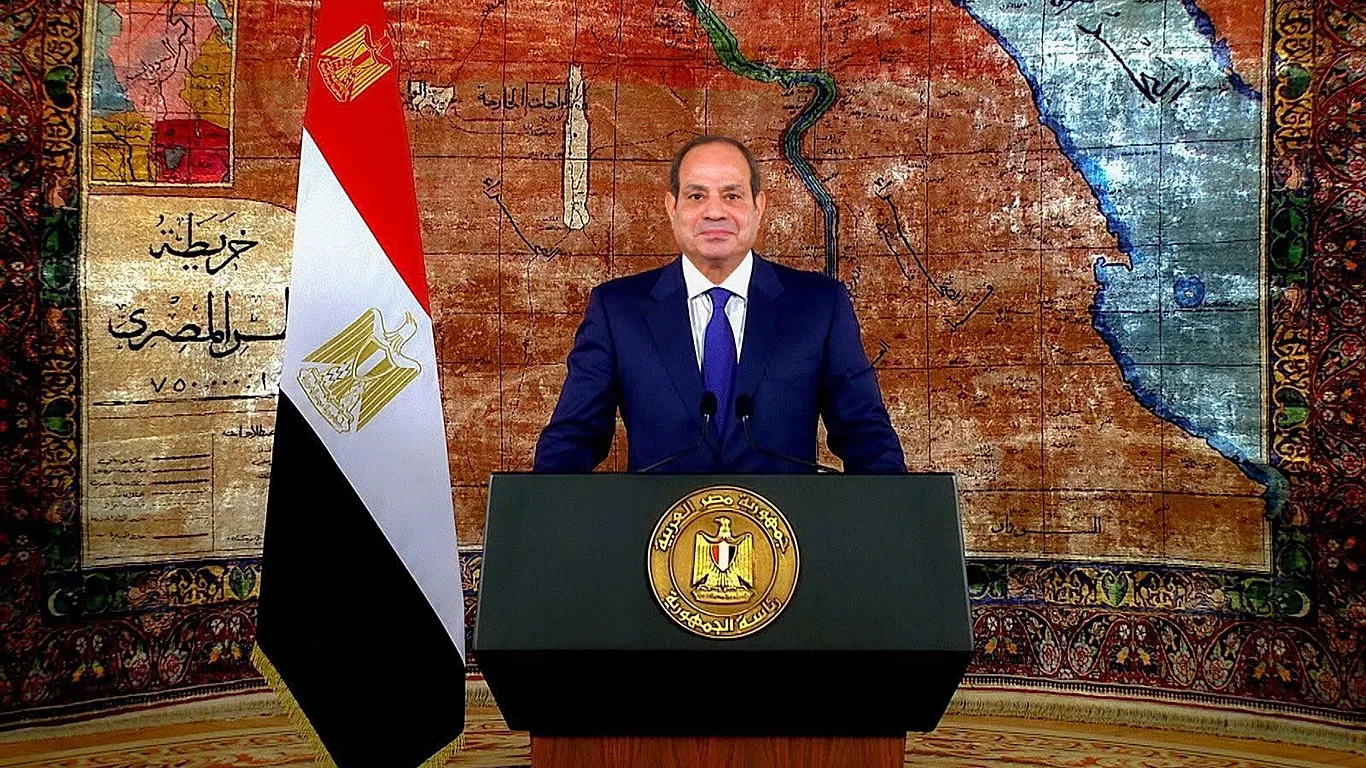
Abdel Fattah el-Sisi met with Hassan Abdallah to review Egypt’s economic conditions and discuss measures aimed at controlling inflation, strengthening foreign currency reserves, and increasing dollar inflows into the country.
According to an official government statement, the meeting focused heavily on the challenges created by ongoing regional conflicts and geopolitical instability. Officials examined how those developments continue to affect inflation, capital movement, investment activity, and Egypt’s external financial balance.
The discussion surrounding Egypt inflation economic reforms comes as authorities work to stabilize the country’s economy during a period of rising regional uncertainty. Egypt has faced strong economic pressure in recent years due to global inflation, currency challenges, and higher import costs.
During the meeting, Abdallah briefed the president on the latest progress made under Egypt’s economic reform programme. Officials said the reforms helped reduce inflation significantly from a previous peak of 38 percent down to 11 percent before the latest regional crisis intensified.
The government also highlighted growth in Egypt’s international reserves. Officials said net international reserves reached a record $53 billion in April 2026. According to the statement, that amount now covers roughly 158 percent of Egypt’s short-term external debt obligations.
Abdallah reportedly explained how current geopolitical tensions continue to create inflationary pressure while affecting external balances and investment flows. The Central Bank of Egypt remains focused on maintaining stability in the country’s financial system despite those external risks.
The central bank governor also reaffirmed Egypt’s commitment to a flexible exchange rate policy. Officials believe the approach allows the Egyptian pound to better absorb economic shocks linked to international events and regional instability.
Currency flexibility has become a major part of Egypt’s broader economic reform efforts. Financial analysts say the policy is designed to improve investor confidence, strengthen reserves, and reduce pressure on foreign currency markets.
The meeting additionally covered preparations for Egypt’s upcoming hosting of the 33rd Annual Meetings of African Export-Import Bank, commonly known as Afreximbank. The major financial gathering is scheduled to take place next June and is expected to attract senior officials, investors, and economic leaders from across Africa and beyond.
Officials view the event as an opportunity to strengthen Egypt’s role in regional economic cooperation and investment discussions. Egypt has increasingly sought to position itself as a major financial and trade hub linking Africa, the Middle East, and international markets.
At the end of the meeting, President Sisi instructed officials to accelerate efforts aimed at achieving long-term fiscal sustainability. He also emphasized the need for stronger fiscal discipline and improvements in Egypt’s debt structure.
The president further directed the central bank to continue working on increasing international reserves while maintaining efforts to contain inflation. Economic stability remains one of the government’s main priorities as Egypt continues navigating external financial pressures and regional uncertainty.
The issue of Egypt inflation economic reforms remains central to public and investor attention. Rising prices and currency pressures have affected many households and businesses across the country over the past several years.
Economic observers say the coming months will be important for Egypt as officials attempt to balance inflation control, investment growth, currency stability, and debt management during a period of continuing geopolitical tension in the wider region.
