


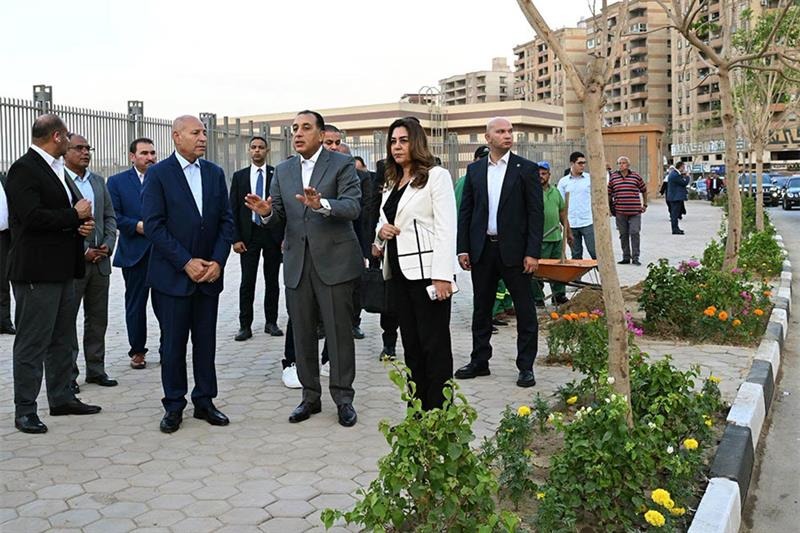
Egypt is expanding a major programme to create more green spaces in Greater Cairo, with Prime Minister Mostafa Madbouly reviewing the project during a tour of tree-planting and agricultural sites. The report was dated September 28, 2026, while the field visit took place on September 27. The programme aims to turn unused and neglected plots into gardens and public green areas and improve the urban environment across the capital.
The project is part of a wider effort to improve the appearance and environmental conditions of Egypt’s cities. Greater Cairo contains a very large population and has experienced rapid urban development. As buildings, roads and other infrastructure expand, open green areas can become limited.
Officials say the programme aims to use vacant land more effectively. Instead of leaving unused plots empty or neglected, authorities want to transform suitable locations into gardens, parks and other green spaces.
Trees and vegetation can provide several benefits in large cities. They can provide shade, improve the appearance of neighbourhoods and create places where residents can spend time outdoors. Green areas can also support urban biodiversity and contribute to local environmental quality.
Cairo’s climate makes shade particularly important. Summer temperatures can become very high, and areas with trees can provide cooler spaces than streets dominated by concrete and asphalt.
The project also involves agricultural activities. Tree planting and cultivation can be combined with landscaping to create areas that are both useful and attractive.
The government has directed attention toward unused land in different governorates. The goal is not limited to the centre of Cairo but includes a broader national effort to improve urban environments.
For residents, the creation of parks can have a direct effect on daily life. Public green areas provide spaces for walking, exercise, family activities and social interaction.
Urban planning experts often consider green space an important part of healthy cities. Parks can also help manage some environmental pressures created by dense construction.
However, maintaining green areas requires long-term work. Trees need water, care and protection, while parks require regular cleaning and maintenance. Authorities therefore need to consider the future cost of maintaining the sites after they are created.
Water management is especially important in Egypt because the country has limited water resources. Planting schemes need to use suitable species and efficient irrigation systems so that green development does not create unnecessary pressure on water supplies.
The government is therefore expected to focus on appropriate plants and agricultural methods in different areas. The choice of trees can affect both water use and the long-term survival of the landscape.
The September 27 inspection allowed officials to review progress on the ground. The September 28 report highlights the wider objectives of the programme and its connection with national urban development.
Greater Cairo contains many densely populated areas, so even small green projects can provide useful community spaces. A larger network of parks could also create more opportunities for recreation.
The programme has an aesthetic purpose as well. Turning empty plots into gardens can change the appearance of neighbourhoods and reduce the amount of unused land.
The initiative also reflects a wider international trend toward greener cities. Governments are increasingly looking at parks, trees and public spaces as part of urban planning rather than treating them as optional additions.
For Cairo, this is particularly important because the capital continues to grow. New housing, roads and commercial areas create pressure on available land, making careful planning necessary.
The greening programme is therefore intended to balance development with environmental improvements. The government wants to use land more effectively while creating spaces that residents can use.
The September 28 report shows that the project is continuing beyond individual planting activities. Officials are reviewing different sites and considering how unused land can contribute to a greener urban environment.
If maintained over the long term, the programme could gradually change parts of Greater Cairo. For residents, the most visible result would be more trees, gardens and public green spaces in areas that previously had little vegetation.
