


A US appeals court has ruled that most tariffs imposed by Donald Trump are illegal. The decision represents a major defeat for his trade agenda and sets up a likely Supreme Court showdown.
The ruling cancels Trump’s “reciprocal” tariffs on dozens of countries. It also nullifies levies imposed on China, Mexico and Canada.
Court confirms Congress controls tariffs
In a 7-4 decision, the US Court of Appeals for the Federal Circuit declared the tariffs “invalid as contrary to law”.
Judges rejected Trump’s argument that the International Emergency Economic Powers Act allowed him to act. They emphasized that only Congress has the constitutional authority to impose tariffs.
The ruling will take effect on 14 October unless the Supreme Court intervenes.
Trump criticizes ruling
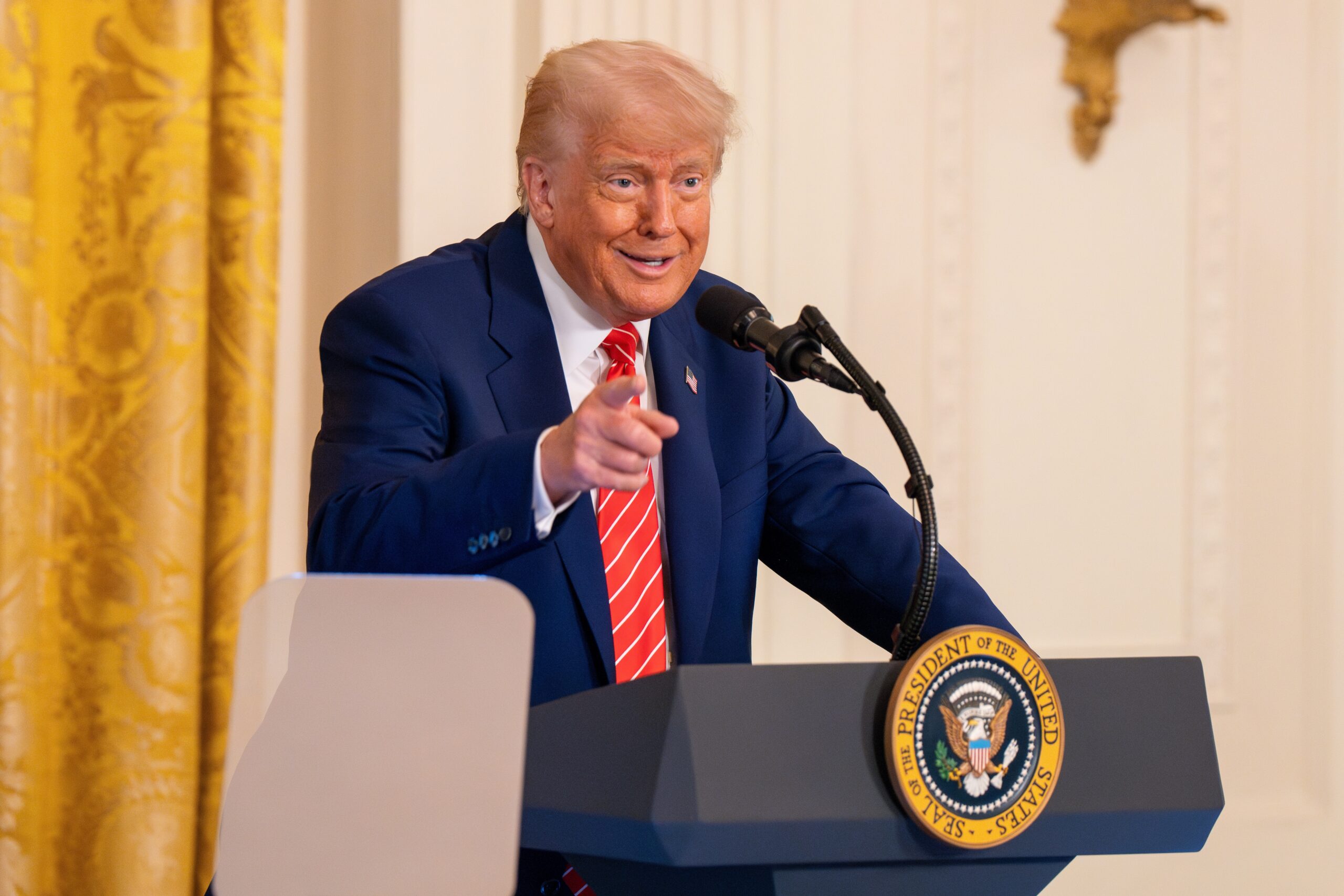
Trump condemned the decision on Truth Social. He warned that removing the tariffs would “literally destroy the United States”.
He accused the appeals court of partisanship and said the tariffs were essential to national and financial strength. Trump predicted America would ultimately prevail.
Emergency powers defense rejected
Trump had defended his tariffs under the IEEPA. He declared a trade emergency, claiming deficits threatened US national security.
The court disagreed. In its 127-page opinion, it wrote that the IEEPA “neither mentions tariffs nor limits presidential authority to impose them”.
Judges stressed that Congress has historically reserved tariff powers and only delegates them explicitly.
Legal challenges from businesses and states
Two lawsuits prompted the case. Small businesses and a coalition of states challenged Trump’s April executive orders.
The orders imposed a 10% tariff on nearly every nation. They also added “reciprocal” tariffs on dozens more. Trump described the move as America’s “liberation day” from unfair trade.
The Court of International Trade had already ruled the tariffs unlawful, though that decision was paused during appeal.
Tariffs on allies and China overturned
The appeals court also nullified tariffs on Canada, Mexico and China. Trump argued they were necessary to curb drug imports.
Tariffs on steel and aluminium remain in force. They were enacted under separate presidential authority.
White House warns of economic impact
Before the ruling, White House lawyers warned of severe consequences. They said revoking the tariffs could trigger a financial collapse similar to 1929.
They argued the US might fail to repay trillions already committed by foreign partners. Such a scenario could weaken national security and damage the economy.
The ruling also casts doubt on trade agreements where countries accepted reduced tariffs in exchange for concessions.
Supreme Court expected to intervene
The case now appears headed to the Supreme Court. The justices have recently limited presidential actions taken without explicit congressional approval.
During Joe Biden’s presidency, the court blocked climate regulations and struck down student debt relief under the “major questions doctrine”.
The Supreme Court will now decide whether Trump’s tariff program was lawful executive action or presidential overreach.
Conservative majority may decide the outcome
Trump lost in the appeals court, where only three of eleven judges were Republican appointees.
The Supreme Court has six conservative justices, including three appointed by Trump himself.
That majority could influence a ruling that may reshape presidential authority over trade for years to come.
