


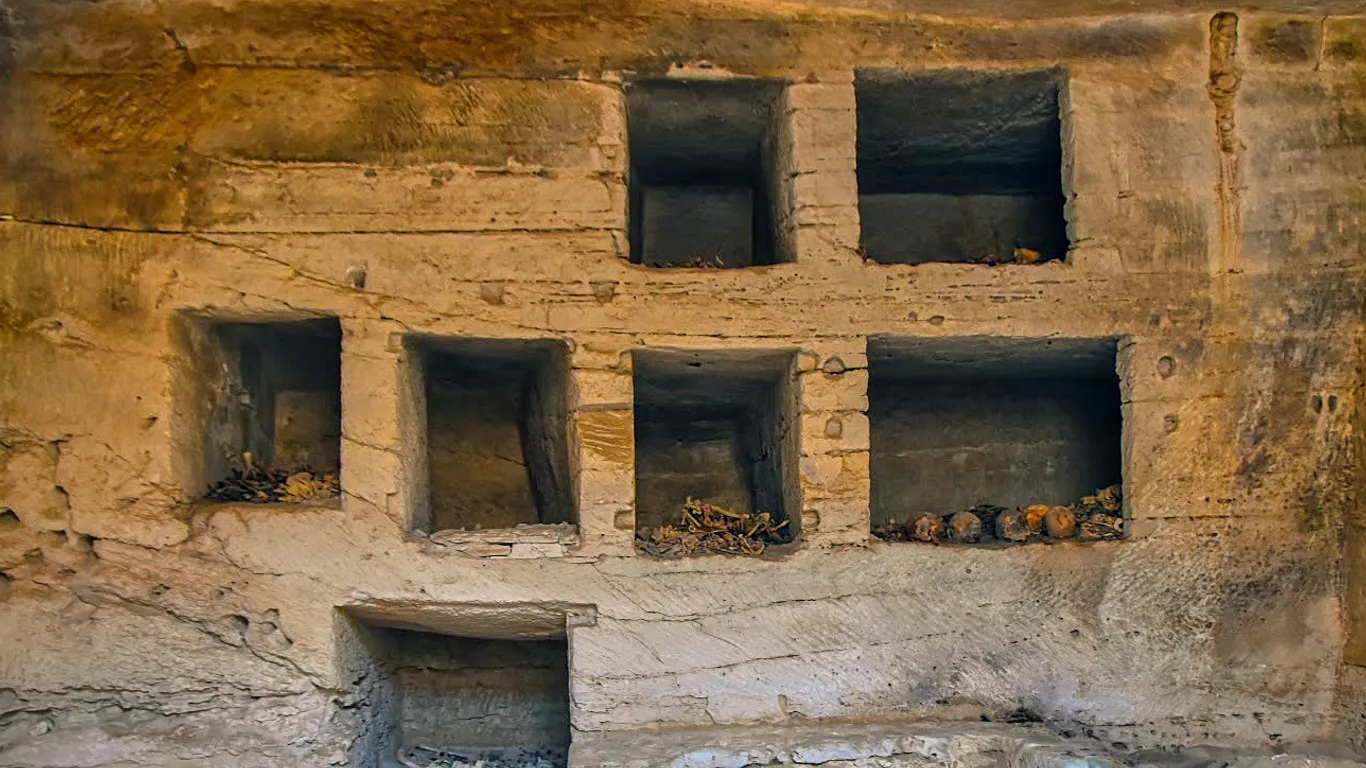
Archaeologists have uncovered 18 ancient tombs along Egypt’s northwestern coast, adding new details to the country’s rich history. The discovery includes rare gold amulets known as “golden tongues,” which were placed inside the mouths of the dead during ancient burial rituals.
The tombs were found at Marina El Alamein, an archaeological site about 300 kilometers northwest of Cairo. The area was once home to the ancient city of Leukaspis, an important center for trade and cultural exchange during the Ptolemaic and Roman periods.
Egypt’s Ministry of Tourism and Antiquities officially announced the discovery after the latest excavation campaign. Officials said the new finds provide valuable information about ancient burial customs and life in the coastal city.
The latest discovery increases the total number of tombs identified at the site to 44 since Marina El Alamein was first discovered in 1986. Archaeologists believe the area still holds more important remains that could help explain the history of the region.
Among the newly uncovered structures are 11 underground tomb complexes carved directly into rock. Researchers also found seven above-ground tombs built with limestone blocks. Some of these structures remained in excellent condition because their original coverings had protected them for centuries.
The excavation also uncovered many well-preserved artifacts. Archaeologists recovered oil lamps, amphorae, ceramic vessels, stone basins, and small stone altars that were likely used during burial ceremonies or religious rituals.
One of the most remarkable discoveries is a large granite sarcophagus measuring about two and a half meters in length. Human remains were still inside the stone coffin, giving researchers an important opportunity to study ancient burial practices and the people who once lived in the region.
The most unusual discovery was 24 thin pieces of gold foil placed inside the mouths of the deceased. These objects are known as “golden tongues” and were part of an ancient funerary tradition during the Hellenistic and Roman periods.
Experts believe the gold foils were placed in the mouths of the dead to help them speak with gods in the afterlife. The ritual reflected the belief that communication with underworld deities was necessary for a successful journey after death.
Archaeologists say the discovery offers strong evidence that ancient Egyptian religious traditions continued even after foreign rulers arrived in Egypt. Although Greek and Roman influence spread across the region, many local customs remained an important part of daily life and burial ceremonies.
Another important object found during the excavation was a gold amulet showing the Eye of Horus. In ancient Egyptian belief, the Eye of Horus symbolized protection, healing, and good health. It was commonly placed with the dead to offer safety during the journey to the afterlife.
Egypt’s Minister of Tourism and Antiquities, Sherif Fathy, said the discovery highlights the historical importance of Leukaspis. Ancient Greek geographer Strabo also wrote about the city, showing that it played a significant role in the ancient Mediterranean world.
Leukaspis stood about 100 kilometers from Alexandria and served as an important coastal settlement. Its location made it a key point for trade between Egypt and other Mediterranean regions, allowing goods, people, and ideas to move across the sea.
Today, Marina El Alamein is considered one of Egypt’s best-preserved coastal archaeological sites from the classical period. Its well-preserved buildings, tombs, and artifacts continue to provide valuable information about life during the Ptolemaic and Roman eras.
Researchers believe the latest discoveries will improve understanding of ancient religious beliefs, burial traditions, and cultural exchange in Egypt. The combination of underground tombs, limestone burial structures, rare gold amulets, and everyday objects offers a clearer picture of how people lived and honored their dead more than 2,000 years ago.
Archaeologists plan to continue exploring the site, hoping to uncover more tombs and artifacts that can further reveal the history of one of ancient Egypt’s most important coastal cities.
