


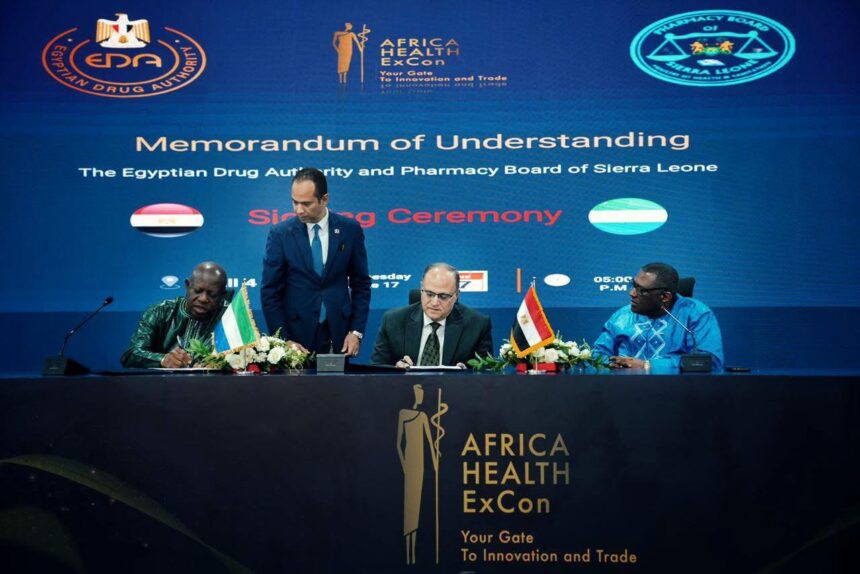
Egypt and Sierra Leone have signed a new memorandum of understanding aimed at strengthening pharmaceutical cooperation, improving regulatory systems, and expanding technical collaboration between the two countries.
The agreement was signed between the Egyptian Drug Authority and the Pharmacy Board of Sierra Leone during the fifth edition of Africa Health ExCon 2026. The signing was carried out by Ali El Ghamrawy, chairperson of the Egyptian Drug Authority, and James Peter Komie, chairperson of the Pharmacy Board of Sierra Leone, in the presence of Sierra Leone’s ambassador to Egypt, Sadiq Sillah.
Officials said the MoU is designed to strengthen cooperation in pharmaceutical regulation through the exchange of technical expertise, training programs, and best practices. The goal is to improve oversight systems and raise the quality of healthcare services in both countries.
The agreement also focuses on building stronger institutional capacity within regulatory bodies. This includes enhancing skills in areas such as drug registration, inspection processes, and pharmacovigilance systems used to monitor the safety of medicines after they enter the market.
Speaking at the ceremony, El Ghamrawy said the partnership reflects Egypt’s broader strategy to expand cooperation with African regulatory authorities. He said the Egyptian Drug Authority aims to play a leading role in supporting pharmaceutical integration across the continent.
He added that closer collaboration will help harmonize regulatory standards between African countries. According to him, this will improve access to safe, effective, and high-quality medical products while strengthening pharmaceutical security across the region.
Sierra Leone’s ambassador to Egypt, Sadiq Sillah, praised Egypt’s leadership in pharmaceutical regulation. He said his country values Egypt’s experience and its willingness to share technical knowledge with other African nations.
Sillah also expressed interest in increasing Egyptian investment and participation in Sierra Leone’s local pharmaceutical market. He said stronger cooperation could help improve healthcare delivery and support long-term public health goals.
James Peter Komie of the Pharmacy Board of Sierra Leone highlighted the importance of learning from Egypt’s regulatory experience. He said Egypt has developed advanced systems in inspection, training, and quality control that can support the development of Sierra Leone’s pharmaceutical sector.
He added that the partnership would help strengthen workforce training and improve institutional performance in regulatory operations. This, he said, would directly benefit public health systems in Sierra Leone.
The memorandum outlines several key areas of cooperation, including pharmaceutical product registration, regulatory inspections, pharmacovigilance, and workforce development. It also includes joint training initiatives and technical exchange programs.
Officials said the partnership is expected to improve efficiency in regulatory systems and promote higher quality standards in pharmaceutical production and distribution.
Beyond technical cooperation, the agreement also aims to encourage broader collaboration among African regulatory authorities. This includes efforts to build trust, strengthen mutual recognition systems, and support greater integration of pharmaceutical standards across the continent.
The signing reflects a growing trend of regional cooperation in Africa’s healthcare sector, as countries work together to improve access to medicines and strengthen regulatory frameworks.
By expanding partnerships like this, officials said both Egypt and Sierra Leone aim to contribute to a more coordinated and resilient pharmaceutical system that supports public health development across Africa.
