


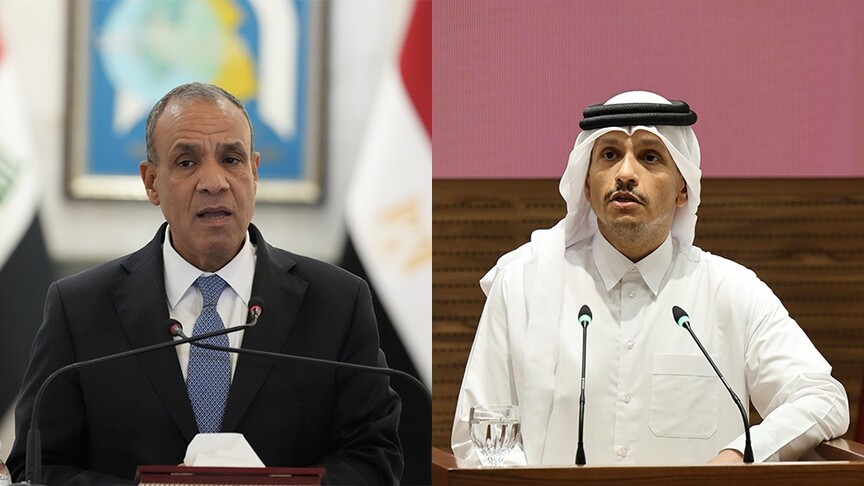
Egypt and Qatar have called for the full implementation of the Gaza ceasefire phase, stressing the need to move forward with agreed steps aimed at stabilising the situation in the territory and supporting broader regional peace efforts.
The appeal was made during high-level talks held in Cairo on Sunday between Egyptian Foreign Minister Badr Abdelatty and Qatari Prime Minister and Foreign Minister Mohammed bin Abdulrahman Al Thani. The meeting focused on strengthening coordination between the two countries and addressing ongoing developments in the region.
Both sides highlighted the importance of continued cooperation on regional issues and agreed to maintain joint efforts aimed at protecting shared interests and supporting what was described as wider Arab security priorities.
A key focus of the discussions was the need to implement the first stage of the Gaza ceasefire phase under an international framework that has been under negotiation since earlier peace proposals were introduced.
The ceasefire plan, which includes multiple stages, was designed to reduce hostilities, facilitate prisoner exchanges, and create conditions for longer-term political and security arrangements in Gaza.
According to official statements, the first phase of the agreement includes a ceasefire on the ground and the exchange of detainees between the involved parties. Mediators have said this stage is essential for building trust before advancing to further steps.
Egypt and Qatar, working alongside Türkiye and other international partners, have been leading mediation efforts aimed at keeping negotiations active and encouraging compliance with agreed terms.
Talks resumed in Cairo over the weekend, with Palestinian factions and mediators continuing discussions on how to move toward the next phase of the agreement. The consultations are part of ongoing diplomatic efforts to reduce tensions and prevent further escalation.
The broader framework of the ceasefire plan includes proposals for a phased Israeli withdrawal from Gaza, the establishment of a technocratic administration, and the possible deployment of an international stabilisation force to support security and reconstruction efforts.
It also outlines arrangements for humanitarian assistance, including the delivery of aid and rebuilding materials to areas affected by prolonged conflict and infrastructure damage.
However, Palestinian sources have reported repeated violations of the ceasefire on the ground, raising concerns about the durability of the agreement and complicating diplomatic efforts to advance the process.
Despite the official ceasefire taking effect in October 2025, reports from health authorities in Gaza have indicated continued casualties and injuries resulting from ongoing incidents, adding pressure on mediators to ensure compliance with the deal.
Egypt and Qatar have both reiterated that progress depends on strict implementation of the initial phase, arguing that failure to uphold commitments could undermine the entire framework.
Diplomatic observers say the current talks in Cairo represent a critical moment for the future of the agreement, as mediators attempt to bridge gaps between the parties and prevent further deterioration of the situation.
The Gaza ceasefire phase remains central to international efforts aimed at de-escalating the conflict and creating conditions for a more comprehensive political solution in the region.
As discussions continue, mediators are expected to push for clearer guarantees and stronger enforcement mechanisms to ensure that agreed steps are carried out on the ground without further delay.
