


Egypt is aiming to increase its outsourcing exports to $6 billion this year as part of a broader national strategy to position the country as a global hub for information technology and business services.
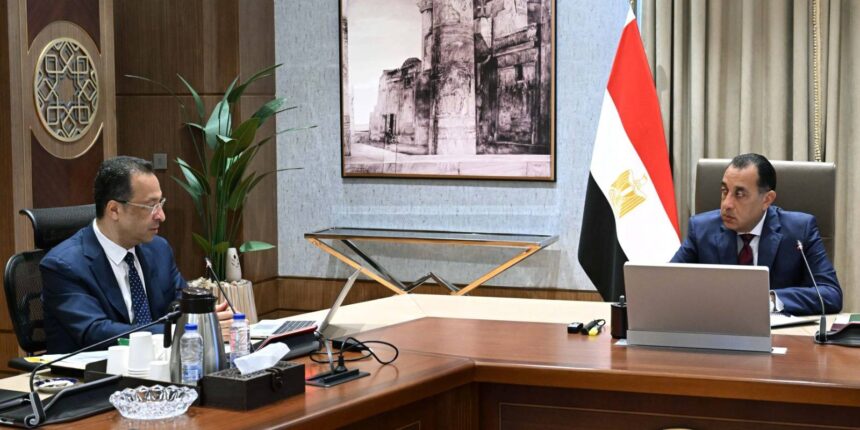
The target was announced by Egypt’s Minister of Communications and Information Technology, Raafat Hindi, during a government review meeting on Monday with Prime Minister Mostafa Madbouly. The figure marks a rise from about $5.2 billion recorded in 2024, reflecting steady growth in the sector.
Officials say the government is focusing on expanding digital services, improving infrastructure, and attracting more international companies to invest in Egypt’s technology industry.
The ministry is currently preparing new investment plans for designated technology zones. These zones are intended to host outsourcing companies and support the expansion of export-oriented digital services.
As part of this strategy, the ministry has also signed a cooperation protocol with the Ministry of Investment. The agreement includes efforts to integrate electronics design and semiconductor-related services into Egypt’s broader export development programme.
During the meeting, the communications minister outlined four key areas driving the sector’s expansion. These include outsourcing services, local manufacturing of mobile phones, digital infrastructure development, and the data centre industry.
Government officials said discussions have been held with several major global outsourcing companies. The talks focused on encouraging firms to expand operations in Egypt and increase investment in local facilities over the coming years.
Authorities believe Egypt’s growing talent pool, competitive costs, and geographic location make it an attractive destination for international outsourcing operations, particularly for companies serving Europe, the Middle East, and Africa.
A key part of the strategy is the “Egypt Manufactures Electronics” programme, which aims to strengthen domestic production of mobile devices. The government is encouraging manufacturers to increase local content in production while also expanding exports.
According to ministry data, 15 mobile phone brands are currently producing devices in Egypt. Annual production is expected to exceed 15 million units as manufacturing capacity continues to expand.
Officials say this expansion is intended to meet rising domestic demand while also supporting export growth to regional and international markets.
The government is also investing heavily in digital infrastructure to support long-term sector growth. This includes upgrading fixed internet networks, replacing older copper cables with fibre-optic systems, and expanding 5G services across the country.
In addition, Egypt plans to increase the number of telecommunications towers to improve network coverage. The ministry aims to add around 3,000 new towers this year and more than 9,000 over the next three years.
To support this expansion, new frequency bands totaling 410 megahertz were allocated to Egypt’s four telecom operators earlier this year, backed by investments worth $3.5 billion.
Since 2019, total investments in fixed and mobile internet infrastructure have exceeded $6 billion, according to government figures. Officials say these investments are essential for supporting a growing digital economy and attracting global technology firms.
Another major focus is the development of data centres. The government is currently working on a national strategy to regulate and expand data centre infrastructure in coordination with multiple state agencies.
The plan aims to position Egypt as a regional hub for cloud computing and artificial intelligence services by leveraging its geographic location between Africa, Europe, and Asia.
Authorities also intend to create an investment map and offer incentives to attract large-scale international data centre projects.
Officials say the strategy will not only boost digital exports but also improve domestic connectivity and support the growing demand for advanced digital services.
Renewable energy integration is also part of the long-term vision, as Egypt looks to ensure that future data centre operations are both sustainable and competitive in the global market.
With rising outsourcing revenues, expanding infrastructure, and increasing foreign investment interest, Egypt is positioning itself for stronger competition in the global digital services industry in the years ahead.
