


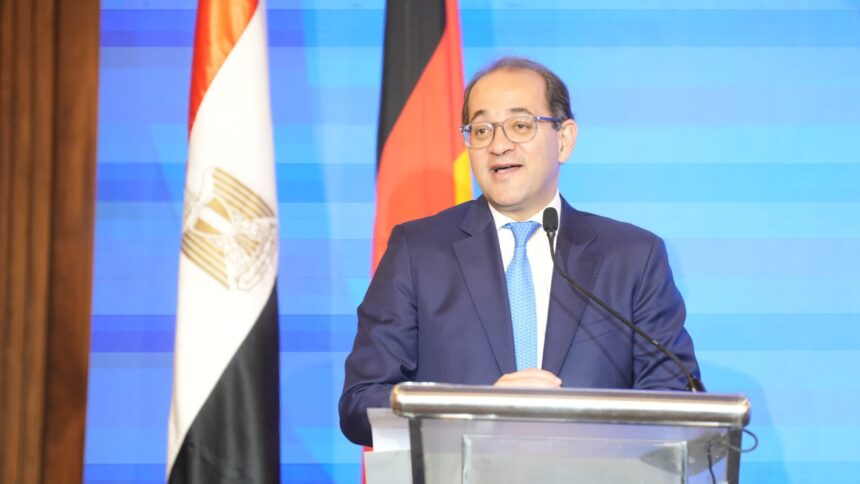
Egypt’s transit trade sector recorded strong growth in early 2026, rising by 35% in the first quarter compared to the same period last year. The announcement was made by Finance Minister Ahmed Kouchouk during a logistics conference focused on trade and investment development.
The Egypt Transit Trade growth reflects the country’s ongoing efforts to strengthen its position as a regional logistics hub. Officials say the increase is linked to improved infrastructure, faster customs processes, and new government support measures aimed at international investors.
Speaking at a conference organised by the German-Arab Chamber of Industry and Commerce, Kouchouk said the government is preparing a major package of reforms. This package includes 40 measures designed to simplify trade procedures and speed up customs clearance.
One of the main goals of these reforms is to reduce delays in moving goods through ports and borders. The government plans to make trade operations more efficient and attract more global shipping and logistics companies to use Egypt as a transit route.
The Egypt Transit Trade strategy also includes improving digital systems in customs operations. Officials said an updated electronic database of customs regulations will be launched soon. This system will allow businesses to access rules more easily and reduce confusion in trade procedures.
Another key change involves customs processing rules. Authorities have already introduced special facilities that allow transit shipments to be cleared at ports without Advance Cargo Information (ACI) pre-registration in some cases. This is expected to reduce waiting times and improve cargo flow.
The government is also working on reducing financial pressure on investors. Instead of relying only on cash guarantees, new alternatives are being introduced. These changes are aimed at making trade operations smoother and more flexible for companies working in Egypt.
According to the finance minister, Egypt is also building an advanced risk management system. This system will follow international standards and help improve pre-clearance processes. Officials say it will strengthen border control while still supporting faster trade movement.
At the same time, the government has stressed that border security remains a top priority. Kouchouk said Egypt will continue to protect its borders and ensure that only goods meeting required standards are allowed entry. He highlighted that trade facilitation will not come at the cost of safety or quality control.
Business leaders attending the conference expressed optimism about the country’s direction. Ahmed El Sewedy, chairperson of the German-Arab Chamber of Industry and Commerce, said investment conditions in Egypt have improved. He also noted that current infrastructure developments are supporting economic growth and trade expansion.
The Egypt Transit Trade increase is also seen as part of a wider effort to position the country as a key global logistics center. Egypt’s location between Asia, Africa, and Europe gives it a strategic advantage for shipping routes and international supply chains.
Experts say that continued investment in ports, roads, and digital customs systems will be important for sustaining this growth. Faster clearance times and simplified rules are expected to attract more transit cargo through Egyptian ports in the coming years.
The government’s reform plan is expected to be presented to the House of Representatives in the coming weeks. If approved, it could further accelerate trade efficiency and improve Egypt’s competitiveness in global logistics markets.
Overall, the Egypt Transit Trade sector is showing strong momentum. With new reforms, digital upgrades, and infrastructure improvements, officials hope the country will continue to grow its role in international trade flows.
