


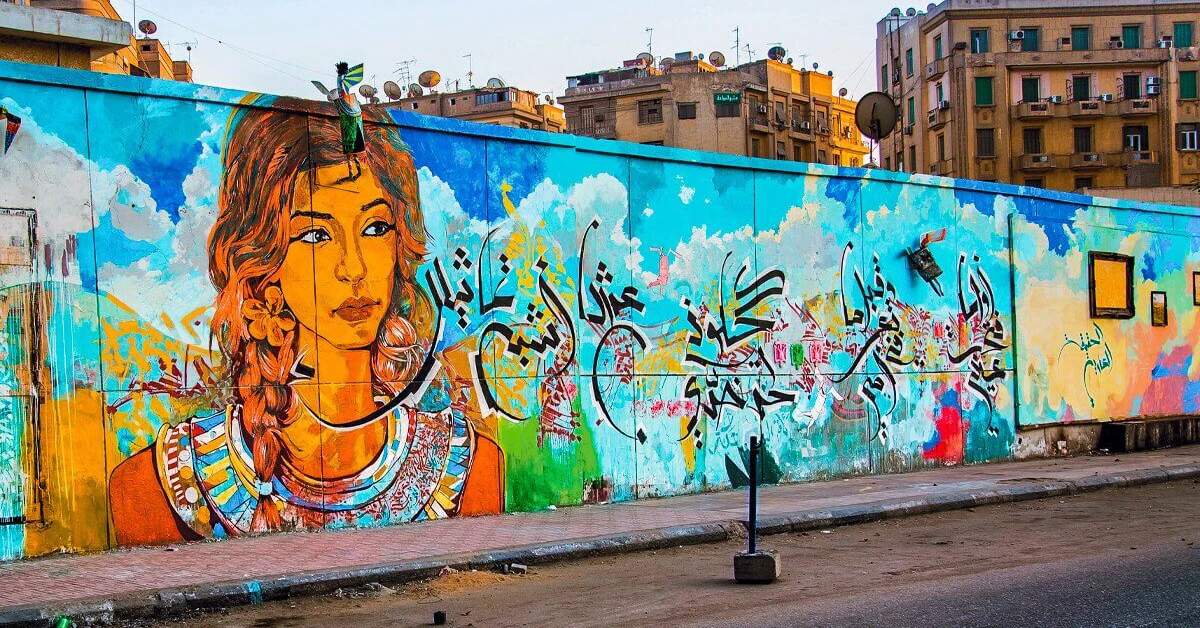
A growing street art movement in Cairo is transforming public spaces across the city, as new community-led projects give young artists a platform to express their creativity and reshape urban neighborhoods.
The initiatives are being carried out in different districts of Cairo, where walls, underpasses, and public areas are being turned into large-scale art spaces. These projects are adding color and creativity to areas that were previously plain or neglected.
Young artists are playing a central role in this movement. Many of them are using street art to express social themes, cultural identity, and everyday life in Egypt. Their work is helping to bring art closer to local communities rather than keeping it limited to galleries or private spaces.
Community groups and local initiatives are supporting these projects by providing materials, organizing events, and connecting artists with public spaces. This collaboration is helping to build a more inclusive cultural environment in the city.
Residents in participating neighborhoods say the artwork is improving the appearance of their surroundings and creating a stronger sense of community pride. Public spaces that once went unnoticed are now becoming local landmarks.
Experts say the expansion of street art reflects a broader cultural shift in Cairo, where young people are increasingly using creative expression to engage with urban life. It also shows how art can be used as a tool for community development.
The movement is also attracting attention from cultural observers and visitors who see Cairo’s street art as part of a growing urban identity. The artworks are often shared on social media, increasing visibility for the artists.
Supporters of the initiative believe that expanding access to public art can help make cities more vibrant and inclusive. They say it also provides important opportunities for emerging artists to gain recognition and experience.
As the street art movement continues to grow, more neighborhoods in Cairo are expected to join in, further expanding the role of public art in shaping the city’s cultural landscape.
