


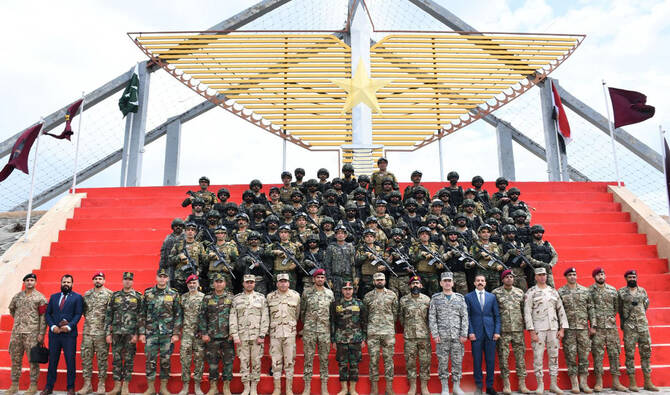
Pakistan and Egypt have concluded a two-week joint military exercise aimed at improving coordination and strengthening defense cooperation between the two armies. The exercise focused on counterterrorism operations and enhancing interoperability through shared training.
The Pakistan–Egypt Joint Exercise Thunder-II was held at the Special Operations School in Cherat, located in northwest Pakistan. It began on April 6 and included personnel from Pakistan Army’s Special Services Group (SSG) and Egypt’s special forces. The drill was designed to improve joint operational skills, refine procedures, and strengthen cooperation in counterterrorism missions.
According to Pakistan’s Inter-Services Public Relations (ISPR), the military’s media wing, the exercise was successfully completed after two weeks of intensive training. Officials said the main objective was to improve coordination between both forces in real operational conditions.
The closing ceremony was attended by senior military officials from both sides. The General Officer Commanding of the Special Services Group attended as the chief guest. Egypt was represented by Major General Mohamed Saad Abdel Razik, Commander of Egyptian Paratroopers, along with Egypt’s defense attaché.
During the exercise, both sides practiced tactical drills, joint planning, and field operations. The training focused on counterterrorism scenarios, which are considered a key area of cooperation between the two countries. Military officials said such exercises help improve readiness and mutual understanding.
Pakistan and Egypt share long-standing diplomatic and defense relations. Egypt was one of the first countries in the Middle East to recognize Pakistan after its independence. Formal diplomatic relations between the two countries were established in 1948, marking decades of cooperation.
Over the years, both countries have maintained regular political and military engagement. Defense cooperation has remained an important part of their bilateral relationship, alongside economic and diplomatic ties.
In October last year, further steps were taken to strengthen cooperation between the two sides. Pakistan’s Army Chief, Field Marshal Asim Munir, who now serves as the country’s top defense official, met Egyptian President Abdel Fattah El-Sisi in Cairo. During the meeting, both sides agreed to expand cooperation in security and economic areas.
Military experts say joint exercises like Thunder-II are important for improving coordination between friendly armed forces. They also help share experience in counterterrorism operations, which remain a key security challenge in several regions.
Officials from both countries described the exercise as successful and said it reflects continued trust and cooperation between Pakistan and Egypt. They also emphasized the importance of regular training exchanges to strengthen defense readiness.
The exercise comes at a time when many countries are increasing joint military training to improve regional and global security cooperation. Pakistan and Egypt have both expressed interest in maintaining strong defense ties while also expanding broader diplomatic and economic relations.
With the successful completion of Thunder-II, both sides are expected to continue similar engagements in the future, focusing on training, coordination, and security cooperation.
