


Egypt’s logistics market is expected to grow strongly in the coming years as the country expands transport infrastructure, improves digital systems, and develops sustainable supply chains.
The freight and logistics market is projected to rise from US$10.93 billion in 2025 to US$14.66 billion by 2031. The sector is expected to record a compound annual growth rate of 5.04% between 2026 and 2031.
The forecast was highlighted in a report by the Information and Decision Support Centre, which examined the role of logistics in Egypt’s economy and the country’s efforts to create greener and more efficient supply chains.
The transport and storage sector has remained an important part of Egypt’s economic activity. Between the 2015/2016 and 2024/2025 fiscal years, the sector contributed an average of about 5% to the country’s gross domestic product.
The value of the sector has continued to increase despite changes in annual growth rates, supported by rising trade activity, infrastructure investment, and demand for transportation services.
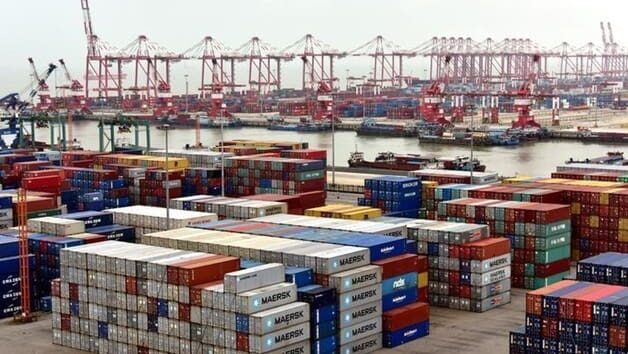
Egypt is investing heavily in port development and transport networks to strengthen its role as a regional logistics hub.
The country currently has 14 operating ports that are undergoing expansion and improvement projects. Five additional facilities are also under construction in Abu Qir, Al-Max, Gargoub, Berenice, and Taba.
Several Egyptian ports have improved their global positions due to upgrades in efficiency, capacity, and operational performance.
East Port Said Port achieved a leading position in the 2024 Container Port Performance Index, ranking among the top ports worldwide and becoming the highest-ranked port in the region.
Damietta Port was also included among the world’s top container terminals in the same index. It was recognized as one of the ports with major annual improvements.
Ain Sokhna Port gained international attention after achieving recognition for its deep artificial port basin, which reaches a depth of 19 meters.
Abu Qir Port is also seeking recognition for a planned 22-meter depth, which would make it one of the deepest ports in the Mediterranean.
The Egyptian government is also focusing on green logistics as part of its wider sustainability plans.
Authorities are encouraging the use of electric vehicles, energy-efficient warehouses, and cleaner supply chain solutions to reduce the environmental impact of logistics operations.
Digital transformation is another major priority for the sector.
Egypt has introduced the National Single Window for Foreign Trade Facilitation, known as NAFEZA, to simplify customs procedures and improve the movement of goods.
Warehouse management systems are also being adopted to improve storage operations, reduce cargo waiting times, and lower logistics costs.
The expansion of the logistics sector is creating significant employment opportunities across Egypt.
Transportation and warehousing accounted for about 8.7% of the country’s workforce during the first quarter of 2026. The sector employed around 2.9 million workers from a total labor force of approximately 33.3 million people.
Transportation services also provided an important source of foreign currency revenue. The sector generated about US$9.4 billion during the 2024/2025 fiscal year.
Freight transportation remains the largest segment of Egypt’s logistics market. It represented around 59.73% of the total market share in 2025.
Egypt’s strategic location between Africa, Europe, Asia, and the Middle East continues to support growth in trade and logistics activity.
The government aims to transform existing transport routes and trade centers into smart and sustainable logistics hubs that can connect global supply chains.
Through continued investment in infrastructure, technology, and environmentally friendly solutions, Egypt expects the logistics sector to become a stronger driver of economic growth and international trade.
The projected market expansion reflects Egypt’s broader goal of building a modern logistics network that supports businesses, creates jobs, and improves the country’s position in global commerce.
