


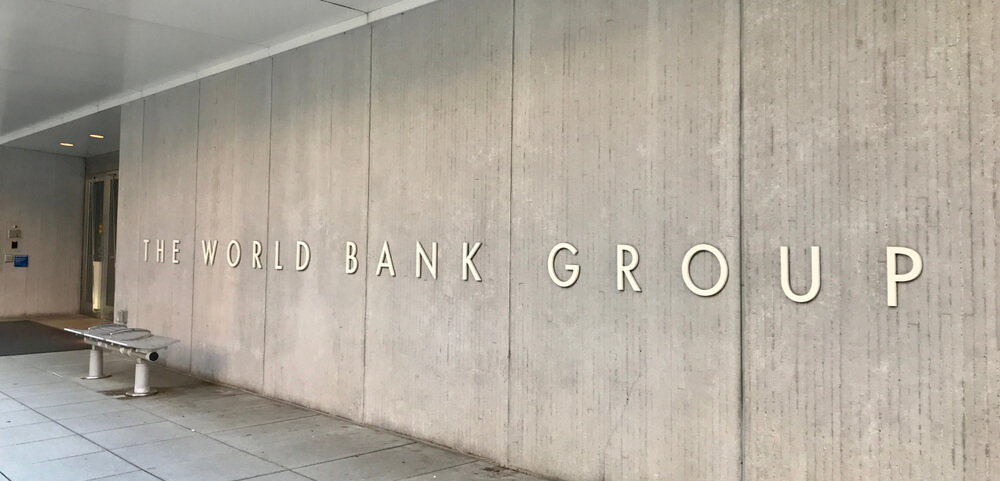
The World Bank Group has officially launched its first office in Doha, a move that signals a stronger and more strategic partnership with Qatar and highlights the country’s growing influence in international development and finance.
The new office, inaugurated on Sunday, is set to act as a regional base for cooperation between the World Bank Group and Qatari institutions, with an emphasis on development funding, mobilising private investment and supporting countries affected by fragility and conflict. It is hosted at the headquarters of the Qatar Fund for Development (QFFD), in coordination with the Ministry of Finance.
World Bank Group President Ajay Banga said the decision reflects a relationship grounded in shared goals and expanding collaboration. He noted that Qatar has the potential to play a larger role in driving growth across neighbouring regions, both through development contributions and by helping attract private capital into emerging markets to create jobs and long-term prosperity.
A Regional Hub for Cooperation
The Doha office is designed to strengthen day-to-day collaboration with Qatari partners and broaden engagement beyond government institutions. Banga explained that discussions during his visit also focused on working more closely with Qatar’s financial and development ecosystem, reinforcing the country’s position as a connector between global institutions and regional needs.
For Qatar, the opening represents more than just a new office. Minister of Finance H.E. Ali bin Ahmed Al-Kuwari described it as a milestone in a long-standing partnership. He said the presence of the World Bank Group in Doha will contribute to Qatar National Vision by supporting capacity building, skills development and training opportunities for young Qataris.
Bringing Together the World Bank Group
The Doha office brings multiple arms of the World Bank Group under one roof, including the International Finance Corporation (IFC) and the Multilateral Investment Guarantee Agency (MIGA). This structure allows for closer coordination on development projects, risk mitigation tools and private-sector investment.
Rwodah Ibrahim Al Naimi, Director of Investments at QFFD, said the multi-institutional presence is a key strength. She explained that having IFC, MIGA and other partners represented in Doha enables deeper cooperation at both national and international levels, creating a more integrated approach to development financing.
Mobilising Private Capital in Fragile Settings
Alongside the office opening, QFFD and the World Bank Group signed a memorandum of understanding aimed at expanding advisory services and exploring new financing solutions, particularly for fragile and conflict-affected countries.
Al Naimi said the partnership focuses on unlocking private investment where it is most difficult to secure. By combining public funding from QFFD with World Bank tools such as guarantees, the collaboration aims to support sustainable investment, strengthen small and medium-sized enterprises and create employment in challenging environments.
