


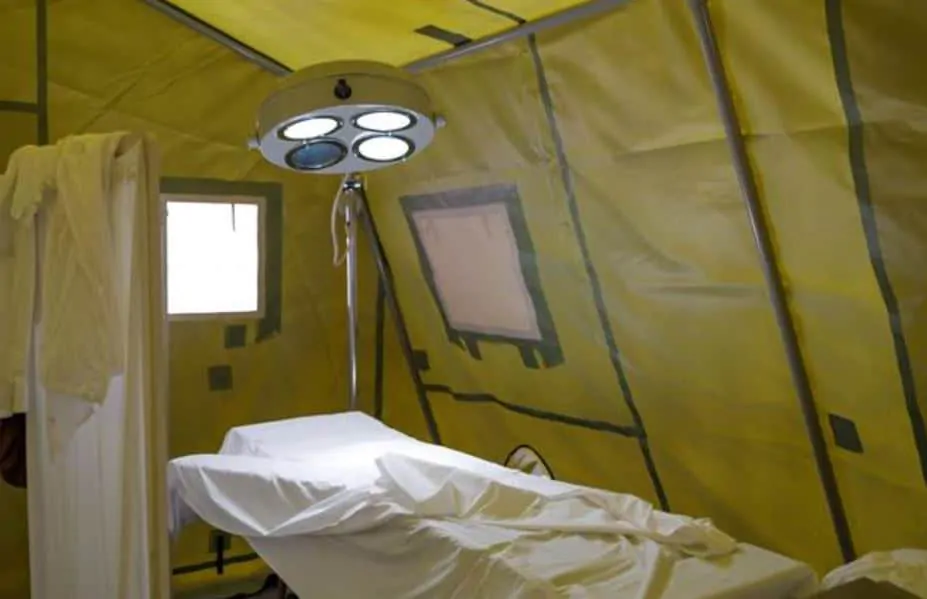
A medical startup has developed a portable surgical tent designed to improve healthcare delivery in remote areas and disaster-hit regions. The innovation promises faster, safer, and more flexible medical responses where traditional facilities are unavailable.
The tent is lightweight, easy to transport, and can be set up in under an hour. It comes equipped with basic surgical equipment, sterilization systems, and temperature control, allowing medical teams to perform procedures in challenging conditions.
Developers said the goal is to provide a reliable solution for emergency and humanitarian missions. In situations where hospitals are damaged or inaccessible, the portable surgical tent ensures that patients can receive life-saving care without delay.
Experts highlight the importance of mobile medical units, especially in disaster zones. Earthquakes, floods, and conflict often disrupt healthcare infrastructure. Portable surgical tents offer a practical solution, bridging the gap between patients and critical medical services.
The startup has already conducted pilot tests in rural communities and areas prone to natural disasters. Initial feedback indicates that medical teams can operate efficiently while maintaining hygiene and safety standards comparable to traditional operating rooms.
This innovation also addresses global health challenges in underserved regions. By bringing surgical capabilities directly to communities, the tent reduces the need for patient transport, which can be risky and costly.
In addition to emergency response, the portable surgical tent may be used in military operations, refugee camps, and large-scale public events. Its flexible design allows teams to adapt the space for different medical procedures, from minor surgeries to emergency trauma care.
Healthcare professionals praised the startup’s approach, noting that portable solutions are increasingly vital as global crises rise. “Access to surgical care should not be limited by location,” said one doctor involved in testing. “This tent brings the hospital to the patient.”
The initiative aligns with broader efforts to improve medical infrastructure worldwide. Organizations focused on disaster relief and global health are exploring partnerships to deploy these tents where they are needed most.
Analysts suggest that innovations like the portable surgical tent could transform emergency healthcare delivery. By combining mobility with essential surgical technology, it offers a model for rapid deployment and effective patient care.
Funding and support from both public and private sectors are helping the startup scale production. The team plans to expand availability to multiple countries, ensuring that more communities benefit from this life-saving technology.
The startup’s development highlights the role of innovation in addressing critical healthcare gaps. As disasters and emergencies continue to challenge medical systems, portable surgical tents could become an essential tool in saving lives and enhancing response capabilities.
