


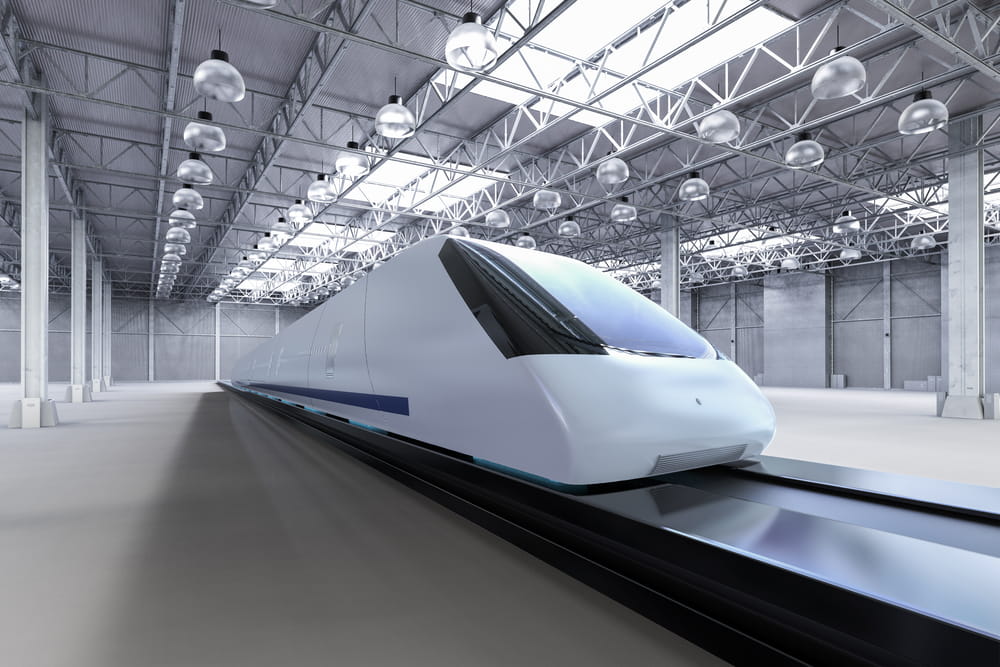
Japan is developing the L0 Series, the world’s fastest train, capable of reaching speeds of up to 603.5 km/h. The magnetic-levitation (maglev) train is being built by Central Japan Railway Company and is designed to slash journey times on the new Chūō Shinkansen line.
Once operational, the L0 Series is expected to cut travel between Tokyo and Nagoya to about 40 minutes, with an eventual extension to Osaka that would link the three cities into a single mega-region. By comparison, Europe’s fastest services, such as France’s TGV or Italy’s Italo, run at around 300–350 km/h.
The train’s speed comes from maglev technology, which lifts carriages above the track using magnets, reducing friction and allowing extreme acceleration. But the ambition comes at a cost: the project has already exceeded €59bn, and delays mean it is now unlikely to open before 2034–35.
Could it ever come to Europe? Experts are sceptical. The L0 Series would require entirely new infrastructure, mostly underground tunnels, far higher energy use, and huge upfront investment. European rail markets also tend to prioritise comfort, capacity and scenic travel over ultra-fast point-to-point speed, except on select business routes.
For now, the L0 Series looks set to remain a Japanese showcase of engineering rather than a model Europe is ready to adopt.
