


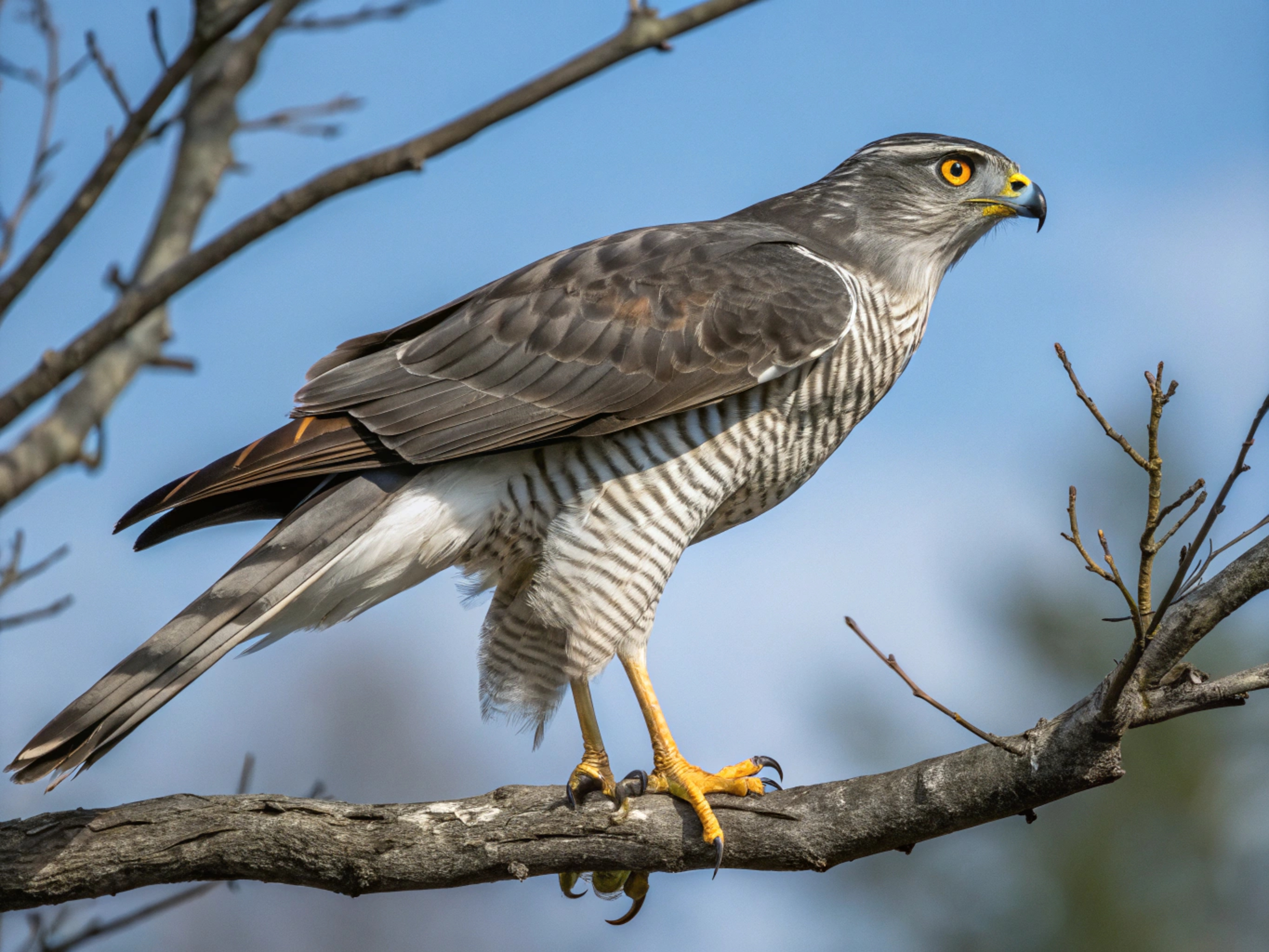
Goshawks, once hunted to near extinction in the UK, could soon be soaring above British cities if a new rewilding project goes ahead.
Conservationist Dr Paul O’Donoghue, director of Rewilding UK, plans to release 15 goshawks each into Chester and London, sourcing chicks from wild European nests and UK breeders. The move follows the success of urban populations in Berlin, Amsterdam and Prague, where the birds have adapted to busy city life, hunting pigeons and nesting in parks.
“The goshawk is basically a flying Batman bringing law and order to the city,” O’Donoghue said while observing breeding pairs in Berlin’s Viktoriapark. He believes their presence could regulate mesopredators such as crows and magpies, easing pressure on smaller garden birds.
The plan, known as “assisted colonisation,” will soon be submitted to Natural England. Birds would be fitted with GPS trackers, with a portion of the £110,000 project cost set aside for monitoring and supplementary feeding.
Goshawks remain persecuted in parts of rural Britain, particularly on shooting estates and grouse moors, but in Berlin they thrive, with about 100 breeding pairs. Their urban success has not been without conflict, as pigeon and chicken breeders complain about losses.
Experts remain cautious. Manuela Merling de Chapa, a German researcher who tracked 60 urban goshawks, warned that rural chicks may struggle to adapt to city life. Ian Henderson of the British Trust for Ornithology added that small release numbers may not have a major impact and suggested many birds might disperse into surrounding countryside.
Despite scepticism, O’Donoghue is optimistic, citing his previous work with wildcats and bustards. He also emphasises the public benefit of city-dwellers encountering elusive predators in everyday life.
“It proves this can be done,” he said. “People go to the park to feed pigeons. Soon they’ll be going to see goshawks.”
