


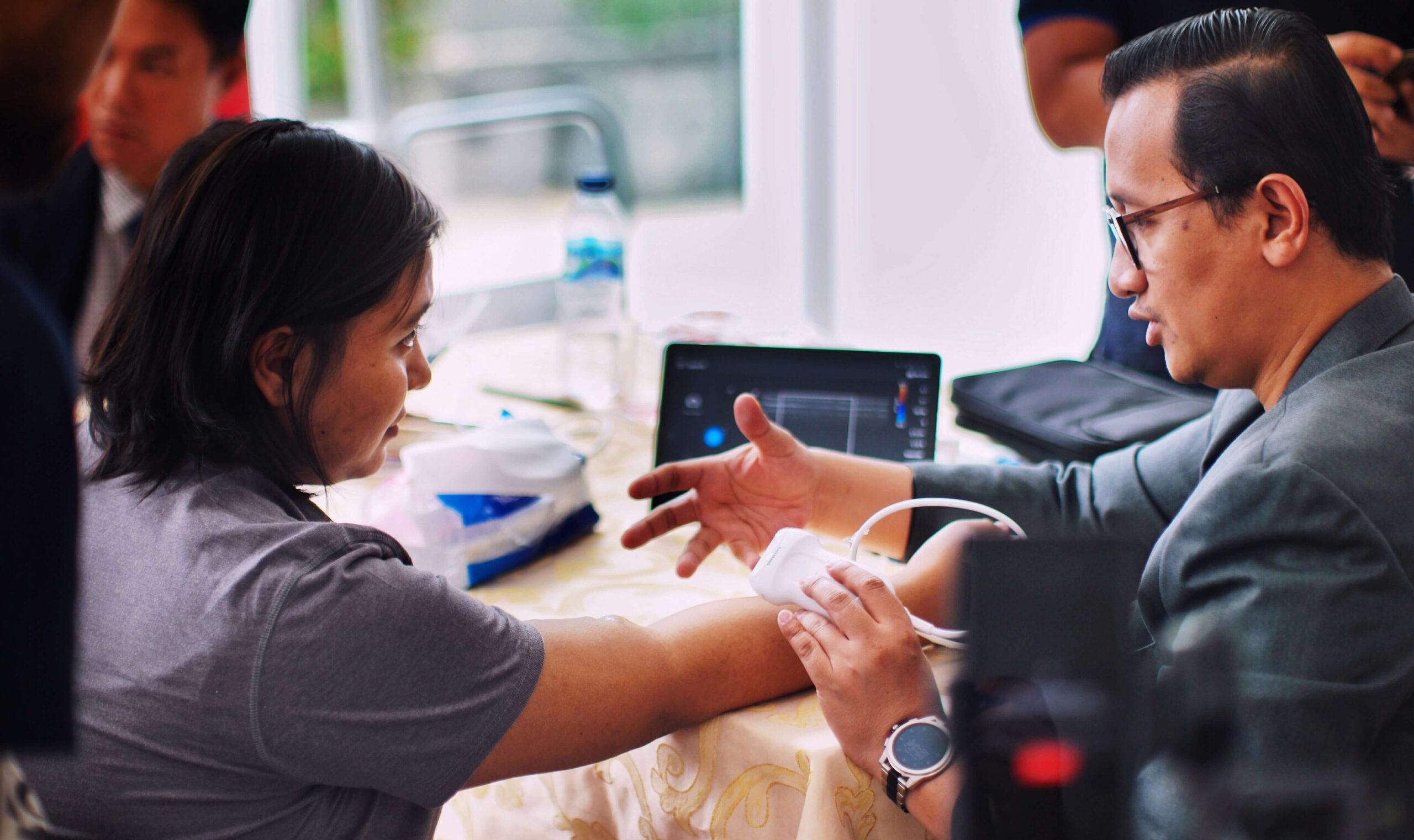
A new artificial intelligence tool cleared for use in the United States could significantly improve how doctors spot fetal abnormalities during pregnancy, addressing a long-standing gap in prenatal care.
Why Ultrasounds Still Miss Problems
Prenatal ultrasounds are a routine part of pregnancy and play a key role in monitoring a baby’s development. They can reveal issues affecting organs, limbs or other structures while the fetus is still growing. Yet despite their importance, traditional scans don’t catch everything.
Research shows that a single early scan, usually carried out between 11 and 14 weeks, identifies only about 38 percent of birth defects. A second scan later in pregnancy, between 18 and 24 weeks, improves detection to around 51 percent. Even with both scans combined, some abnormalities are still missed, leaving families and doctors with limited information.
How the AI Tool Works
Developed by US start-up BioticsAI, the newly approved software works alongside existing ultrasound machines. As images are captured, the system analyses them in real time. It checks whether the image quality is sufficient and suggests adjustments if a clearer view is needed.
The software also verifies that all key parts of the baby are visible during the scan, flagging anything that appears to be missing. By comparing the images against patterns drawn from global medical data, it can highlight potential concerns such as heart or limb abnormalities.
At the end of the scan, the tool produces a detailed report that doctors can review, cutting down on paperwork. BioticsAI says the system can save clinicians around eight minutes per patient, easing pressure in busy clinics.
A Step Forward for Prenatal Care
The US Food and Drug Administration’s clearance means the software has met clinical performance standards and can now be used as an approved medical device. Supporters say this could help close the detection gap in prenatal screening, especially in high-volume healthcare settings.
The push toward AI-assisted ultrasounds is not limited to the US. In Europe, companies such as France’s Diagnoly and Sonio Detect have also received approval for similar tools that automatically analyse fetal structures and heart development.
With congenital anomalies affecting nearly 24 in every 10,000 births across Europe, advances like these could offer doctors sharper tools — and families clearer answers — during one of the most important stages of care.
