


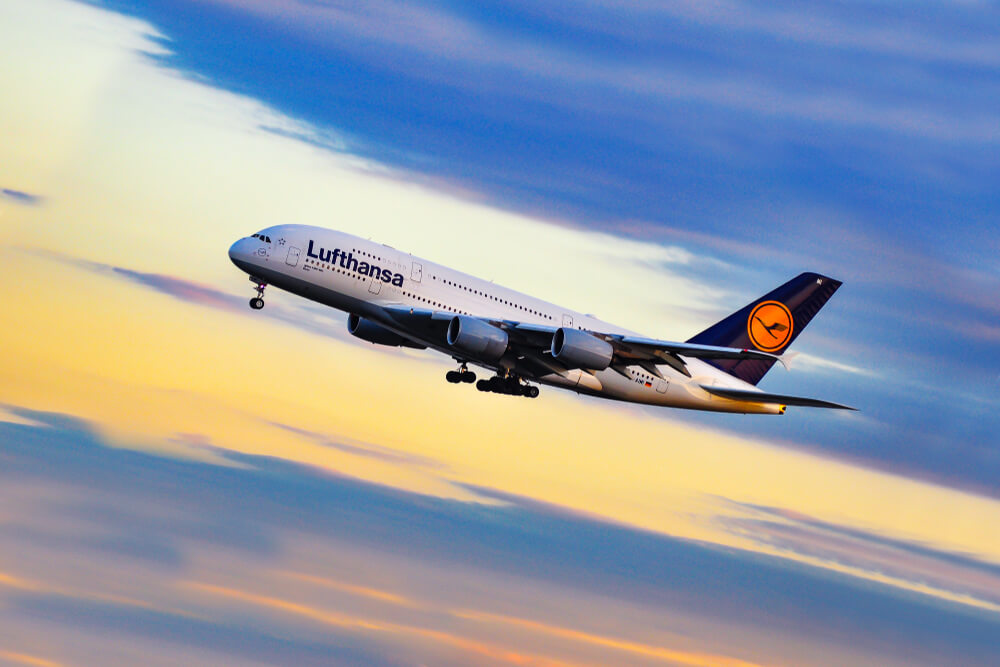
Airlines across Europe are tightening their rules on power banks after a series of dangerous onboard fires, with Germany’s Lufthansa becoming the first major carrier on the continent to introduce sweeping new restrictions.
The move follows mounting safety concerns after investigations linked several aircraft fires to lithium battery packs, prompting regulators and airlines to rethink how these everyday devices are handled in the air.
Lufthansa Draws a Line on In-Flight Use
Lufthansa has updated its onboard safety policy to sharply limit how power banks can be used during flights. Passengers are no longer allowed to charge their phones or other devices using power banks while in the air, nor can they connect the batteries to seatback entertainment systems.
While power banks are still permitted in carry-on luggage, storing them in overhead bins is now prohibited. Instead, travellers must keep them on their person or place them in a bag under the seat in front of them. The long-standing ban on packing power banks in checked luggage remains in force.
Stricter Limits on Size and Quantity
The airline has also imposed firm limits on battery size. Power banks may not exceed 100 watt-hours, or roughly 27,000 milliampere-hours. Passengers who wish to carry larger batteries must seek approval from the airline in advance. Devices brought on board without authorisation risk being confiscated and destroyed.
In addition, each passenger is now limited to carrying a maximum of two power banks per flight. Lufthansa says the changes are based on updated safety guidance from the European Union Aviation Safety Agency.
The new rules apply not only to Lufthansa flights but also to services operated by its affiliated airlines, including Swiss, Austrian Airlines, Eurowings, Brussels Airlines, Discover, Edelweiss and Air Dolomiti. Travellers are advised to fully charge their devices before boarding or rely on the aircraft’s dedicated USB ports during the journey.
A Fire That Changed the Conversation
The tighter approach follows a serious incident in January 2025 involving an Air Busan Airbus A321 in South Korea. A fire broke out in the overhead compartment while the aircraft was still on the ground, injuring 27 people.
Investigators later confirmed that a power bank stored in the overhead bin was the source of the blaze. Within minutes, flames spread through the fuselage, forcing passengers to evacuate using emergency slides.
The incident has had a global impact, pushing aviation safety authorities and airlines to reassess the risks posed by lithium batteries in confined cabin spaces. As a result, passengers can expect stricter rules and closer scrutiny of power banks on flights worldwide.
